



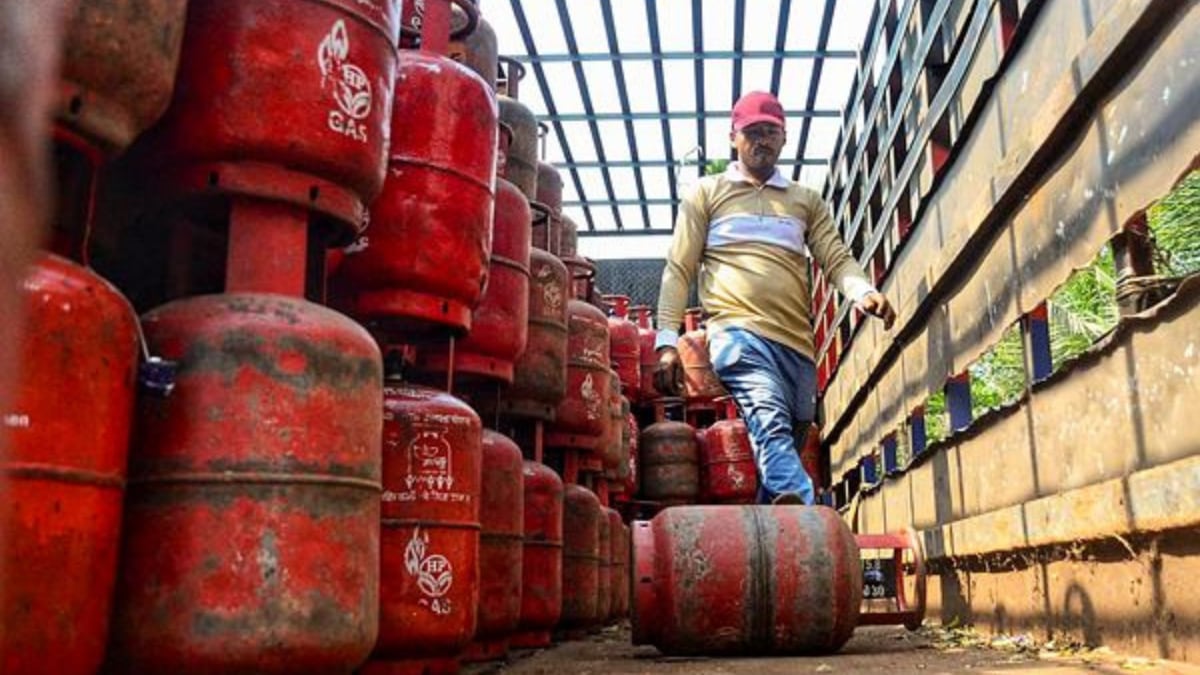
Industrial and corporate caterers are currently facing difficulties procuring commercial LPG cylinders, forcing them to turn to coal and wood as alternative fuels to continue supplying food to industrial canteens and other corporate facilities.
Gurvinder Singh Bindra, CEO of Bindra Hospitality Services and chairman of the National Association of Corporate Caterers and the Federation of Corporate and Industry Caterers, stated that there is little clarity on when supplies will resume. He predicts that the situation may worsen in the coming days as existing fuel stocks are depleted.
Although the government assured a quota for commercial cylinder refilling, Bindra said supplies have been minimal, covering only about 10% of caterers’ demands. While the government has committed to providing up to 70% of the commercial LPG cylinder requirements for their industry, Bindra indicated that their members have not been able to obtain the promised supplies.
Impact on the catering industry
The catering industry in the region comprises about 200 large caterers, 700-800 mid-sized caterers, and over 1,000 small catering vendors, along with 200 outdoor catering companies.
The industry is struggling to manage this sudden transition from LPG to coal and wood. Bindra’s company supplies food to 20,000 people daily and had to relocate one central kitchen and implement bulk cooking methods. They have started cooking with coal, which has proven challenging, as kitchen staff are not trained to handle it.
This method is a slow cooking process, and existing exhaust systems and other equipment cannot effectively manage the smoke and soot produced.
According to data from the caterers’ association, corporate and industrial caterers feed close to one million employees daily, with about 50% of these workers employed in the manufacturing sector across industrial estates in and around Pune. While IT and ITES employees can work from home, factories cannot halt their production lines and require a steady workforce to operate, Bindra explained.
To assist caterers in transitioning to alternative fuels, companies have actively supported them by trimming menus to offer basic, no-frills meals. A few companies have also begun to deploy electric cooking equipment such as combi ovens, tilting pans, griddles, deep fryers, and induction pans. For example, vaccine manufacturer Serum Institute of India has ordered electric combi ovens and induction cooktops to ensure that employees do not experience changes in their food menu.
However, the shift to electric cooking comes with a high cost. A ten-tray oven costs around Rs 8 lakh, while a 20-tray oven can range from Rs 20 to 25 lakh. Most of this equipment is imported from Germany and Italy, with only a couple of Indian manufacturers operating in this market. There is a shortage of this equipment, and the companies would take a month to deliver, Bindra said.
The caterers are in a crisis management mode. They have approached the city administration and gas distribution agencies seeking clarity on the supplies so they can plan accordingly, but have not got any assurances. The catering companies and their clients are now trying to cope with these changes, hoping the supply situation improves.