



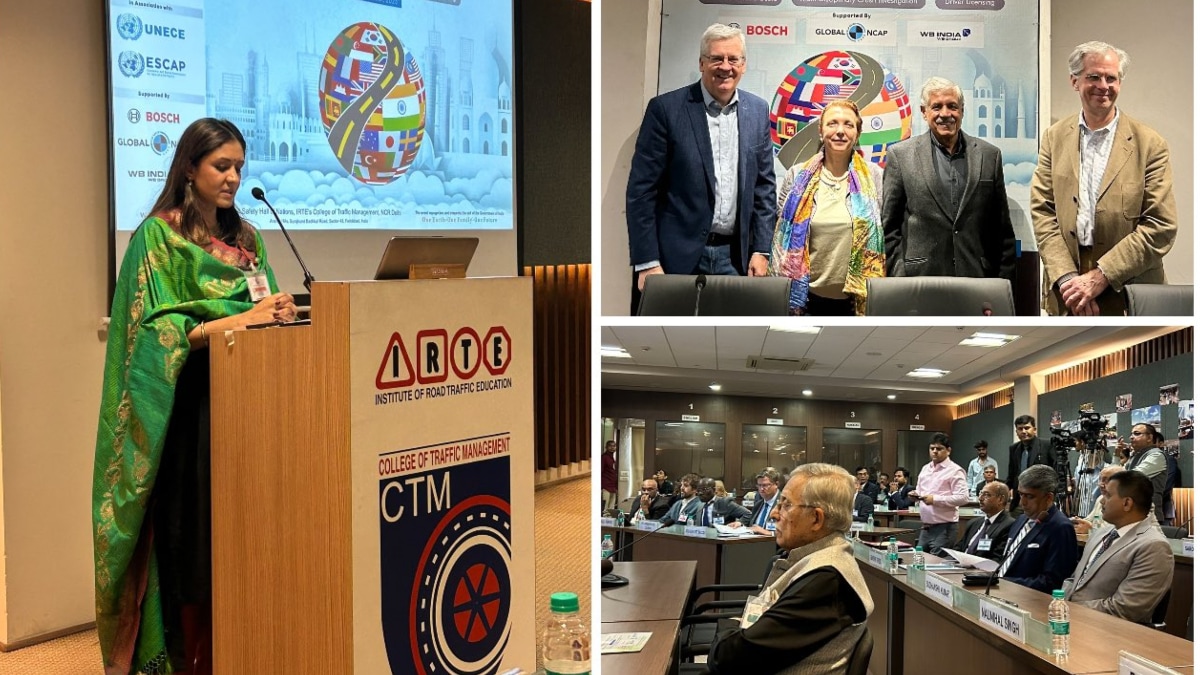
The Union Ministry of Roads Transport & Highways (MoRTH) plans to introduce cashless medical treatment to all injured accident victims across India within the next 3-4 months.
The announcement was made by Anurag Jain, Secretary, Union Ministry of Road Transport & Highways (MoRTH) at the inauguration of a 3-day Global Road Safety Initiative organised by the Institute of Road Traffic Education (IRTE) in partnership with MoRTH and in association with the Nations Economic and Social Commission for Asia and the Pacific (UNESCAP) and the United Nations Economic Commission for Europe (UNECE).
“The free and cashless medical treatment to accident-injured victims is part of the amended Motor vehicle Act 2019 (MVA2019), some states have implemented it but now MoRTH in league with the Ministry of Health and Family Welfare will be fully implementing it across the nation. It is envisioned for providing access to cashless trauma care treatment for road accident victims at the nearest appropriate hospital in the country, in accordance with the Supreme Court ruling, and by drawing its power from the Motor Vehicle (Amendment) Act 2019. Such cashless treatment shall be extended to road accident victims including during golden hour, as defined by the MV Amendment Act,” said Jain.
He acknowledged that India has the highest number of road accident deaths in the world, in a bid to reduce accidents by 50 percent by the year 2030 Road Ministry has formulated a multi-pronged strategy based on 5E’s of road safety to address the issue of road safety based on Education, Engineering (both of roads and vehicles), Enforcement and Emergency Care.
As part of road engineering, road safety has been made an integral part of road design at the planning stage. The electronic Detailed Accident Report (e-DAR) Project has been initiated to establish a central repository for reporting, management and analysis of road accidents data across the country and rectify the engineering faults within a month or two.
The government also has planned to incorporate road safety as part of curriculum for schools and colleges, which will be implemented soon.
“For vehicular engineering several steps have been taken including ABS brakes, two wheelers over speed warning system, seat belt reminder and introduction of Bharat NCAP. Enforcement is a real-time key to ensuring motor vehicle laws are followed including wearing of helmet seatbelt lane driving and jumping redlight,” he added.
The event will see participation from more than 130 eminent road safety experts from more than 27 countries with a focus on deliberating and finalising suggestive codes to reduce road crash fatalities and injuries in low and middle-income countries and cities. Eminent participants included in the meet include Dr Luciano Lorio, Chairperson – UN Economic commission for Europe (ECE) Global Forum For Road Traffic safety & senior legal adviser – MIT, Italy; David Ward, Executive president – Global NCAP; Nanda Srinivasan, Associate Administrator, NHTSA Department of transport (DOT), USA; Dr B Mohammed Asheel, National Professional Officer (Injury & Disability prevention ) – WHO; Dr Jorge Bengue Calumbo, Secretary of State For Land Transport – Ministerio dos Tranportes, Govt of Angola; Joshua Kurt Sacco, Deputy Minister – Ministry of Transport & Infrastructural Development, Govt of Zimbabwe.