



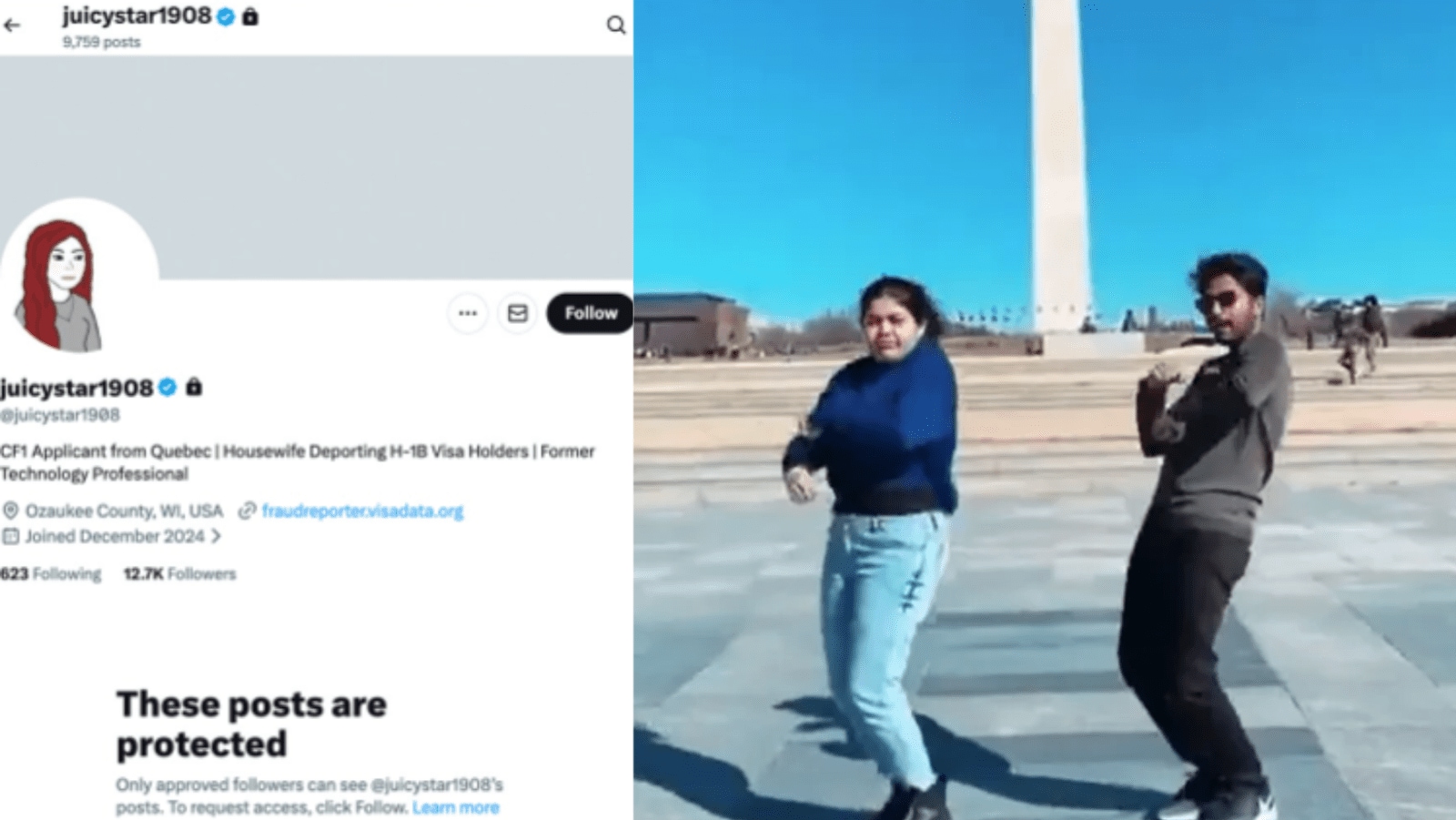
A viral dance video filmed at a historic memorial in the US has snowballed into a global online controversy. What began as criticism of a viral clip showing an Indian-origin tech professional dancing at Washington, DC’s World War II Memorial soon turned into a wider debate about respect at public monuments, immigration politics and the power of online mobs.
But within days, the focus shifted dramatically, from the dancer at the centre of the backlash to the social media user who amplified the outrage and sparked a campaign that threatened his career.
The dance video that led to massive outrage
The controversy began when a video posted on TikTok showed Raju performing a choreographed dance routine at the National World War II Memorial on the National Mall. A woman was seen dancing alongside him.
The clip soon spread widely across social media, leading to criticism from users who felt the location, a memorial honouring World War II veterans, required a more respectful atmosphere. According to The Juggernaut, the online storm began around Thursday, March 5.
It did not take long for the video to reach political corners of the internet. Several MAGA-aligned accounts began sharing the clip while calling for harsh action against him. One comment on the post read, “Not the IT department making socially awkward TikTok dances. They ALL have to go back.”
The tweet reportedly gathered more than 5.8 million views and 9,700 likes, fuelling further outrage.
The tweet that escalated the situation
As criticism mounted, one social media user pushed the issue beyond online mockery. A woman using the handle juicystar1908 tagged Raju’s employer, Palo Alto Networks, and publicly demanded that the company take action. She wrote that the company must fire him “before your legal team gets contacted.” The post received thousands of responses and splitting opinion online.
Some users, including many within the Indian community, felt that threatening someone’s employment over a dance video was excessive. Others, including critics of the H-1B visa system, argued that the incident showed a lack of respect and demanded stricter action.
As the debate spread, Raju’s identity was widely shared online. Social media users claimed he worked as a Cloud Network Security Engineer at Palo Alto Networks and had been in the role since June 2025.
They also pointed to a dance studio allegedly run by him, called MAD Dallas. Soon after the backlash intensified, the studio’s website and social media pages appeared to have been taken down. Raju’s own online presence also began disappearing. His LinkedIn, Instagram and other social media accounts were deleted after the video went viral.
Online backlash turns toward the accuser
But the online storm soon took another turn. Within days, some users began investigating the identity behind the account that had called for Raju’s firing. According to The Juggernaut, Indians online managed to identify the user behind the handle juicystar1908.
She was reportedly based in Canada and she is now under scrutiny of netizens. After being identified, the woman made her social media posts private.
When contacted by The Juggernaut, she declined to comment, saying she could not speak “as per her attorney’s advice”.
Reports indicate that immigration officials are examining whether the incident could have any implications for Raju’s visa status. He is believed to be residing in the United States on a non-immigrant visa. Under US immigration law, visa holders can face revocation if they are convicted of certain offences or engage in activities considered inconsistent with their visa conditions.
Rules at national memorials
The National Park Service, which manages the World War II Memorial, requires visitors to maintain decorum at national monuments. Memorial sites are expected to remain spaces of reflection and respect, and activities that disrupt that environment can attract scrutiny.
Reports suggest Raju later issued an apology, saying he did not intend to offend anyone. However, by that point the issue had moved far beyond the original video. What started as a short dance clip had turned into a global online debate about immigration, public behaviour and the consequences of viral outrage.