



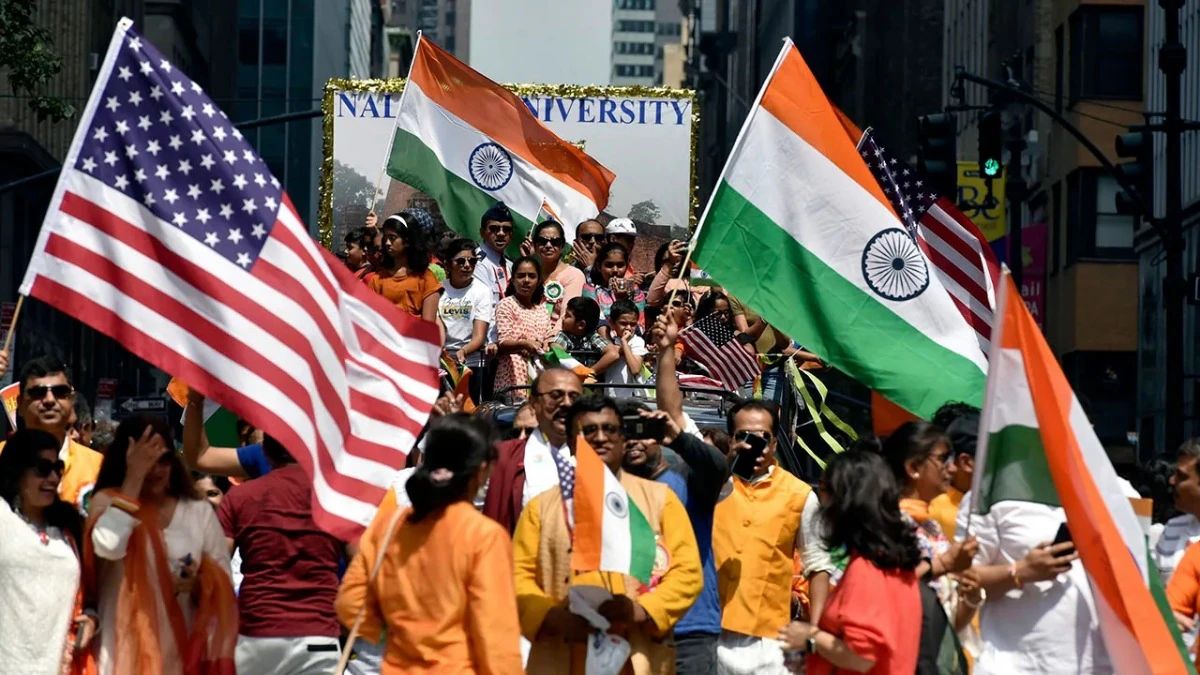
The New York Times recently ran a piece that makes one thing clear. The fight over H-1B visas is no longer just about jobs. In some places, it has turned into open anger toward South Asians, especially Indians.
Meanwhile, US President Donald Trump has added to the debate with strong anti-immigrant language. In September, he signed a proclamation creating a $100,000 fee for certain new H-1B applications, even while saying the country still needs some skilled workers from abroad.
But Asian American advocacy groups say that while policy discussions are important, they are being drowned out by hate speech. Indian Americans make up about 1.5 percent of the US population. They are among the most highly educated and economically successful immigrant groups. Many work in technology, medicine and business.
Anti-Indian sentiment on rise in US
Citing Stop AAPI Hate, a nonprofit that tracks discrimination, the NYT report said that between January 2023 and December 2025, anti-South Asian slurs in online spaces linked to targeted violence rose by 115 percent. The Center for the Study of Organized Hate found that posts on X last summer using anti-Indian slurs or messages like “deport Indians” gathered 280 million views in about two months.
“In a career spanning 40 years, I have never encountered this type of rhetoric,” wrote Dinesh D’Souza, an Indian-American political commentator on X. “The Right never used to talk like this. So who on our side has legitimised this type of vile degradation? It’s a question worth thinking about.”
Some of the languages used focus on “great replacement” conspiracy theory, the false idea that white Americans are being replaced. “Whereas the old version of replacement theory accuses Jews of taking over, the thrust of this new version is that now Indian people are taking over,” said Stephanie Chan of Stop AAPI Hate.
When the debate spilled into a city meeting
At a City Council meeting in Frisco, residents lined up to speak about immigration and jobs. Instead, the room filled with sharp, heated comments. Some speakers blamed the H-1B visa program for an “Indian takeover.” Others used words like “fraudsters” and “scammers,” offering no proof. One person even said, “We must maintain our Rhodesia,” referring to the former white-ruled government in what is now Zimbabwe.
The meeting lasted two hours. Some people spoke about job losses and wages. South Asian residents spoke about fear. City leaders tried to calm the room. Frisco’s mayor, Jeff Cheney, later said in a statement that many of the speakers were “outside agitators” who did not reflect most residents.
Politicians and public figures targeted
According to NYT, Anti-South Asian hate speech began climbing in 2024 during the presidential campaign of Kamala Harris, whose mother was Indian, according to Ms. Chan of Stop AAPI Hate.
She said it surged again last summer after President Donald Trump issued an executive order on H-1B visas and as Zohran Mamdani rose to prominence in New York City politics. Nearly 80 percent of anti-Asian slurs online are now aimed at South Asians, she said.
After Vice President JD Vance announced that he and his wife, Usha, were expecting their fourth child, online forums included racist comments calling for Usha Vance, who is of Indian descent, to be deported. Some used the phrase “anchor baby,” a term tied to replacement theory. Vivek Ramaswamy has also faced attacks. One of his primary challengers, Casey Putsch, called him an “Indian anchor baby” and a “globalist Trojan horse.”
In Texas, Aaron Reitz, a Republican candidate for attorney general, wrote on X that some counties “may soon be renamed Calcutta, Delhi, & Hyderabad Counties given how bad the invasion of un-assimilated & un-assimilable Indians has become.”
In Palm Bay, Florida, a City Council member named Chandler Langevin was censured after accusing Indians on social media of coming to the United States to “drain our pockets” and calling for their deportation.
The H-1B visa program was created in 1990. It allows up to 85,000 foreign workers each year to take specialized jobs in the United States. In 2023, about three-quarters of roughly 400,000 approved H-1B applications went to workers from India, according to Pew Research Center. Many of these workers are software programmers and computer engineers.
The rules are supposed to protect American workers. Companies are not allowed to pay H-1B employees less than others with similar skills. But whether those rules truly work is strongly debated.
Tech companies say they need the visas because there are not enough qualified Americans. Health care groups say the visas help fill doctor shortages. Many economists say H-1B workers boost productivity and can even raise wages for American workers. Critics, including labor unions, say the program is often abused and pushes out American workers.