



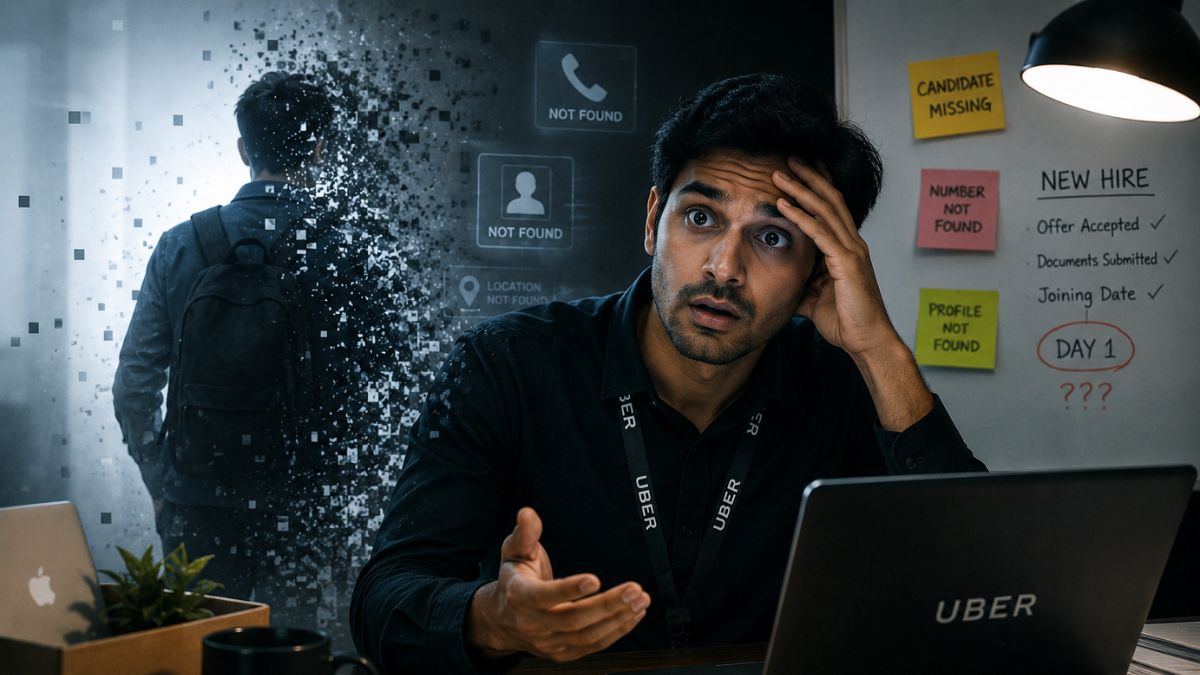
Ghosting has become a frequent occurrence in today’s day and age. It happens in relationships, friendships and, unfortunately, in workplaces too. Recruiters complain about candidates who disappear after accepting job offers or fail to show up on their joining day. Now, Raghu Tenneti, a recruiter explained on LinkedIn how candidate ghosting can sometimes go far beyond a missed phone call.
A candidate who seemingly vanished
In the post, Tenneti recounted what appeared to be one of the strangest cases of candidate ghosting he had encountered. “Candidate ghosting on joining day is not something new today. But this guy didn’t ghost us. He vanished from existence,” he wrote.
According to Tenneti, attempts to contact the candidate led nowhere. The phone number provided by the individual no longer existed. The LinkedIn profile used during the hiring process had also disappeared. Things became even more unusual when the company checked the address where a laptop had been shipped.
The location, Tenneti claimed, turned out to be a vacant plot behind an abandoned building. The company later discovered that the laptop had been remotely reset and could no longer be traced in any meaningful way.
“This man didn’t skip Day 1. He faked his entire identity and vanished without a single digital footprint. That’s not ghosting. That’s a heist,” Tenneti wrote.
The bigger ghosting problem
Though this story is an extreme example, ghosting itself has become a growing problem across the hiring industry. Recent surveys suggest that many job seekers experience silence from employers after investing significant time and effort in applications and interviews. Greenhouse’s 2025 Candidate Experience Research showed that 61% of candidates report being ghosted after an interview, a figure that has risen by nine percentage points since 2024.
Meanwhile, Greenhouse’s 2025 Candidate Experience Report found that 77% of candidates are ghosted by at least one employer in a given year, while 10% report being ghosted even after receiving a verbal job offer.
For job seekers, ghosting often creates uncertainty that can linger for weeks or months.
Many candidates find themselves repeatedly checking their phones, refreshing their inboxes and replaying interviews in their minds, wondering whether they said something wrong. Follow-up emails are drafted and redrafted without receiving a response.
Why recruiters admit they ghost candidates
The problem is not limited to applicants. HR Brew’s 2025 ghosting survey found that eight in ten hiring managers admit they have ghosted candidates at some point during the hiring process.
The most common reason, cited by 81% of respondents, was that they were still evaluating options and had not reached a final decision. Recruiters are also often juggling hundreds of applications for a single role while simultaneously managing multiple interview processes.
In many organisations, there is little internal accountability or formal requirement to close the loop with candidates who are no longer being considered. As a result, silence becomes the default response.
Disclaimer: The content in this article is based on a viral social media discussion and is intended for informational and entertainment purposes only. The financial figures and strategies mentioned are personal to the user and have not been independently verified. This story does not constitute financial advice or an endorsement of any specific investment strategy. Readers are advised to consult a SEBI-registered investment advisor before making financial decisions.