



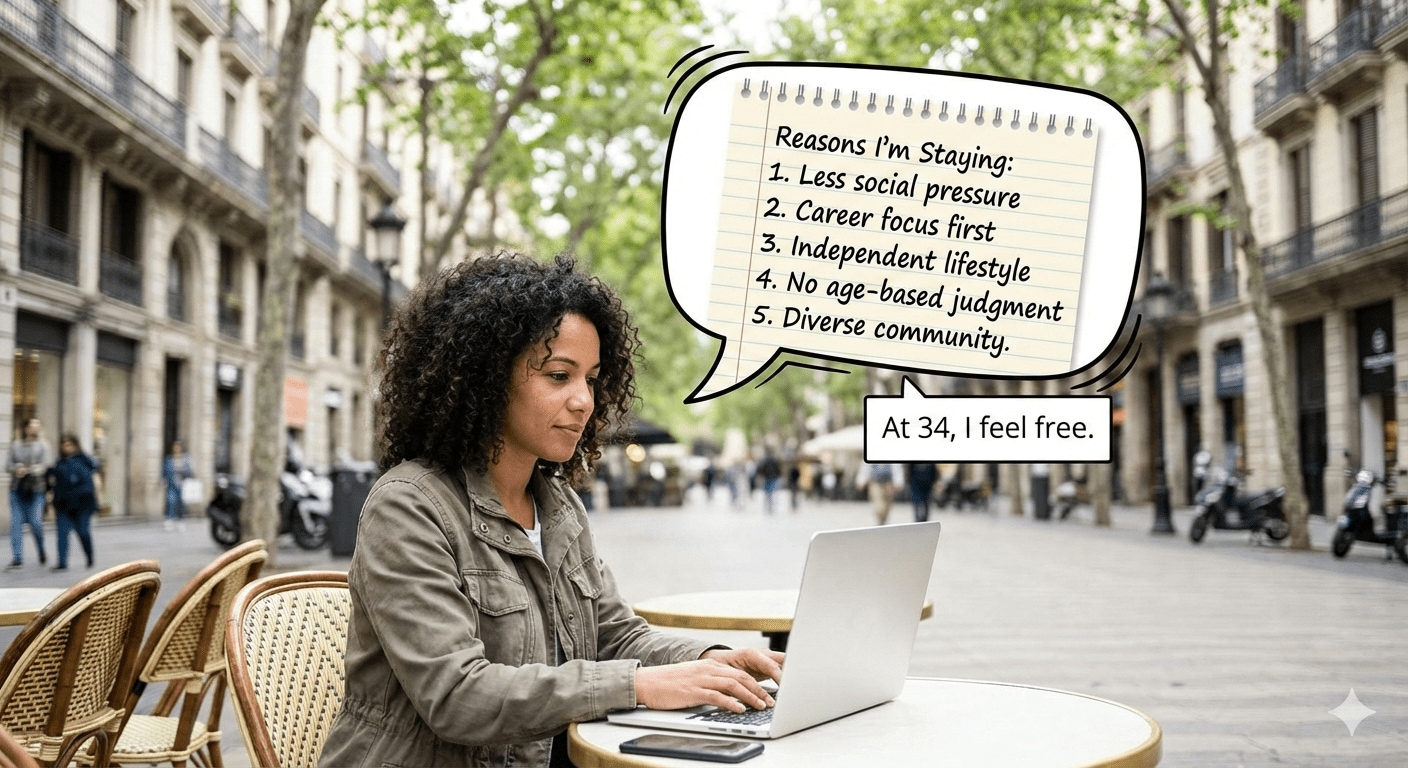
Why do many NRI women hesitate to return to India despite emotional ties, family connections and a growing economy?
According to Nupur Dave, an NRI writer and community builder who surveyed hundreds of Indian women living overseas, the answer lies not in one single factor but in a series of trade-offs that shape everyday life, careers and personal freedom.
Speaking from her own experience and those of women she interviewed, Dave in her podcast ‘NRI Diaries by Nupur Dave’, said one of the biggest advantages of working abroad, especially in the US, is merit-based respect at the workplace.
“No one cares if you’re 34 and unmarried,” she noted, adding that age does not automatically define a woman’s professional potential. In many Western workplaces, women reported feeling heard, evaluated largely on performance, and free from constant questions about marriage or family plans.
‘Rampant ageism and sexism in India’
In contrast, returning to India often means confronting a mix of ageism and sexism, Dave said, arguing that age bias can sometimes be even stronger than gender bias, particularly for women over 30. Professional credibility, she said, is frequently mediated through relationships rather than merit alone. For first-generation professional women coming back from abroad, even a strong international resume may not translate into the same authority or opportunities.
Workplace culture is better
Workplace culture is another key concern. Many women who returned to India described feeling subtly excluded from informal conversations, lunches and decision-making spaces, especially in male-dominated offices. “It’s not that people are openly hostile…they just don’t include you,” Dave explained. This creates what she calls a “likeability tax,” where women feel pressured to be extra agreeable to be taken seriously, while those who set boundaries risk being labelled difficult.
Social pressures are a key concern
Beyond work, social pressures weigh heavily. Single women in India often face constant scrutiny, from relatives, colleagues and even doctors, about marriage and children. Abroad, this absence of judgment can feel liberating, though it comes with its own cost: loneliness and the lack of a built-in support system. “Abroad, if something goes wrong, a health crisis or family emergency, you face it alone,” Dave said.
Safety concerns
Safety and everyday adjustments also factor into the decision, Dave said. While India is not uniformly unsafe, many women described being in a constant state of vigilance, modifying how they dress, where they live and how they move through public spaces, she claimed.
Ultimately, Dave said the question isn’t whether India or abroad is better, but which set of problems women can live with.