



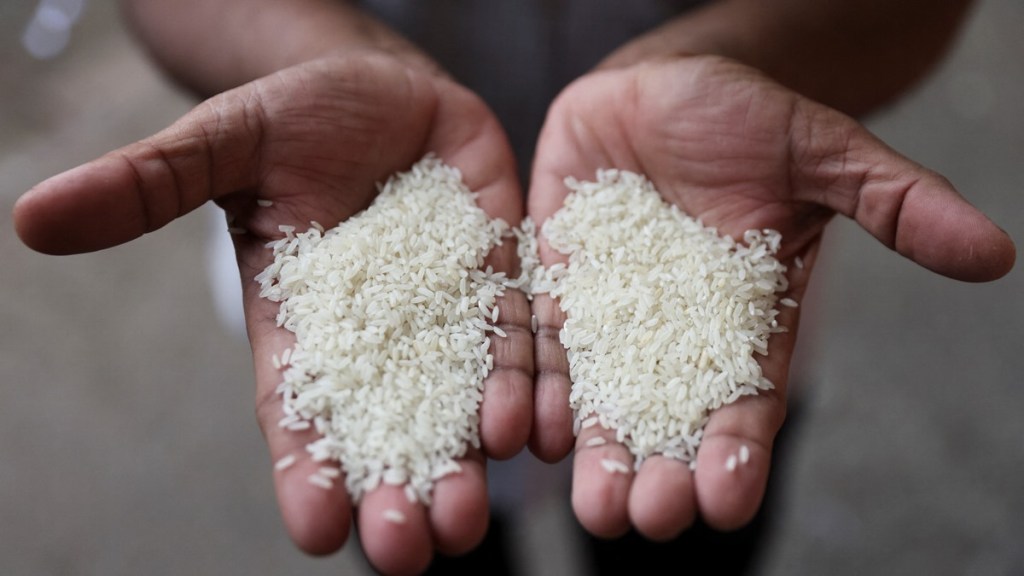
The world’s largest rice miller KRBL weathered the fallout of the subdued global markets, and intermittent curbs on shipments of basmati rice in the past year, with an increased focus on the domestic markets for regional grain varieties.
According to Ayush Gupta, business head-India market, despite the relative slump in some of the export markets, and the recent Red Sea crisis, the company could still clock a 10% annual rise in consolidated revenue in FY24. Of course, this is significantly lower than the 27% jump in revenue posted in the last financial year.
The company had churned out profit after tax of Rs 701 crore in FY23, on total revenues of Rs 5,363 crore. Gupta said KRBL’s exports of basmati rice might not take a big hit because of the recent attack by Yemen rebels on commercial vessels in the Red Sea as most of its shipments are to West Asia where freight costs haven’t risen much due to conflict. “Freight impact is more for shipments to Europe, which isn’t a large market for us,” he said.
The company, which owns the top-selling basmati brand India Gate is looking to expand the domestic and export footprints of its premium regional non-basmati varieties Kolam, Sona Masuri, and Gobindobhog. “We have also firmed up plans to boost basmati rice sales in the domestic market to boost sales,” Gupta said.
Kolam rice is widely consumed in western and southern parts of the country while Sona Masuri is largely used by people in southern states, where the company procures the rice from. It sources the Gobindobhog variety from farmers in West Bengal.
In the last fiscal, the company’s domestic rice sales were a record Rs 3,335 crore, mainly because of 26% growth in branded basmati rice sales. KRBL is aiming to increase the domestic market share of branded basmati rice from 34% to around 38% in the next three to five years. “In the case of the modern trade segment, we are currently at 42% share and planning to ramp this up to 45% in 3-5 years,” Gupta said.
Other major players in the branded basmati rice segment include LT food (Daawat), Adani Wilmar (Kohinoor) and Chaman Lal Setia Exports (Maharani).
In terms of sales of regional rice varieties which KRBL launched last year, sales in the current fiscal year are likely to be Rs 200 crore and the company is aiming to increase sales of regional non-basmati rice varieties to around Rs 1,000 crore in the next three to five years.
Meanwhile, the company is also planning to launch rice bran oil as well as atta (flour) and market these products under the India Gate brand in the next couple of years.
“We have rice milling capacity in Dhuri, Punjab where we currently supply rice bran to a private entity which we would like to use for launching our own edible oil brand,” Gupta said.
Out of India’s total annual production of around 8.2 million tonnes (MT) around 4.5 MT of aromatic long-grain rice is exported to largely Middle East countries including Saudi Arabia, Iran and United Arab Emirates.
Out of the domestic consumption of basmati rice, around 0.61 MT is sold under ‘branded’ category while 1.85 MT is sold to the HoReCa (hotels, restaurants and cafes) sector. About 1.24 MT of aromatic rice is sold to the consumers loose.