



By John Brittas, CPI(M) MP, Rajya Sabha
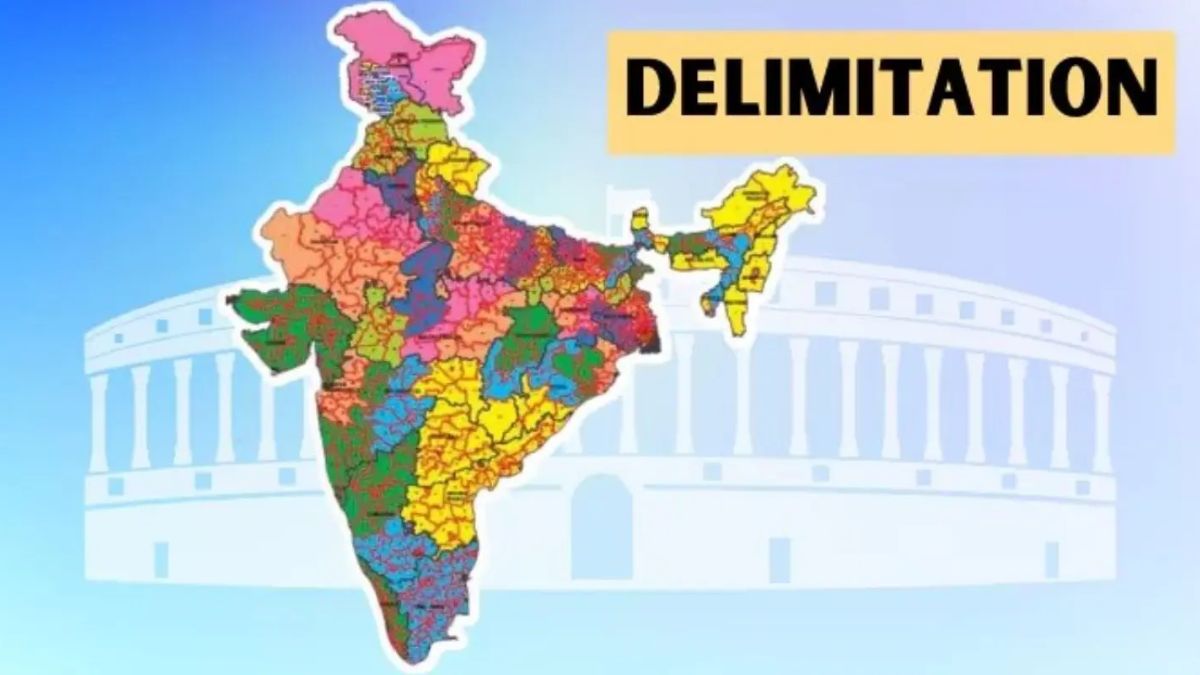
Our worst fears have been confirmed. Far from empowering women, the National Democratic Alliance government’s real aim appears to be disrupting India’s carefully maintained federal equilibrium. The proposed delimitation will rely on the 2011 Census not 1971 to allocate seats in an expanded 850-member Lok Sabha. Despite assurances of a pro-rata increase, the bill offers no such guarantee.
Women’s reservation in Parliament and state assemblies is non-negotiable. After decades of debate, the Nari Shakti Vandan Adhiniyam finally mandated one-third reservation for women a historic step, albeit with caveats. The 2023 Act inserts provisions requiring that “as nearly as may be, one-third” of seats be reserved, with rotation after each delimitation.
Crucially, this quota will only take effect after delimitation based on the first Census conducted post-2023. The government’s principal reform seeks to accommodate this quota without displacing male incumbents by increasing the total number of seats by 50%.
The core problem
While ministers have privately indicated that inter-state seat shares will remain proportionate, the absence of this assurance in law is telling. Even if ratios are preserved, the shift in absolute numbers will alter India’s political balance. In electoral politics, it is numbers, not ratios , that determine power, influence, and coalition leverage.
This is the core problem. The proposed delimitation would expand the LS from 543 to 850 members far beyond what the Constitution originally envisaged. Article 81 capped the House at a functional maximum of 550 members, reflecting the framers’ concern for manageability and deliberative quality.
That principle now stands abandoned. Even if proportionality is maintained, the gains will disproportionately favour northern states with larger populations. Estimates suggest that these states could collectively add around 200 seats, while southern and eastern states may gain only 66-90.
The majority mark would rise sharply from 272 to about 408, amplifying the dominance of larger northern blocs while diluting the bargaining power of regional parties. Consider the Telugu Desam Party (TDP), a key ally in Andhra Pradesh.
While its share within the state may remain intact, its influence at the national level will shrink in a much larger House. By contrast, the Bhartiya Janta Party’s northern strongholds would expand significantly Uttar Pradesh alone could rise from 80 to around 120 seats.
In a 543-member House, a party with 15-20 Members of Parliament (MPs) can be pivotal. In an 850-member House, that same bloc becomes marginal unless it scales dramatically. If the bill is implemented without safeguards, southern states risk being reduced to political afterthoughts in national decision-making.
The proposal also raises serious concerns about legislative effectiveness. Parliament’s functioning has already weakened. LS sittings have declined from an average of 121 days annually in the early decades to about 55-68 days now.
The committee system — once the backbone of legislative scrutiny has eroded, with only around 18% of bills being referred to committees, down from nearly 70% earlier. State assemblies fare worse, often meeting for just 20-28 days a year. Adding hundreds of legislators will likely worsen, not improve, deliberative quality.
If the objective is simply to implement one-third reservation while preserving inter-state balance, a more modest increase of around 25% in seats would suffice. This would allow for rotation and inclusion without rendering Parliament unwieldy while limiting the scale of north-south disparities and preserving political diversity.
The expansion also contradicts the government’s governance philosophy. More MPs and MLAs will increase public expenditure on salaries, allowances, and infrastructure.
Since the size of the Council of Ministers is capped at 15% of the House strength, larger legislatures will also mean larger ministries — expanding patronage rather than efficiency. Finally, a significantly enlarged LS risks weakening the Rajya Sabha further. In joint sittings under Article 108, the Lower House already dominates numerically.
Expanding it further would reduce the Upper House’s ability to act as a meaningful check, undermining the balance of India’s bicameral system. Women’s reservation is a constitutional milestone and a moral imperative. But embedding it within a sweeping 50% expansion risks turning Parliament into a larger, less effective echo chamber — rather than a sharper instrument of accountability.
The writer is a member of Rajya Sabha i.e. the upper house of the Indian parliament.