



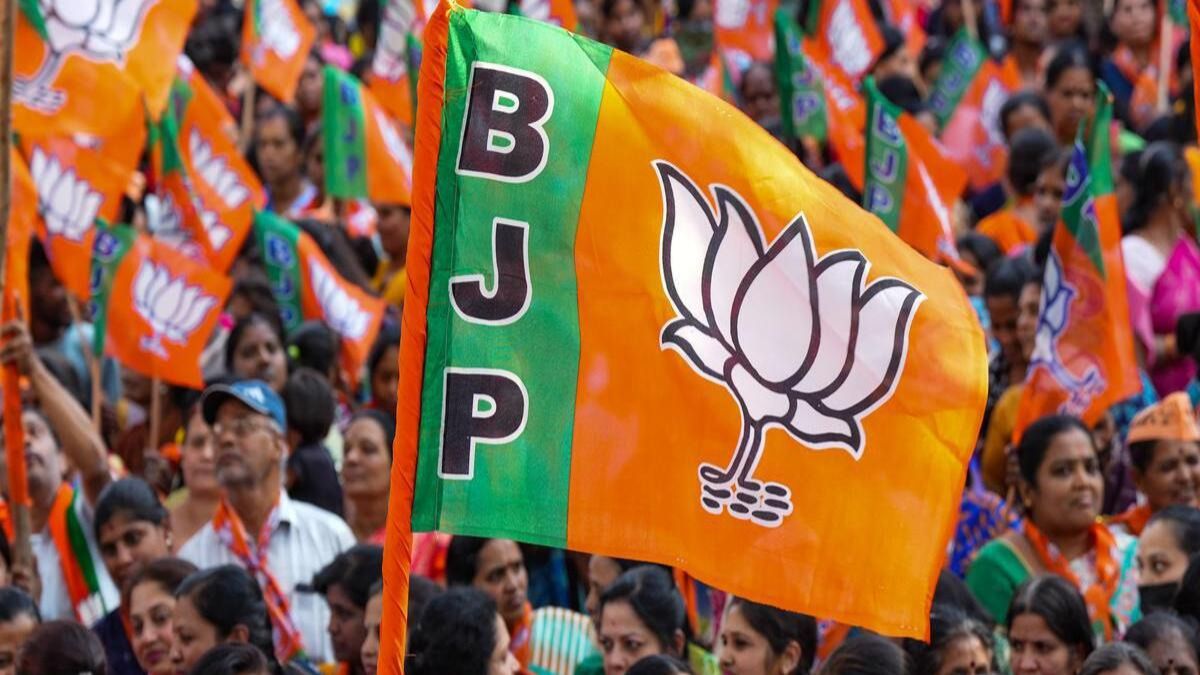
As West Bengal prepares to vote on April 23 and April 29, with results expected on May 4, the Bharatiya Janata Party faces a familiar but unresolved challenge: transforming electoral force into a governing majority. The numbers reveal both the opportunity and the limitation.
The BJP went from 3 seats in 2016 to 77 in 2021, with its vote share rising from about 10 percent to nearly 38 percent. Still, the Trinamool Congress held on to power with 213 seats. Bridging that gap is now central to Amit Shah’s strategy, and the 170-seat target indicates the extent of that ambition.
What does Shah’s time in Bengal reflect?
Shah’s time in Bengal reflects a campaign that is neither sporadic nor symbolic, but methodical. His 15-day stay in the state involved frequent visits and granular assessments of booth-level readiness. This points to a shift in approach from harnessing momentum to building outcomes.
The focus on party worker mobilisation, booth management, and internal coordination highlights the effort to build electoral certainty from the ground up. At the same time, moves to manage discord and project leadership unity indicate the party knows organisational coherence will be key in translating votes into seats.
By contrast with previous efforts that relied heavily on political momentum, this campaign is particularly noted for its more meticulous, grounded approach. Shah’s 15-day stay in the state, along with numerous visits and comprehensive reviews of booth-level preparedness, exhibits a shift toward organisational precision as the central electoral instrument.
Target of 170 seats
The target of 170 seats is not just ambitious—it signals an attempt to fundamentally reorganise the electoral calculus through focused and streamlined organisational effort. Shah’s present strategy is built on bridging that gap: consolidating areas where the BJP is currently outperforming while flipping constituencies it narrowly lost, all while holding together a state unit that has struggled with internal divisions from time to time.
An equally interesting aspect of this campaign is the attempt to integrate organisational precision with a well-built political narrative. The BJP has grounded its messaging in law and order, particularly women’s safety, drawing on high-profile incidents and data to strengthen its claims.
The NCRB’s 2023 figures—34,691 cases of crimes against women and 27.5 percent of the country’s acid attack cases—are not just statistics here; they are being positioned to frame governance as the central electoral theme. Further, the electoral promise of 33% reservation for women in government jobs seeks to convert that critique into policy assurance.
There is a similar pattern in the party’s attention to illegal infiltration. The “detect, delete, deport” strategy, coupled with a 45-day border fence construction deadline, captures the electoral integrity and national security nexus. The promise to enact a Uniform Civil Code within six months further extends this focus, placing the election within a broader legal and political context.
The third pillar of this narrative is corruption. References to the cancellation of over 26,000 teaching jobs and the alleged prosecution of over 20 politicians are used to argue systemic collapse. This is reinforced by the repeated charge of a “cut-money” syndicate culture, which the BJP alleges is ingrained in the everyday operations of the state.
These three strands—law and order, infiltration, corruption—are not advanced in isolation. Together, they seek to shift the focus of the election from the extent of welfare provision to confidence in governance.
This is where the economic argument is embedded. The claim that over 6,600 companies have exited the state points to industrial decline, unemployment, and reduced investor confidence, coupled with a commitment to establish four new industrial cities and revive essential sectors.
Simultaneously, the BJP is retaining the welfare plank. Among other things, its manifesto promises ₹3,000 per month for women and unemployed youth, which is double the current provisions, and offers ₹9,000 per year to farmers through a mix of central and state support.
Hence, the BJP is adopting a dual approach of competing on welfare while arguing for structural reform—to challenge the Trinamool Congress on its strongest ground and reshape the contest. The party has also sought to recalibrate its strategy to address the “outsider” critique, promising that a “son of the soil” would take over the leadership of the state if it comes to power. In an election where regional identity has long determined outcomes, this is a notable shift.
Overall, the BJP has designed a more cohesive campaign this time. It aims to translate a 170-seat ambition into reality through booth-level management, political claims backed by specific figures, and a combination of welfare expansion and structural commitments.
This campaign, however, also underlines the scale of the task, as the BJP must displace an incumbent with a strong hold of 213 seats and a deep organisational base, while building on its existing 77 seats.
The consequences of this election go beyond the BJP’s attempt to build on 77 seats. It is also about a campaign’s potential to overturn a long-standing political system through organisational discipline and a consolidated governance narrative. Bengal has a history of resisting linear political transitions, and Amit Shah’s plan is to break that pattern.
The outcome of the election is not just a test of Shah’s cohesive strategy but also a measure of the limits of national political expansion in a state that has long resisted it.
(The writer is an international conservative foreign policy, economic and political expert)