



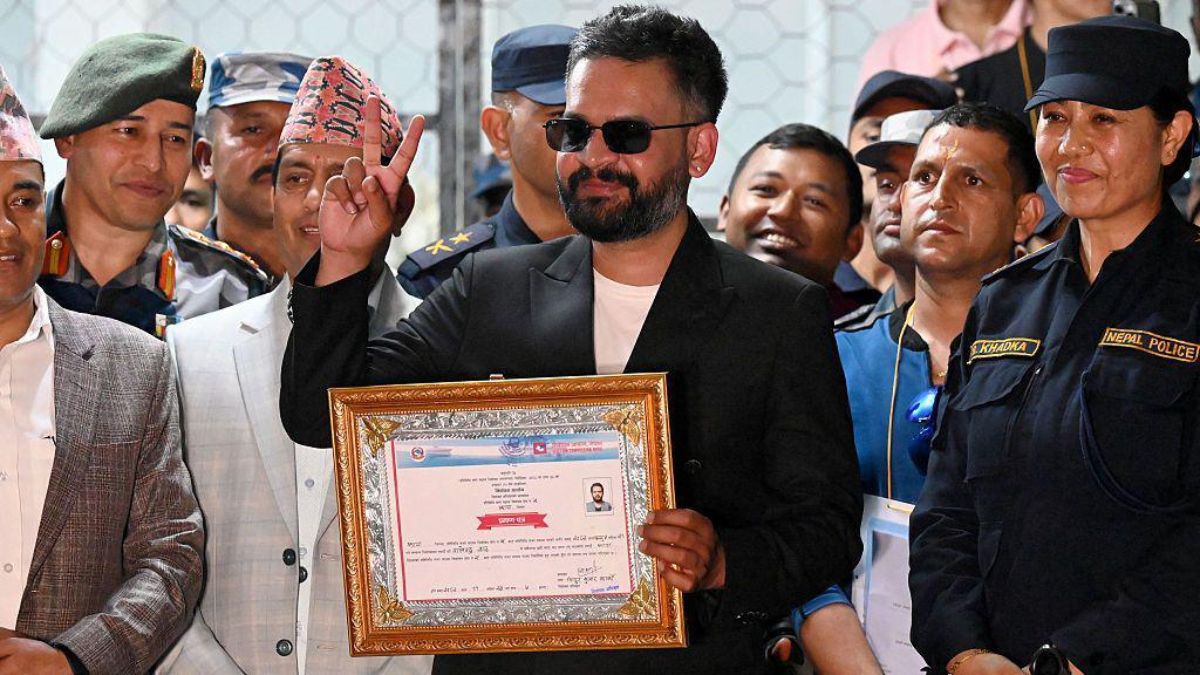
In Nepal’s general elections, the Rastriya Swatantra Party (RSP) with a 35-year-old rapper-turned-politician as its prime ministerial face has secured a majority of the 165 directly elected seats and is likely to do so for the 110 seats based on proportional representation as well in the country’s 275-member Lower House.
The decimation of the traditional political parties augurs well for transformative change—as the RSP successfully campaigned on a platform of better governance and anti-corruption. Nepal has seen 14 governments since it became a democracy 18 years ago, and virtually every senior political leader—including KP Sharma Oli and five other former prime ministers—faces serious corruption charges.
Regime changes in an unstable region can and do present challenges for India’s engagement with its neighbourhood. Besides the growing role of China, there is the need to address the desire of neighbours to seek more strategic autonomy in their relationship with India.
However, the ongoing political revolution that convulsed Nepal, when a Gen Z-led uprising toppled the government headed by PM Oli last September, holds out promise for India to reset its relations with its Himalayan neighbor.
PM Modi congratulates leadership of RSP
PM Narendra Modi has congratulated the leadership of RSP and expressed hope that with joint endeavours India-Nepal relations will scale new heights. The challenge for India, however, is to step up economic engagement—with more trade due to better connectivity—with the new regime in Nepal while dispelling the perception of being an overbearing big brother.
India must engage on the basis of mutual interests and reciprocal sensitivity and develop economic interdependencies so that this Himalayan nation with a population of 30 million acquires a greater stake in our growth story.
That said, there is indeed much to look forward to as the rapper-turned-politician, Balendra Shah, will also be the first person to hold high office from the Madhesi community that inhabits the southern Terai plains in Nepal and has strong cultural and linguistic ties with India.
Without appearing intrusive, there is much that we can contribute as the new regime seeks to fulfil its ambitious electoral promises of generating 1.2 million jobs in five years and reducing foreign migration as Gen Z is extremely frustrated by the lack of jobs. Unemployment of those between 15 and 24 years of age is as high as 22.7%, forcing most of them to migrate abroad.
Growing footprint of the dragon
While India definitely looks forward to improved ties with Nepal’s new regime, the major imponderable of course is the growing footprint of the dragon. The previous Oli-led dispensation had a penchant for turning to Beijing, which irked India. There is little that India can do if neighbours choose to further their ambitions on economic development by engaging with China.
The regime change in Nepal, however, could entail a different strategy in this regard as Shah has expressed reservations about China’s growing influence in the country. The RSP’s decisive triumph in the general elections is clearly not the script Beijing expected.
The party, for its part, seeks to change Nepal from being a “buffer state” between China and India to a “bridge” promoting “trilateral economic partnership and connectivity” between all the three Himalayan countries, according to the Financial Times. How this putative strategy actually works out in practice bears watching in the months ahead as India comes to terms with the political change in Nepal.