



India’s auto sector has quietly become one of the market’s strongest performers again.
The BSE Auto Index has delivered strong gains over the last few years as demand recovered across passenger vehicles, SUVs, tractors and premium motorcycles. Even after periodic slowdowns, the broader industry continues to benefit from rising incomes, easier financing, premiumisation and improving rural demand.
But auto cycles are rarely straightforward.
The industry has already gone through phases of chip shortages, weak urban demand, rising discounts and commodity inflation over the last few years. Several companies managed to grow despite this. Others lost market share because product pipelines weakened or execution slipped.
That is what makes this phase interesting.
A fresh investment cycle is now underway across the sector. Companies are expanding SUV portfolios, ramping up EV investments, increasing manufacturing capacity and positioning India as a larger export hub. At the same time, structural drivers remain favourable. India sold a record 4.3 million (m) passenger vehicles in FY25, while SUVs continue gaining share across the market.
The better opportunities are usually found in companies where growth visibility is improving faster than valuations.
In this article, we look at auto sector companies with strong balance sheets, visible growth plans and management teams that are investing aggressively for the next phase of growth.
#1 Hyundai Motor India
Fourth on our list is Hyundai Motor India.
Hyundai Motor India remains one of the strongest passenger vehicle franchises in the country. The company built its dominance on a simple formula: reliable cars, strong SUVs and enough launches to stay relevant without constantly chasing market share at any cost. But over the last few years, competition in SUVs has intensified sharply, while Hyundai’s domestic market share has steadily narrowed.
That is what makes the next phase interesting.
Hyundai is entering a fresh product and capacity cycle at a time when the broader passenger vehicle industry is slowing. It plans to launch two new models in FY27. Simultaneously, it is expanding production capacity, with total installed capacity expected to rise to around 1.14 m units (6% CAGR over FY25-31) vs 1.08 earlier.
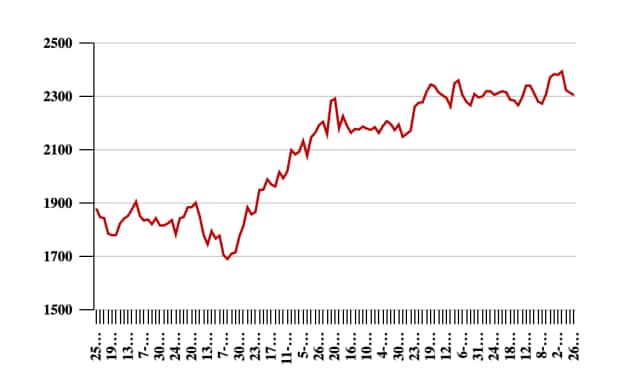
Hyundai Motor India Share Price – 6 Months
Source: NSE
FY26 itself was not particularly strong. Revenue grew just 2.3%, while EBITDA margins declined due to higher commodity costs, labour code impact, new plant overheads and a one-time vendor compensation hit. Domestic passenger vehicle volumes also declined.
The March 2026 quarter, however, showed early signs of recovery. Q4FY26 revenue rose 5.4% YoY, driven by 8.7% growth in volumes, while domestic market share improved sequentially.
Going forward, Hyundai expects both domestic and export PV volumes to grow 8-10% in FY27. The company is also positioning India as a larger export hub for emerging markets while increasing SUV penetration and EV localisation.
Management expects EBITDA margins to remain within the 11-14% range as commodity pressures stabilise, utilization at the Pune facility improves and operating leverage starts kicking in.
The stock currently trades at 26.7x earnings, below its five-year average PE of around 31x.
#2 Eicher Motors
Next on the list is Eicher Motors.
Eicher Motors has managed to turn a motorcycle brand into a lifestyle franchise without diluting its pricing power. Royal Enfield still dominates the mid-size motorcycle segment with nearly 87% market share. Now, the company is trying to ensure growth does not remain dependent on just one category or geography.
What stands out is that demand remains surprisingly resilient despite premium motorcycles becoming significantly more expensive over the years.
Domestic motorcycle volumes grew 14% YoY in Q4FY26, supported by healthy bookings and dealer inventory of less than seven days. Management also expects premiumisation, new launches and stronger market activation to continue supporting demand.
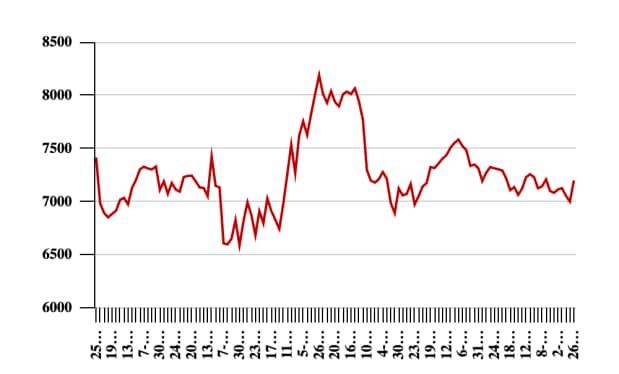
Eicher Motors Share Price – 6 Months
Source: NSE
The company’s FY26 sales grew 24%, while EBITDA margins remained stable at 24.7%, as higher commodity costs weighed on profitability. Management, however, indicated that commodity inflation could create a 3-3.5% impact on revenue in Q1FY27, which it plans to offset through price hikes, value engineering and operating leverage.
Looking ahead, Eicher Motors plans to expand annual production capacity to 2 million units from 1.6 million units through a brownfield expansion over FY28, with planned investments of around Rs 9.6 bn. The company is also entering electric mobility through Flying Flea and continues to expand its international presence across Latin America and Asia.
The stock currently trades at 36.6x earnings, slightly above its five-year median PE of 34.7x.
#3 Mahindra & Mahindra
Third on our list is Mahindra & Mahindra.
Mahindra & Mahindra is no longer just an SUV company that also sells tractors. It is slowly turning into a full-spectrum mobility play.
What makes the story more interesting is the timing. At a point when parts of the auto industry are still debating whether demand can sustain after a strong run, Mahindra is expanding capacity, accelerating launches and preparing for the next cycle of growth.
The company’s FY26 standalone sales grew 25%, helped by strong SUV demand and a sharp rise in tractor volumes. EBITDA margins remained stable at 19%. Meanwhile, Q4FY26 sales rose 29%, while EBITDA margins stood at 18%. The auto business continued to report healthy PBIT margins. Management also indicated that commodity pressures, especially steel prices, are likely to remain elevated in the near term.
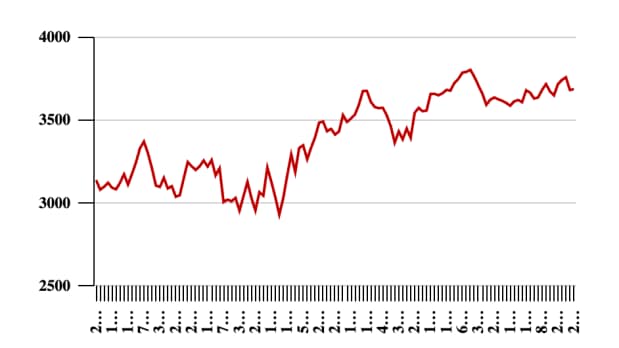
Mahindra & Mahindra Share Price – 6 Months
Source: NSE
In the future, Mahindra plans to launch ICE SUVs, EVs and LCVs by 2031. Capacity expansion is also underway. The Chakan facility alone is expected to add 10,000 units per month of ICE capacity and another 4,000 EV units by FY28. Strong cash generation from the core businesses is giving the company room to keep investing aggressively.
The stock currently trades at 22x earnings, below its five-year median PE of 26.5x.
#4 TVS Motor Company
Fourth on our list is TVS Motor Company.
TVS Motor Company is slowly turning itself into a premium mobility play with a growing presence across higher-end bikes, electric vehicles, exports and global brands.
What TVS seems to have figured out earlier than many rivals is that the Indian two-wheeler buyer is changing. Customers are increasingly willing to pay for styling, performance, features and electric mobility.
That shift is visible in the numbers. Scooters, including EVs, now contribute nearly 38% of sales and management expects this to cross 40%, driven by Jupiter, Ntorq and iQube. Premium motorcycles like Apache and Ronin continue to see healthy demand, even as the economy bike segment remains weak.
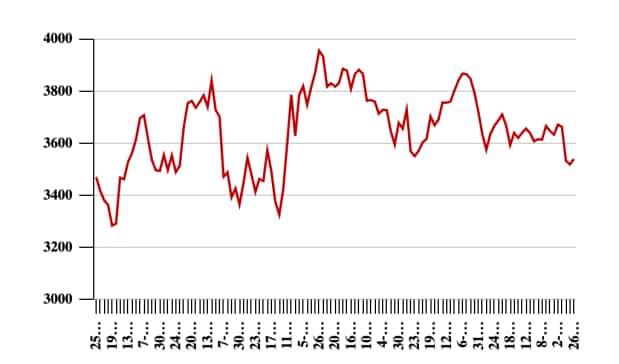
TVS Motor Company Share Price – 6 Months
Source: NSE
FY26 revenue grew 30.4%, aided by 24% volume growth and strong momentum in exports, scooters and EVs. EBITDA margins improved to 14% due to better product mix, operating leverage and premiumisation. In Q4FY26, revenue rose 27% with margins at 15%. Management, however, flagged inflation in steel, aluminium, gas and crude-linked inputs as a near-term risk to margins.
TVS plans to add around 1.5 m units of annual capacity over the next year, taking total capacity to nearly 8.3 m units. EV capacity has already increased to about 40,000 units per month and is expected to rise to 50,000 units. The company also invested around Rs 24 bn during FY26 towards Norton Motorcycles, TVS Credit, overseas operations and future growth initiatives.
The stock trades at 54x earnings, in line with its five-year median valuation.
#5 Ashok Leyland
Last on our list is Ashok Leyland.
Ashok Leyland is entering the next CV cycle from a much stronger position than in the past. The company has reduced its dependence on trucks by building businesses across buses, LCVs, exports, aftermarket, defence and power solutions. A more diversified mix makes earnings less volatile during downturns.
The replacement cycle is also finally kicking in. Management said the average fleet age in India has risen to nearly 10-10.5 years from 7-7.5 years earlier, creating a large replacement opportunity. GST rate rationalisation improved freight demand and brought both retail and bulk fleet operators back into the market.
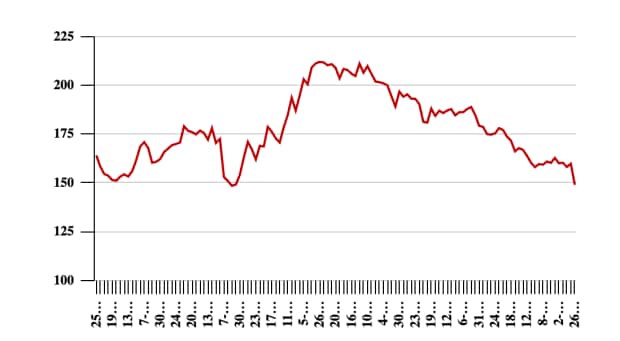
Ashok Leyland Share Price – 6 Months
Source: NSE
The momentum is already visible in the numbers. In 9MFY26, Ashok Leyland’s domestic MHCV volumes grew 9.8% YoY, ahead of industry growth, helping the company gain market share.
Domestic LCV market share improved to 12.7%, while exports rose 30% during the period. In Q3FY26, revenue grew 24% YoY and EBITDA margin stood at 19%, despite temporary pressure from commodity costs and an unfavourable product mix. Defence revenues rose 84% YoY, while power solutions revenues grew 45%.
In the future, the company is preparing aggressively for the next phase of growth. Ashok Leyland recently inaugurated its new EV manufacturing facility in Lucknow and is ramping up electric trucks and buses through Switch Mobility and OHM. It is also expanding distribution and service reach, adding 152 new touchpoints during 9MFY26, while strengthening presence in North and West India, where it historically lagged peers.
The stock currently trades at 26.6x earnings, slightly below its five-year median PE of 27.5x.
Conclusion
Even the best bull markets create bad habits.
Cheap stocks start looking automatically attractive, while investors often ignore the difference between a genuine value opportunity and a value trap. In reality, low valuations alone rarely create long-term wealth. Strong management execution, healthy balance sheets and clear growth visibility matter far more.
The companies in this list operate across different sectors, but each is entering a fresh phase of expansion while still trading at relatively reasonable valuations compared to broader market favourites.
Of course, no stock is completely risk-free. Investors should focus on business quality, management discipline and long-term growth potential rather than get carried away by narratives or short-term price moves alone.
Happy investing.
Disclaimer: This article is for information purposes only. It is not a stock recommendation and should not be treated as such. Learn more about our recommendation services here…
The website managers, its employee(s), and contributors/writers/authors of articles have or may have an outstanding buy or sell position or holding in the securities, options on securities or other related investments of issuers and/or companies discussed therein. The content of the articles and the interpretation of data are solely the personal views of the contributors/ writers/authors. Investors must make their own investment decisions based on their specific objectives, resources and only after consulting such independent advisors as may be necessary.