



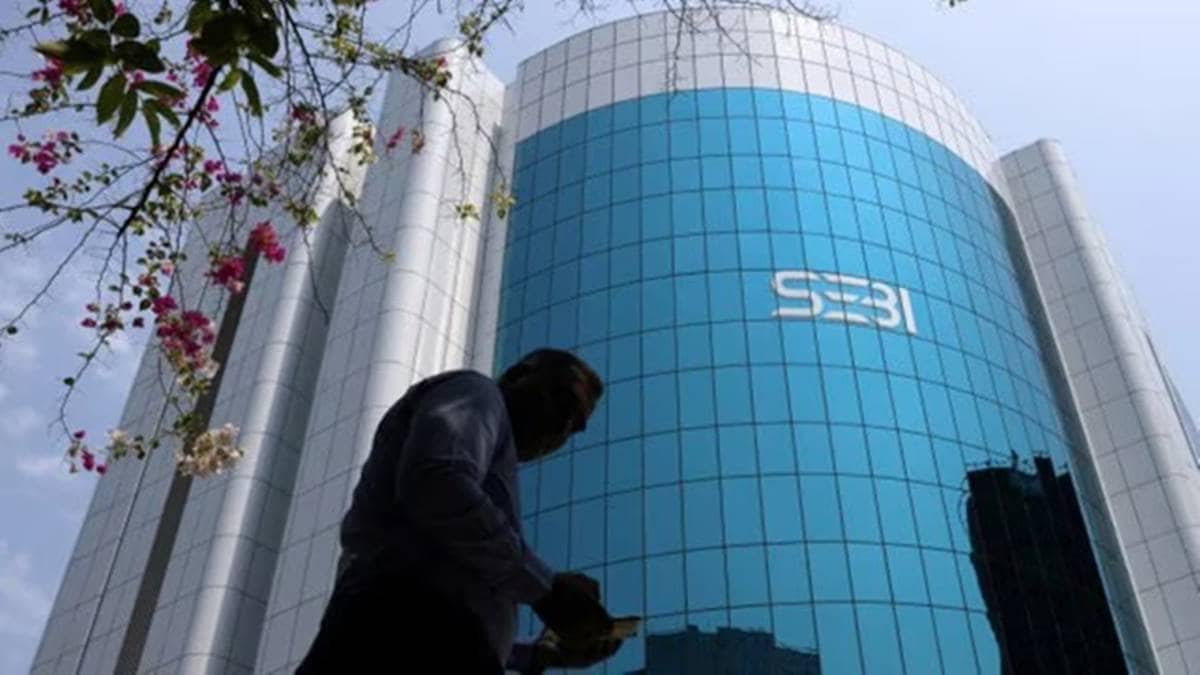
The Securities and Exchange Board of India (SEBI) is scheduled to meet in a few hours from now. The board is set to discuss a host of reforms, most linked to equity brokerages and stockbroker norms.
The market regulator may also review rules pertaining to mutual funds and look at ease of foreign portfolio investors. (FPIs), improve the stock lending and borrowing (SLB) mechanism, and review the recently submitted report of the high-level committee on conflict of interest. Relaxation of KYC norms for NRIs and introduction of a closing-auction session may also be discussed.
SEBI to mull disclosures by senior officers
The fourth board meeting, chaired by SEBI chief Tuhin Kanta Pandey since he assumed office on March 1 this year, is also likely to consider recommendations with regard to disclosure of assets by senior officers. A high-level panel has recommended public disclosure of the assets of senior officers to avoid conflict of interest.
The SEBI board is expected to mull the high-level panel report, which proposes comprehensive reforms to bring in transparency by way of greater disclosure and a “zero-tolerance” culture to address conflict of interest.
A recent PTI report highlighted some of the likely recommendations. The high-level panel had submitted its report on November 10. The report’s recommendations include setting up a secure whistleblower system for reporting conflicts of interest, a ban on expensive gifts,a 2-year restriction on post-retirement assignments, and creating a post of Chief Ethics and Compliance Officer (CECO).
SEBI to consider norms on stock brokers, review MF rules
Consultation papers on both MF and stockbrokers’ norms have been released. In October, SEBI had issued a consultation paper proposing an overhaul of mutual fund rules. These included clarity on the definition of the Total Expense Ratio (TER) and revised limits on brokerage charges. According to SEBI, these are aimed at boosting transparency, cutting down redundancies and rationalising information. Easing compliance is on the radar, too.
The proposed framework and the key takeaways include
-Removal of 5 bps exit load that asset management companies (AMCs) were previously allowed to levy across mutual fund schemes.
-Lowering of TER slabs. This is done to separate statutory costs in TER and the street has been looking for clarity to ascertain the impact. The concern for many is if there is risk that some of the decline may not be passed through.
-To further improve clarity, SEBI also suggested excluding all statutory levies such as STT (Securities Transaction Tax), GST (Goods and Services Tax), CTT (Commodity Transaction Tax), and stamp duty from TER limits, along with currently permissible expenses for brokerage, exchange, and regulatory fees.
The current GST on management fees is allowed over and above the TER limit, while other statutory charges fall within the prescribed cap for mutual fund schemes.
Modernising stockbroker norms
The SEBI board may also review the 1992 Stock Broker Regulations. As part of this, the market regulator had proposed introducing a definition for ‘algorithmic trading’ to streamline compliance requirements. The current framework does not have such clarity. As these were framed more than 3 decades ago, the SEBI board may look to revise them in the current context.
Closing-auction mechanism
Another key topic that may be discussed by the SEBI board includes the long-discussed closing-auction session for equities. According to a report by Hindu Business Line, widely used in major global markets, the mechanism enables end-of-day price discovery through an auction, replacing the current Volume Weighted Average Price-based system.
IPO norms and governance
The board may also take up amendments to the Issue of Capital and Disclosure Requirements Regulations to simplify IPO procedures and rationalise lock-in requirements, as per many news reports. At present, depositories are unable to impose lock-ins on pledged shares, a gap the regulator aims to address, as per the report.
For now, it is for us to wait and watch while the SEBI board mulls on the key issues. All eyes are on the final announcement.