



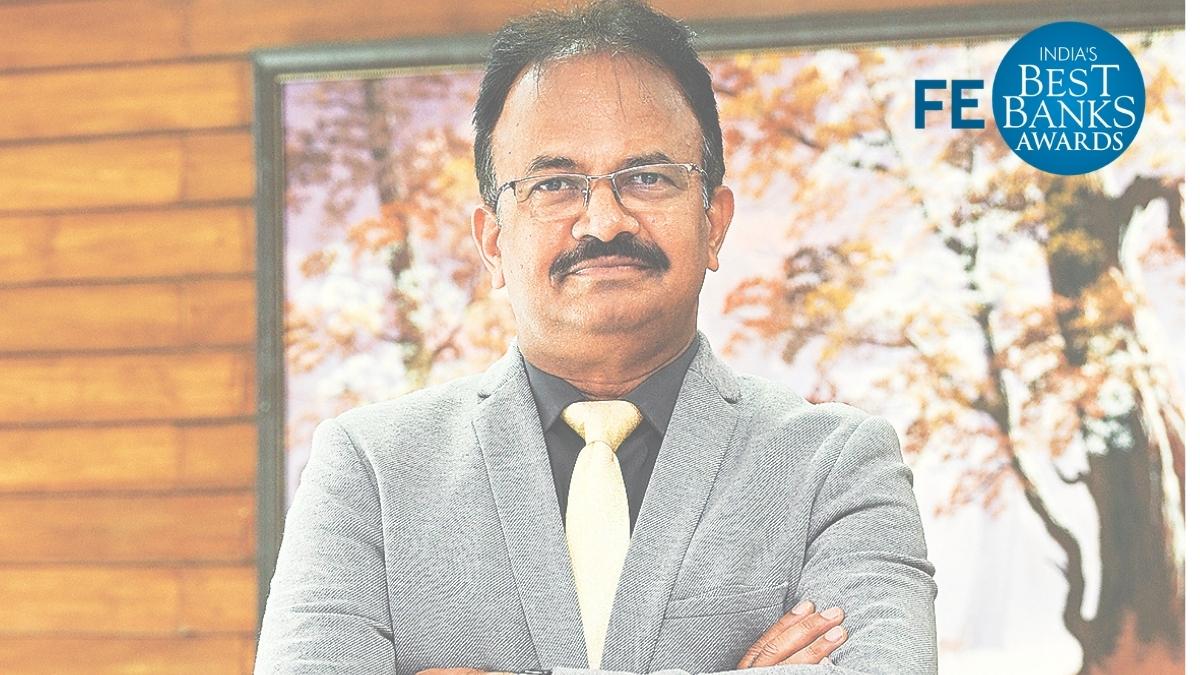
A thread connects the different chapters of K Satyanarayana Raju’s life, spun by a woman who earned Rs 60 a month stitching clothes in a small village in Andhra Pradesh’s West Godavari district. Ramaseetha had little formal education and great determination—a combination more powerful than most balance sheets. She was resolved that her three children would receive the education she never had, and she stitched that conviction into everything she did.
Her youngest son was paying attention.
Raju grew up in circumstances that left little room for comfort. The family survived on coarse grain, the children collected leftover paddy from harvested fields to keep the kitchen going, and young Raju travelled nearly 20 kms every day to attend school — long before the age of Ola or even a reliable bus.
At 21, faced with a choice between academics and employment, he picked the latter to support his family. His first posting, in an Accountant General’s office, lasted less than a year. He had once dreamed of becoming a police inspector, but banking kept pulling at him.
“In those days, if someone got a banking job, people considered it a great achievement,” he recalls. “That atmosphere attracted me.”
He started as a clerk. He would retire as Managing Director and CEO of Canara Bank — one of the country’s largest lenders — nearly four decades later.
In between, he earned every single promotion on the first attempt, completed a career of over 36 years without a single disciplinary proceeding, and somehow managed not to let any of it go to his head.
The numbers he leaves behind are not modest. When Raju took charge as executive director, Canara Bank’s market capitalisation stood at around Rs 24,000 crore. It doubled over the next two years, and by the time he superannuated in December 2025, it had climbed to nearly Rs 1.45 lakh crore. Operating profit rose from roughly Rs 12,000 crore to Rs 31,391 crore in FY25. Net profit increased twenty-fold to nearly Rs 20,000 crore. And yet, ask Raju about any of this and he will, with some reliability, find his way back to his mother.
“Only financial independence for women can bring development to a family,” he says. “The proof is my own life.”
That belief shaped him as a banker too. Under his leadership, Canara Bank ran a programme offering scholarships to 50 girl students from government schools across the country every year — a quiet initiative from a man who had seen at close quarters what an educated woman could do for a household.
His leadership style confounded those who expect executives at his level to be perpetually combative. Instead: identify the problem, involve people in finding solutions, stay open to better ideas. In three years of digital transformation and employee appraisal overhauls — the kind of changes that reliably produce industrial unrest — not a single day’s strike notice arrived from the trade unions. Whether this counts as a management miracle or simply good manners is left as an exercise for the reader.
Off duty, Raju is a man of reassuringly uncomplicated tastes. His day begins with a 45-minute walk and pranayama. He unwinds with Telugu film classics — SP Balasubrahmanyam and KS Chithra, with occasional nods to Sid Sriram — and his idea of a great meal is brinjal curry and curd rice. Both daughters have built careers in Bengaluru’s technology sector. His wife is a homemaker. Life, in other words, is orderly.
He is now building India’s digital fraud prevention infrastructure through the Indian Digital Payments Intelligence Corporation — a new chapter that suggests retirement, for Raju, is largely a technicality. The son of a woman who earned Rs 60 a month still believes there is no shortcut to anything worth having. Just education, hard work, honesty and patience.
His mother, one suspects, would not be surprised.