



When Go Digit General Insurance launched in 2017, its founding premise was almost contrarian: that insurance could be straightforward. No jargon, no paperwork, no friction — just technology doing the heavy lifting to make policies legible and the customer journey seamless.
Eight years on, that bet has paid off in scale. In FY25, Digit crossed Rs 10,000 crore in gross written premium (GWP), overtaking legacy players like Chola MS and IFFCO Tokio that had spent decades building their books. It was a milestone that arrived in an unforgiving year — India’s non-life insurance sector slowed to 6.2% growth, nearly half the prior year’s pace, weighed down by a shift to new accounting norms, sluggish vehicle sales and weakness in commercial lines.
Digit navigated the turbulence better than most. GWP came in at Rs 10,282 crore, profit after tax surged 133.5% to Rs 425 crore, and its overall market share in general insurance rose to 3.3%. In motor insurance — still its largest segment — share climbed to 5.9%, even as the broader motor market grew just 7.9% against 12.9% the year before.
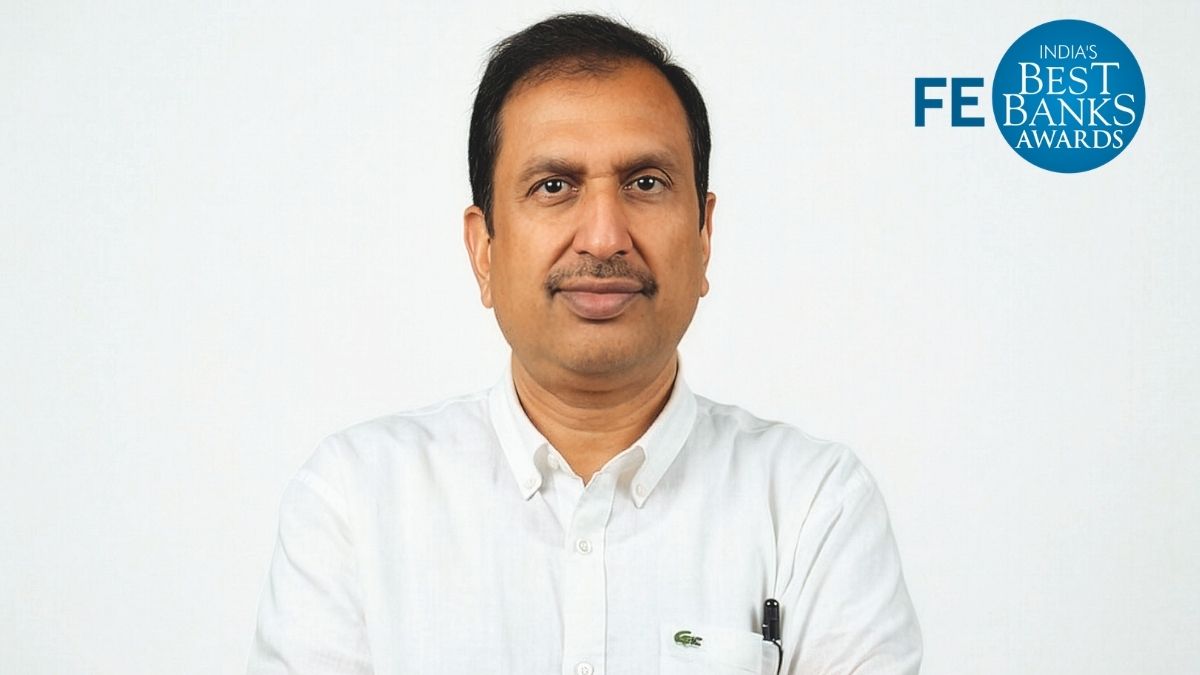
For this combination of growth, profitability and technology-led execution, Digit was named the unanimous winner in the Fintech–Insurance category at the FE Best Banks Awards 2024–25.
The company has also been quietly reshaping its portfolio. Motor insurance’s share of the GWP mix has fallen from 63% in FY23 to 57% in FY25 as Digit has leaned into health and personal accident cover, which now accounts for 22% of premiums — up from 13% two years ago. The pivot reduces exposure to a segment where growth is structurally tethered to new vehicle sales and where third-party premium rates have gone unrevised for years.
One number, however, demands attention. Digit’s combined ratio — the standard measure of underwriting profitability — has crept upward every year, from 107.4% in FY23 to 109.3% in FY25, and further still to 110.7% in FY26. Any reading above 100% means the insurer is spending more on claims and expenses than it collects in premiums. For a company built on the promise of doing insurance smarter, bringing that ratio under control is the next test of whether the model is as disciplined as it is ambitious.