



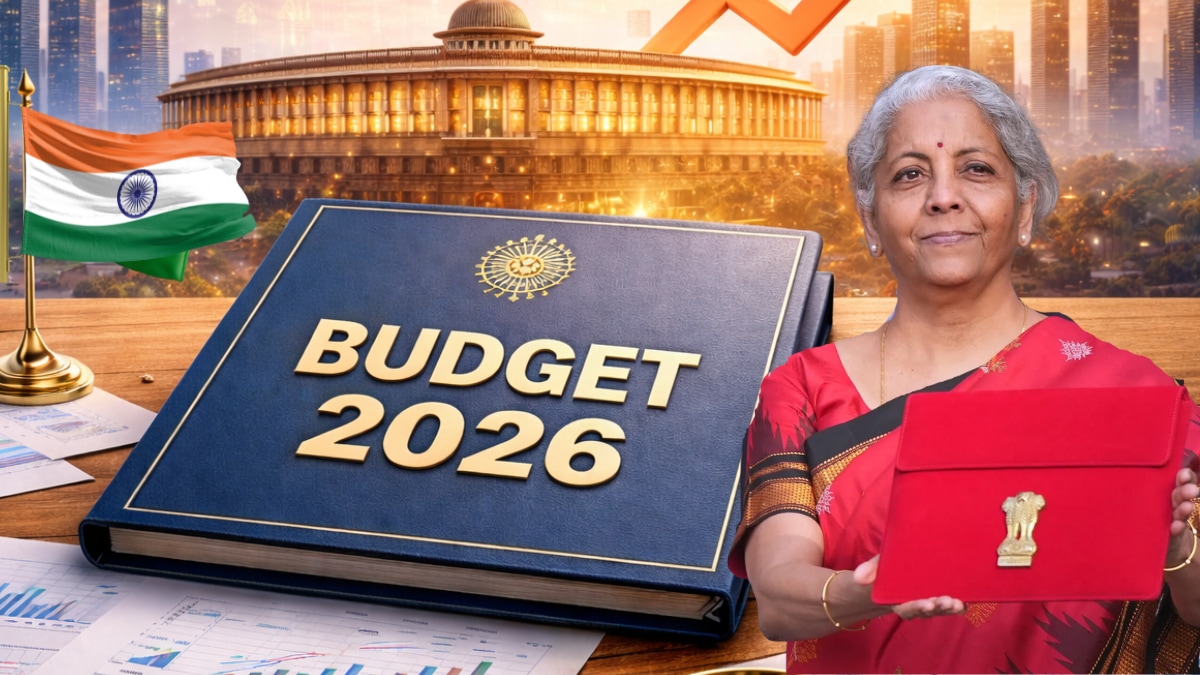
With less than a week to go for the Union budget there are common threads emerging from the many mature voices from the industry and policy pundits. The focus seems more on what is most reasonable to expect rather than a wish list of what is ideally needed.
Some of the strands that stand out include: What can help position India as a globally attractive investment destination that offers more than its low inflation, high growth and a large market access. That it fosters an ease of doing business, is able to withstand the headwinds it faces in global trade and the slide in the rupee against the dollar. That it can reverse the trends in net foreign direct investments and foreign portfolio investment (albeit FPIs are more seasonal and short term in nature). Backed by a pro-growth and pro-market policy stance, position India as a country that can offer an ecosystem that can raise the domestic investment rate by at least 2 per cent this year
The four key buckets
Taken together, these broadly fall into four buckets – decriminalisation, deregulation, maintaining fiscal probity and the inevitability of a clear plan on privatisation. The last driven more by concerns over the budgetary space that is constantly under pressure with bulk of the funds committed to interest payments, administrative and related expenses.
On decriminalisation, the expectation is for a comprehensive and an upgraded of Jan Vishwas bill with an outcome-driven approach deeper than the discussion on the choice modal verbs ‘shall’ or ‘may’ to sound business-friendly. That the focus is on the breadth and depth of the provisions and central Acts that are overdue for decriminalisation and to enhance the ease of living, including perhaps decriminalising of ticket-less train travel.
It is a topic on which much has been written and spoken about by Manish Sabharwal, including the much quoted 20,000-odd jail provisions in matters relating to employer compliances. That the leading HR guru is part of the regulatory reform committee chaired by former cabinet secretary Rajiv Gauba, lends more weight to the possibility that serious focus on this issue could be expected in the budget.
Ease of Being Honest
In fact, the phrase ‘ease of being honest,’ as chosen by Dr Anantha Nageswaran, the chief economic advisor, seems to have struck a chord with many at the Express Adda late last year. The author of the economic survey was only alluding to an approach within the government that it does not wish to even let a crisis – in terms of global trade challenges and uncertainties – get wasted and instead devotes time and resources to renew the focus on a path to deregulation with a sense of heightened urgency.
On deregulation, the ask from the industry is to build on the beginning made by the government having overhauled the labour laws. It could go a long way in the efforts to present India as the potential factory to the world. That it can through enabling policies and regulatory reform backed by pick up in urban and rural consumption, attract capital formation and raise the share of manufacturing in GDP from the rather sticky 16 per cent to 25 per cent.
Expand the frontiers of AI
The hope across many industry leaders is that the budget will signal the direction of regulatory reforms as one focussed on capacity-building in niche areas, policy enablers that enthuse the private sector investors to deploy research funds to expand the frontiers of technology – like Artificial Intelligence (AI) or biotech if not prepare at least a bold plan to absorb the new technology that has already been developed.
The Indian industry has been ready with global examples. Ireland for instance attracted euros 1.2 billion from Pfizer and nearly as much from Eli Lilly. US Operation Warp Speed deployed funds to attract vaccine manufacturing.
The only caveat, many policy watchers, especially those who have handled policy-making over several decades caution against, is “a new system of announcing worthy schemes where fund allocations run into thousands of crores but over long periods of time – next five years or so making the immediate allocation not very crucial.” But then, it seems unlikely and many (not willing to be named) expect the government to announce yet again some mega multi-year schemes.
This, even as, the take-off is awaited of the Rs 1 lakh crore Research, Development and Innovation (RDI) fund (announced in the budget a year ago) and the Anusandhan National Research Foundation that is meant to seed, grow and promote research and development while fostering a culture of innovation in the country.
Finally, given that the government has often spelt out its mission and mantra to minimise government and maximise governance and to stay out of business, it may be a good time to roll out a concrete and clear plan on privatisation.
Naushad Forbes, the co-chairman of Forbes Marshall and a leading voice in the industry as the former president of the Confederation of Indian Industry (CII) and the author of a popular book on Indian economy, while responding to a question on what he thought of privatisation that seemed to have gone off the burner, told this writer: It needs to comeback and become a major part of the reform programme with the Indian stock market valuations still high.
Air India & Hindustan Zinc
Forbes often speaks of Air India and Hindustan Zinc as stellar examples of entities that could now harbour hopes for new investment and growth albeit Hindustan Zinc is an old story but its revenues have shot up making it India’s most valued metal company (to be fair also aided by the sharp rise in silver prices). For the moment, there can only be a hope for the appetite and a plan on privatisation and one that recognises the implications for fiscal probity. Economist and former RBI governor Dr C Rangarajan has often spoken of many countries that have a government debt to GDP ratio agt levels that are much higher than India but unlike India have a lower interest-payments to revenue receipts ratio. For a finance minister committed to maintaining fiscal probity, perhaps this may want her to consider a plan on privatisation.