



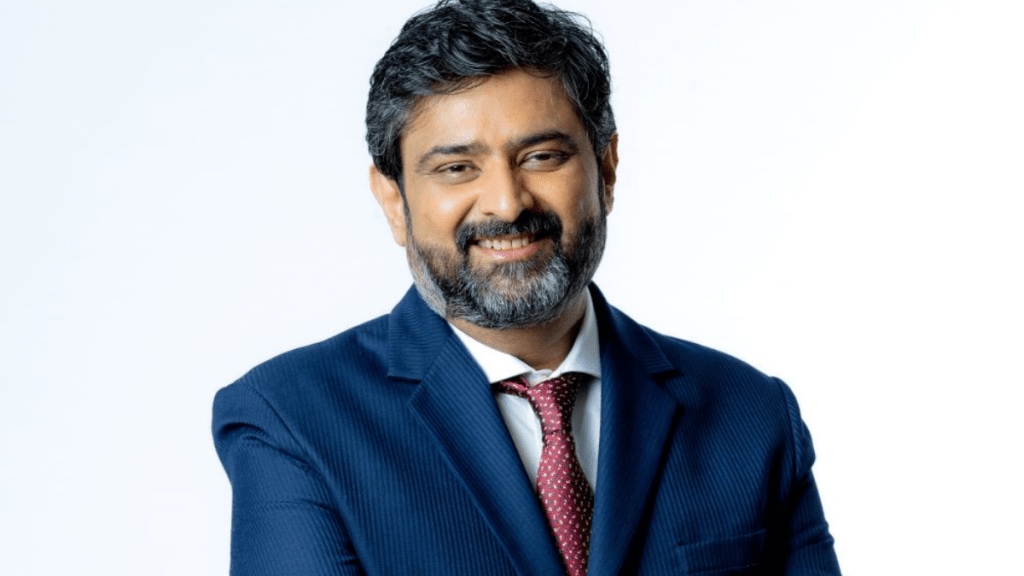
Generali Central Insurance is targeting a doubling of its gross written premium to ₹10,000 crore by 2030, driven by its existing product strategy and an expected boost in distribution following Central Bank of India’s stake acquisition earlier this year. MD & CEO Anup Rau tells Narayanan V about the impact of the recent Insurance Amendment Bill and how the bank partnership could help the general insurer deepen its reach, particularly in the SME segment. Edited Excerpts:
Will the 100% FDI limit increase have any bearing on your business?
That’s really a question for the shareholders rather than the CEO. We already have a very stable joint venture partnership between Generali Insurance and the Central Bank of India. From a broader industry perspective, India does not have as many insurers as several other large markets. Dubai, Singapore and South Africa have three to four times the number of insurers that we do. One challenge is that many companies already have joint venture partnerships in place. In India, it is difficult to find suitable partners who understand the sector, are willing to deploy patient capital and are not keen on listing immediately. Most of the large industrial conglomerates have already been taken. The remaining set of potential partners often include players primarily interested in listing gains, which is not what many legacy insurers are looking for. Under these circumstances, it is very difficult for an overseas insurer to enter the Indian market. In that sense, the move to allow 100% FDI is godsend for those who want to come into India, as it allows them to enter without having to worry about these constraints.
Anup on insurance industry
Do you see the absence of a composite licence as a drawback for the insurance industry?
The composite licence has both positives and negatives. On the positive side, a composite licence can offer economies of scale. A single organisation could sell multiple product lines, costs could come down, and those savings could potentially be passed on to customers because of the scale benefits. On the other hand, life and general insurance are very different businesses and are approached very differently. Life insurance is a core underwriting business in the true sense of insurance. No life insurance company has gone under because of poor underwriting; some may have failed due to other reasons such as financial mismanagement or lack of scale. The resource requirements are also very different. One argument often made is that life insurance customers anyway need general insurance products, so why not offer both together. But that synergy does not have to exist at all times, and it should not necessarily be forced.
Have you seen an uptick in health insurance demand following the GST rate cut?
Renewals have become more attractive because customers are suddenly paying less than last year. As far as new demand is concerned, there is some increase, but there is no clear visibility yet. It is difficult to quantify or say whether this (GST rate cut) has had a meaningful, tangible impact on new business. There is definitely an impact on renewals, and logically that should be the case—if something becomes cheaper, demand improves. On the other hand, group insurance is a much more complicated issue. Many players are being very cautious on pricing because over the last 18 months, group health loss ratios across the industry have gone up significantly. Several companies have been writing a lot of wholesale business—be it crop or group health—at very competitive pricing and low commissions to manage their expense and scale requirements. Some of this has now become unsustainable, and as a result, insurers are stepping back from group health business.
Anup on target for FY26
What is your gross written premium target for FY26 and beyond?
We expect to close the current fiscal with a gross written premium of around ₹5,500 crore, having grown at a 14% annual rate over the past five years. Going forward as well, I see the growth rate remaining broadly at the same level. This should allow us to double our premium income to the ₹10,000-crore milestone by 2030.
Are you looking to expand into new product segments?
We are very keen to grow the SME segment, and that is an area we want to pursue in a big way. The SME segment in India remains underserved, and beyond being an insurance opportunity, we see it as a social responsibility. This is also a segment where we can build meaningful scale, given that there are an estimated 6.5 crore SMEs in the country. SME asset protection insurance is therefore a key focus area for us. Central Bank of India is a very strong lender in the SME space with access to a large base of SME customers. That gives us a significant opportunity to cross-sell insurance products to the SME segment.