



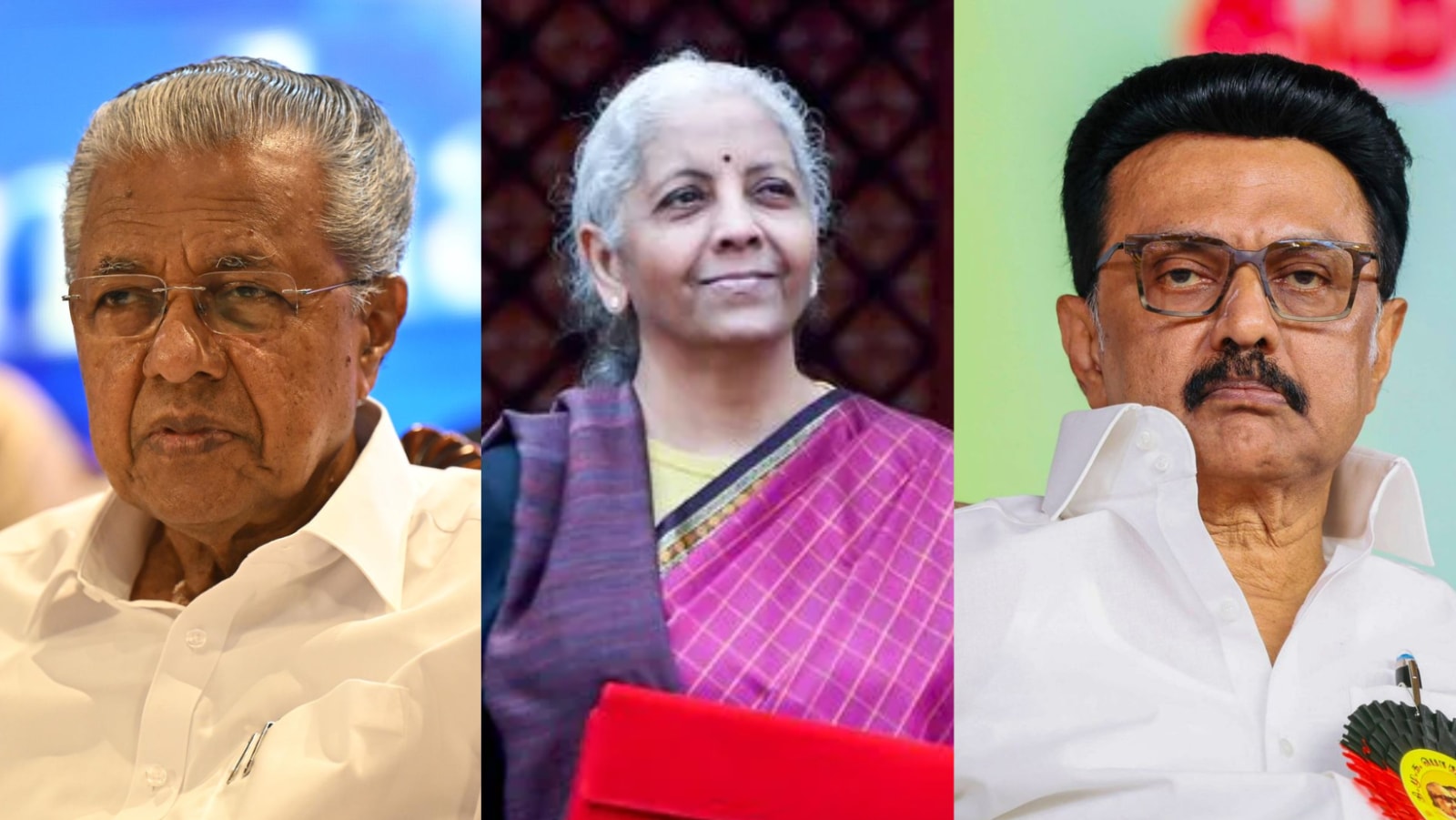
As the Finance Minister concluded her second-shortest Budget speech on Sunday, the message for southern states lay in the details. Even as the Union Budget was described as “people-centric and not populist,” the contrast between Tamil Nadu’s gains and Kerala’s omissions was hard to miss.
For Kerala, Budget Day once again carried a familiar issue. The poll-bound state had gone to the Centre with a long list of urgent demands including fiscal relief, additional borrowing space, major infrastructure projects, and targeted support for stressed sectors.
The response offered little that was direct or decisive. Most benefits were generic in nature, shared across states, and there was no announcement tailored specifically to Kerala’s immediate needs.
What exactly did Kerala receive?
The most important reference was the proposal to establish dedicated Rare Earth Corridors in mineral-rich states. Kerala was named alongside Odisha, Andhra Pradesh, and Tamil Nadu under the Centre’s plan to boost mining, processing, and manufacturing of rare earth minerals.
Beyond this, the state’s key demands remained unresolved. There was no special financial package to ease Kerala’s strained finances, no relaxation in borrowing limits, and no assurance of a higher share in central tax devolution. Long-standing requests including setting up an AIIMS in the state or including Kerala in high-speed rail network, unfortunately found no mention in the Budget.
Some sectoral announcements may offer indirect relief. Special schemes aimed at improving coconut production are expected to benefit Kerala. The government’s ambition to position India as a global hub for premium cashew and cocoa products by 2030 has also created some sort of positivity in the state’s agricultural circles.
The announcement of three new Ayurveda institutes brings further hope, given the strong possibility that one could be located in Kerala. Added to this was the Budget’s push for sandalwood cultivation, aligning well with Kerala’s potential for high-value plantation crops.
Kerala also appeared in the Centre’s eco-tourism plans, with proposals for turtle trails along major nesting sites on the coast. These initiatives carry environmental importance, yet they offered little comfort to a state facing fiscal stress and struggling traditional industries such as coir, cashew processing, and handloom.
The gaps were most visible in infrastructure. The Budget spoke at length about new transport corridors in other parts of the country, but projects critical to Kerala, such as the Sabari Rail line and high-speed rail proposals, were left untouched. For a state frequently battered by floods and landslides, the absence of measures like catastrophe bonds or dedicated disaster-recovery funding added to the sense of neglect.
Kerala leaders react
Reacting to the Union Budget, Congress MP Shashi Tharoor said, “There is nothing in this Budget that makes me satisfied as a Malayalee.” He further added, “Kerala was only mentioned in the context of rare earths and the turtle trail. Even when coconuts and cashews were talked about, the state wasn’t mentioned. So I’m assuming that some of these subheadings she spoke about will translate into concrete projects and programmes for us.”
Speaking shortly after the Budget presentation, Tharoor pointed out that while Patna and Varanasi were mentioned during discussions on ship preparation and connectivity, coastal Kerala which he described as “a very large and significant part of India” found no mention. He added that he was yet to read the full Budget document and would offer a more detailed assessment after going through it.
Meanwhile, reacting to the Union Budget 2026–27, Congress leader KC Venugopal said, “This budget is a total disappointment for Kerala. For the last 10 years, promises have been made about the AIIMS for Kerala, but there is no mention of it in this budget. Kerala contributes significantly to sectors like tourism, aviation, and health, yet nothing concrete has been allocated for the state.
The announcements made, including one corridor for mineral resources, seem targeted at others. This budget is not for the common people; it is for big corporates.”
State Industries Minister P Rajeev said the state had been sidelined regardless of taking early initiatives.
“In spite of Kerala being the first to submit a proposal to the Centre, it was not considered,” he said, adding that when the state had earlier decided to implement a similar project, permission was denied by the Centre.
“Now the Centre has announced the project, and not including Kerala amounts to discrimination,” he said.
On AIIMS, Rajeev said the Centre had directed the state to suggest three locations, following which it was asked to shortlist one. “Even though land under the Industries Department, which was in high demand, was handed over to the Health Department at Kinalur for AIIMS, it was not sanctioned. The NDA government has announced several AIIMS before, but Kerala has not been allotted one,” he said.
Rajeev also referred to the Rare Earth corridor announced by the state and expressed concern over proposed amendments that would allow the Centre to acquire Rare Earth resources bypassing the state.
“It is not clear whether the announcement is aimed at taking Rare Earth resources to other places. This needs to be examined, as Rare Earth resources currently lie with the states,” he said, adding that from the first impression, the state appeared to have been “neglected” in the Budget.
CPI(M) MP John Brittas told reporters in New Delhi that, given the upcoming Assembly elections, there was an expectation that Kerala would receive at least some allocation. He said Kerala Finance Minister K Balagopal had raised 29 key demands after meeting Union Finance Minister Nirmala Sitharaman ahead of the Budget.
“However, it is unfortunate that nothing was granted to Kerala, either at the micro or macro level,” Brittas said.
What exactly did Tamil Nadu receive?
The standout announcement was the proposal for high-speed rail corridors linking Chennai with Hyderabad and Bengaluru. This single decision firmly placed the state on India’s emerging high-mobility map and showed long-term infrastructure commitment.
Chennai also featured prominently in the Centre’s plan to establish a nationwide network of over 1,000 accredited clinical trial sites. Given the city’s existing strengths in healthcare, pharmaceuticals, and research, this will improve Tamil Nadu’s position in India’s medical innovation ecosystem.
Tamil Nadu, like Kerala, was included in the Rare Earth Corridor initiative. In this case, the proposal comes in alignment neatly with the state’s broader industrial strategy, particularly in electronics, advanced manufacturing, and export-led growth.
The state’s major fiscal demands including higher share of central taxes and the release of pending funds for education and water projects, did not receive direct answers. Even so, Tamil Nadu’s repeated visibility in flagship national initiatives gave it a perceptible advantage in this year’s Budget narrative.