




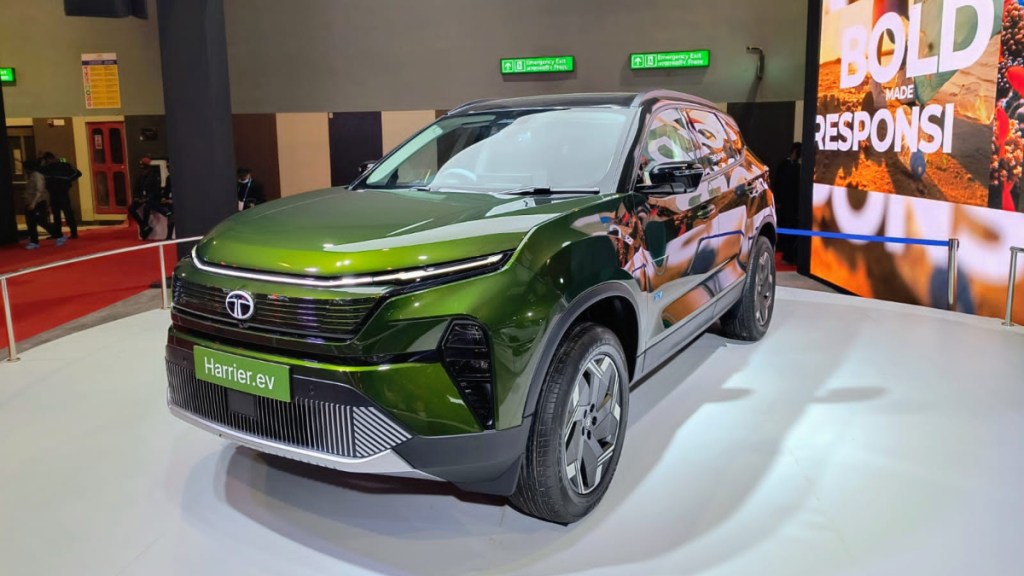
Tata Motors unveiled a pre-production concept of Harrier EV at the last year’s Auto Expo followed by a more evolved, closer-to-production prototype at the inaugural Bharat Mobility Expo earlier this year. The all-electric SUV has also been spied testing on multiple occasions over the past one year.
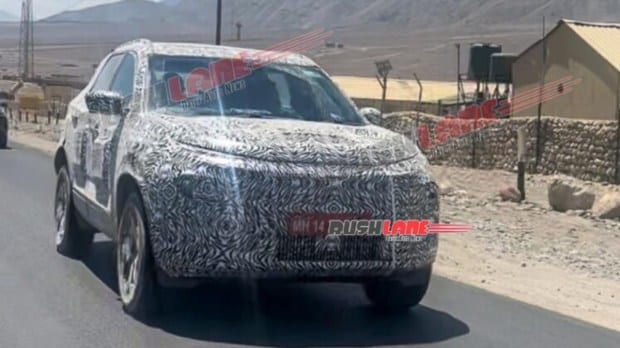
The upcoming Harrier EV has been spotted testing once again, this time in the mighty and rugged terrains of the Ladakh valley. The fully-electric Harrier is supposed to make its debut towards the end of this year after Tata Curvv and Curvv EV are launched in the next couple of months.

Tata Harrier EV: What to expect?
Although wrapped in a full camouflage, the exterior design of the Harrier EV is evidently borrowed from its ICE sibling which got a major makeover in September last year. Built on Tata’s Gen 2 EV architecture called Acti.ev, the EV version of Harrier is likely to retain its commanding road presence and muscular stance. Differentiating the EV from its fossil-fueled sibling will be a closed-off grille and a Harrier.ev badging.
The cabin interiors of Harrier EV are also expected to mirror the diesel-powered Harrier, This should include a free-standing touchscreen infotainment unit, a fully-digital instrument console, and Tata’s new two-spoke steering wheel. Other novelties expected to be offered are wireless phone charging, wireless Android and Apple CarPlay connectivity, connected car tech via Arcade.ev suite, and Level 2 Advanced Driver Assistance System (ADAS).
Tata is expected to offer at least two battery packs options with the Harrier EV ranging between 400-500 km on a single charge. Charging options will include on-board 7.2kW and 11kW AC chargers. With a 150 kW DC fast charger, around 100 km can be juiced up in just around 10 minutes.
LWe can also expect the Harrier to offer Vehicle to Load (V2L) functionality where the vehicle battery can be used to charge an external device. While exact figures are yet to be confirmed, a power output in the 150-200 bhp seems realistic. Further, Tata is also likely to add the dual-motor, all-wheel drive option to Harrier EV since the Acti.ev architecture supports it.


