



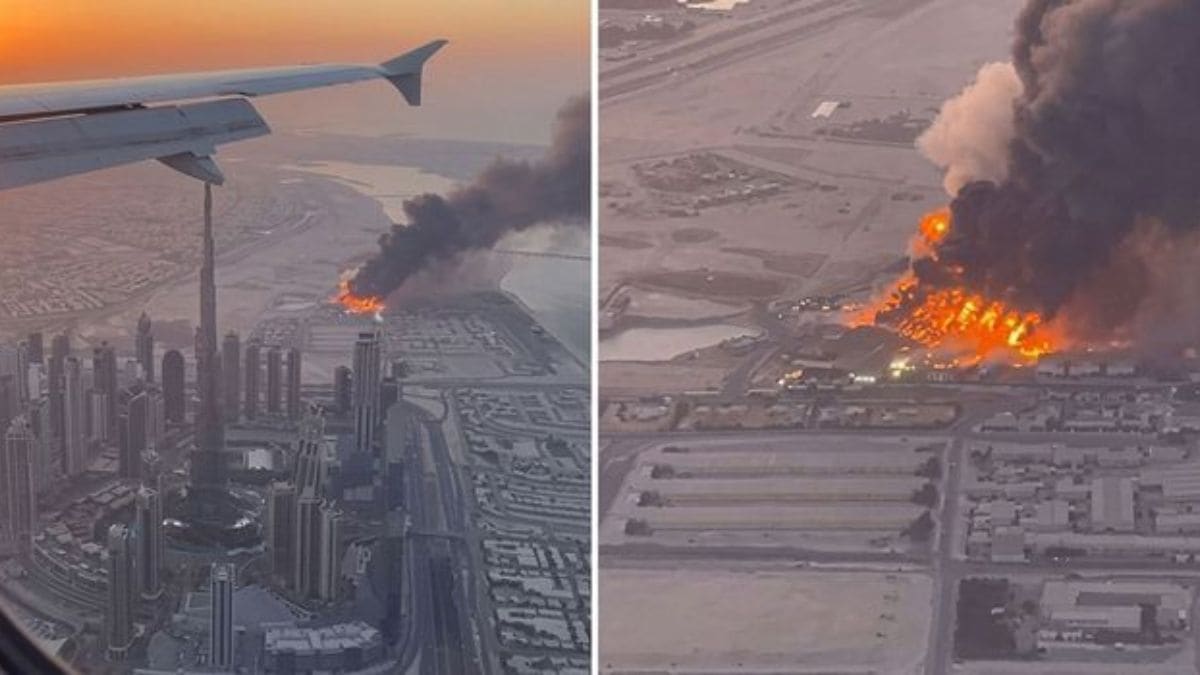
A massive fire has gutted a major aluminum facility in the United Arab Emirates following a targeted Iranian aerial assault, marking a dangerous escalation in the month-long regional conflict. On Sunday, video footage captured by a traveler showed thick plumes of black smoke billowing from the Emirates Global Aluminium (EGA) plant in Abu Dhabi.
According to reports from AFP, the attack which involved a volley of missiles and drones wounded at least six employees and caused significant damage to the industrial site.
The Islamic Revolutionary Guard Corps (IRGC) claimed responsibility for the strike, asserting that the facility is an “industry linked to the U.S. military and aerospace sectors.” This assault was not isolated; a similar strike targeted the Aluminium Bahrain (Alba) plant in Manama on the same day, leaving two workers injured.
As per analysts interviewed by Reuters, IGRC’s recent targeted strikes against such industrial structures represent Tehran’s latest strategy to exert economic pressure on Gulf states it perceives as hubs for U.S. and Israeli operations.
Latest developments in the Iran-Israel war
This surge in hostilities comes as the Middle East war, which erupted on February 28, enters a volatile new phase. While the UAE’s THAAD and Patriot defense systems have intercepted hundreds of projectiles over the last month, falling debris has increasingly impacted civilian and industrial zones in Dubai and Abu Dhabi.
The conflict’s geography expanded further this weekend as Yemen’s Houthi rebels officially entered the fray, launching their first barrage of cruise missiles and drones at strategic sites inside Israel.
Against this backdrop of burning factories and naval blockades, Pakistan has emerged as the primary mediator between Washington and Tehran. Utilizing a new-found proximity to the Trump administration, Islamabad is facilitating a high-stakes exchange of peace proposals.
Negotiations take centre stage in Islamabad
Pakistani officials recently delivered a 15-point U.S. peace plan to Iran. While Tehran rejected the initial terms, it countered with a 5-point proposal of its own, which is currently being reviewed by U.S. special envoy Steve Witkoff.
Islamabad is presently bringing together foreign ministers from Saudi Arabia, Turkey, and Egypt to refine these mediation efforts.
However, the situation remains precarious. The IRGC has warned of further strikes on regional infrastructure if U.S.-Israeli raids on Iranian nuclear and steel sites continue.