



Iran and the US are not just at war on the battlefield; they are also clashing over where the two countries stand in terms of communication about potential peace talks related to the ongoing war.
Within a few days, US President Donald Trump changed his tune on the West Asia conflict as quickly as the second hand of a clock moves. From threatening Iran with a 48-hour deadline to postponing attacks on the country’s energy infrastructure altogether, the US leader’s strategy has been all over the place, which has only inflated uncertainty surrounding the current circumstances.
Here’s what the last few days have looked like.
Trump’s U-Turn: 48-hour Iran ultimatum postponed by 5 days
Over the weekend, Trump hit the West Asian nation with a 48-hour ultimatum to reopen the Strait of Hormuz “without threat” or face the annihilation of its power plants. As the weekend ended, Trump completely flipped his stance on the ongoing war with the commencement of a new week. On Monday, he issued a new declaration, suddenly postponing the 2-day deadline for five days, leaving Iran with “one more chance.”
But that’s not all. He even insisted that the US and Iran had engaged in talks on the “complete and total resolution of hostilities” in the Middle East. Sharply contradicting his claims, Iran’s parliamentary speaker, Mohammad-Bagher Ghalibaf, asserted that no such negotiations had been discussed with the US. He and other Iranian officials tore down the MAGA leader’s claims, outrightly calling him a liar for spreading “fake news” to “manipulate the financial and oil markets.”
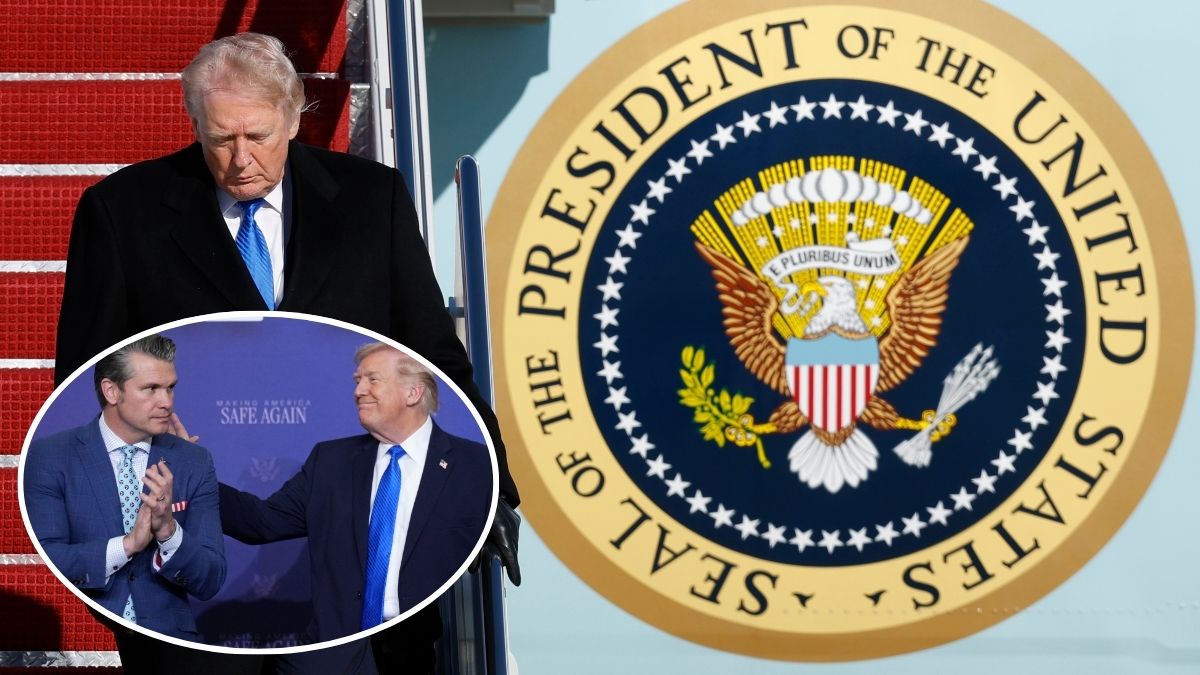
Trump continued dealing more shockers on Monday as he pinned full responsibility for starting the Iran war on US Defence Secretary (or Secretary of War) Pete Hegseth. “Pete, I think you were the first one to speak up, and you said let’s do it because you can’t let them have a nuclear weapon,” the POTUS said at a Memphis Safe Task Force roundtable in Tennessee, while Hegseth sat right beside him.
The bigger confusion at the centre of it all is what prompted Trump to suddenly pull back from his initial plans. Inevitably, the spotlight instantly turned to the money question.
Why did Trump retract from the Iran war decision?
The US president’s decisions related to the ongoing Iran war have elicited severe backlash from within the country. The cost of the war had already surpassed $11.3 billion in its first six days, Pentagon officials told lawmakers in a closed-door briefing, as per US reports.
On Sunday, Kevin Hassett, director of the National Economic Council, raised those figures to $12 billion. On the flip side, a TIME Magazine analysis, based on publicly available data, discovered that those billions of dollars could have been redirected towards the healthcare of 1.3 billion Americans in a different reality.
The war’s financial burdens on the US are already evoking worries beyond control as the US national debt soared past the $39 trillion mark this past week, according to TIME.
At a time when US politicians are already convinced that only “more will be wasted” moving forward, the Pentagon has also requested an additional $200 billion in funding for the war, The New York Times and The Washington Post cited unnamed military and administration officials.
But Hegseth is not even confident that the requested amount will be restricted to those numbers. “Obviously, it takes money to kill bad guys,” he said during a news conference on Thursday. “As far as the $200 billion, I think that number could move.”
A private warning from Gulf and US allies?
Bloomberg further cited people privy to the development, saying that Trump’s decision to back down on his threat to destroy Iran’s power infrastructure was spurred into action after US allies and Gulf countries privately warned him of the war’s disastrous implications.
A report by The Wall Street Journal echoed the claims, suggesting that foreign ministers across Asian countries from Egypt Turkey, Saudi Arabia and Pakistan convened for a closed-door meeting in Riyadh on Thursday. Ironically, the talks involving Iran were starkly marked by the absence of an Iranian negotiator on the table.
While Trump spent the weekend at his Mar-a-Lago club, Egyptian intelligence officials struck up back-channel mediation with Iran’s Islamic Revolutionary Guard Corps (IRGC), proposing to halt the violence for five days and move towards a potential ceasefire, WSJ cited unnamed officials involved in the discussions.
Despite being thousands of miles away from Trump, the butterfly effect of these reported talks was indisputably strong, as the POTUS publicly backtracked on his decision to “obliterate” Iran’s power plants. As word of the discussions in Riyadh reportedly reached the White House, diplomacy appeared to take the front seat in Trump’s approach towards Iran as well.
Potential discussions about an in-person meeting in Pakistan or Turkey between US and Iranian officials also joined the mix, according to US and Arab government aides cited by the WSJ.
In the meantime, White House press secretary Karoline Leavitt
Others again pointed to the financial crisis, as Trump’s announcement triggered a small reprieve after weeks of Wall Street mayhem. Oil prices rebounded after a 10% drop in the previous trading session. In Tuesday’s early trade, Brent crude surged 2.5% to $102.43 a barrel.
“The market reaction likely reflects some retreat in the perceived risks of lengthy disruptions and of damage to energy assets,” Goldman Sachs analysts remarked, as per the WSJ.
Dana Stroul, former Deputy Assistant Secretary of Defence for the Middle East also said, “Trump needed some way to climb down from a threat that would surely have started a new round of escalation, this time crossing a new threshold by targeting civilian energy infrastructure, which would likely constitute a war crime,” as quoted by Bloomberg. “It is surely no coincidence that the announcement of a five-day pause and talks came right before markets opened in the United Statesir on Monday morning.”
Trump himself appeared to admit to the insinuation on Monday. “The price of oil will drop like a rock as soon as the deal is done,” he said. “I guess it already is today. So we have a very serious chance of making a deal.”
The POTUS also conceded that the talks had not been directly with the newly appointed Supreme Leader, Ayatollah Mojtaba Khamenei, adding that his Middle East envoy Steve Witkoff, and close aide and son-in-law Jared Kushner were involved in them with Iranian representatives.