



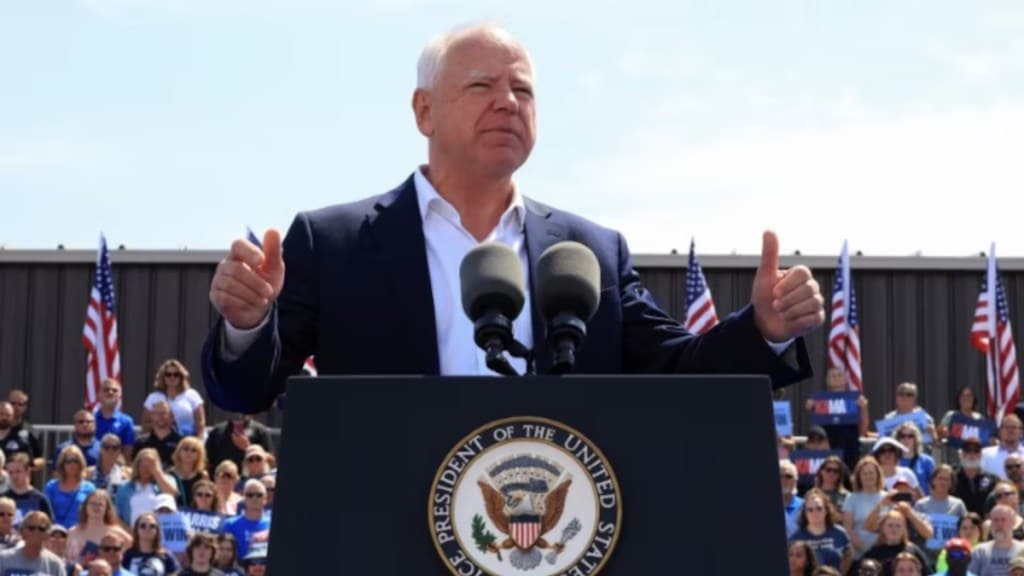
Minnesota Governor Tim Walz announced Monday that he will no longer seek a third term, abruptly ending what had been a declared bid for re-election in the 2026 gubernatorial race.
The decision, unveiled in a statement and confirmed during a scheduled news conference in St Paul, marks a dramatic reversal for the two-term Democrat and former 2024 Democratic vice-presidential nominee.
Walz, who had previously launched a campaign for an unprecedented third consecutive term, said he had come to the conclusion that he could not fully commit to a campaign while also giving the state his full attention.
“I can’t give a political campaign my all,” Walz said, adding that every minute spent on defending his own political interests would take away from addressing the pressing challenges facing Minnesota, according to Star Tribune.
The governor’s announcement comes amid mounting political and legal scrutiny over alleged widespread fraud in Minnesota’s welfare and childcare programs, a controversy that has engulfed the state and become a focal point of national debate.
Who is Tim Walz?
Walz is a former US Army National Guard member who has served as the Governor of Minnesota since 2019.
Before becoming governor, Walz represented Minnesota’s 1st Congressional District in the US House of Representatives from 2007 to 2019 as a Democrat. In Congress, he was known for focusing on veterans’ issues, agriculture, education, and bipartisan cooperation.
Walz has a non-traditional political background. He spent over 20 years in the Army National Guard, retiring as a command sergeant major, and worked as a high school teacher and football coach in southern Minnesota, according to Minnesota’s state portal.
What is the Minnesota fraud scandal all about?
The Minnesota fraud scandal involves widespread schemes defrauding state-administered public assistance programs, particularly Medicaid-linked initiatives like the Housing Stabilization Services (HSS) and Integrated Community Supports, as well as the earlier Feeding Our Future child nutrition fraud during the COVID era. Federal prosecutors have charged over 90 individuals, many, but not all, of Somali descent, with stealing hundreds of millions (potentially up to $1 billion or more across cases) through fake claims, inflated billing, sham providers, and even “fraud tourism” by out-of-state actors submitting bogus invoices for non-existent services like housing or therapy, according to CBS News.