



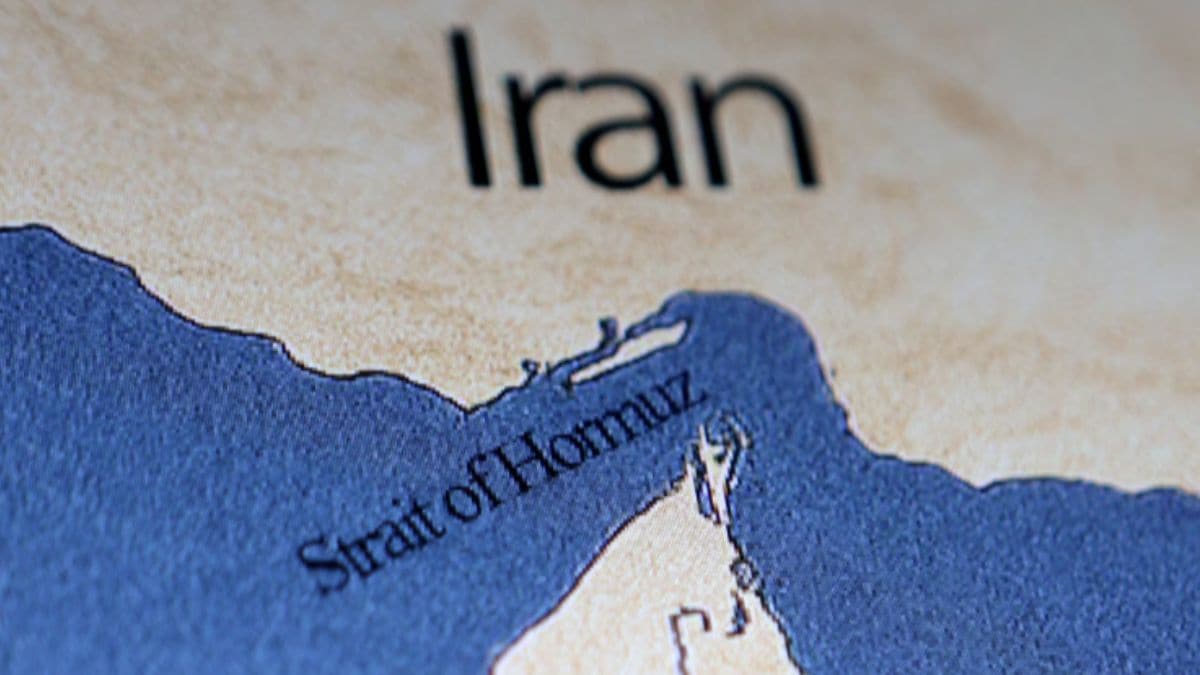
The vital Strait of Hormuz, brought to a standstill by the ongoing war, has since also emerged as the key to solving it. With the focus strategically shifting away from Iran’s nuclear power to its authority over the crucial maritime chokepoint, the biggest question still remains: Is the shipping waterway still open?
Originally, US President Donald Trump, Iran and Israel agreed to a two-week ceasefire during which “safe passage through the Strait of Hormuz will be possible via coordination with Iran’s Armed Forces.” As the deal itself hinged upon the full reopening of the strait, Iran ended up halting the passage of oil tankers through the waterway, further disrupting global oil supply. The swift U-turn was prompted by Israel’s continued strikes in Lebanon, according to the Fars news agency.
At the same time, ship-tracking service MarineTraffic also indicated that at least two vessels were allowed to pass through the strait in the hours since the US-Iran ceasefire deal was announced on Tuesday night (US time). Consequently, uncertainty and confusion took centre stage as several other updates tied to the Strait emerged on the horizon.
Here’s what we know.
Strait of Hormuz Reality Check: Latest updates
- White House adds to the confusion: While briefing reporters on Wednesday, Press Secretary Karoline Leavitt called news reports that the strait had been closed “false.” She then called for it to be reopened “immediately,” while failing to answer repeated questions about who currently controlled the waterway.
- Iran’s deputy foreign minister, Saeed Khatibzadeh has told the BBC that the Hormuz is open, but due to mines those crossing need to take permission from Iran. He earlier told the news agency that the country will allow vessels through the strait in accordance with “international norms and international law” once the US ends its “aggression” in West Asia and Israel stops attacking Lebanon.
“Definitely we are going to provide security for safe passage and it is going to happen after the United States actually withdraws this aggression. Does it mean that Iran is going to control the Strait of Hormuz in terms of letting ship by ship to go through that?” he said. “I think that we have shown to everybody that energy security is pivotal for Iran, is pivotal for this body of water in the Persian Gulf, and we are going to be abided by the international norms and international law.” - IRGC Navy’s alternative routes: Iran announced alternative routes for ships travelling through the Strait of Hormuz, citing the risk of sea mines in the main zone of the waterway.
“Due to the past war situation and possible anti-ship mines in the main traffic zone of the Strait of Hormuz, all vessels are advised to coordinate with the IRGC Navy and use alternative routes until further notice,” it said in a post on X shared by the Consulate General of Iran in Mumbai.
As further detailed by Iranian state media, vessels entering and leaving the strait were directed to adhere to the following routes:
Entry: From the Sea of Oman to the north of Larak Island, and then continuing towards the Gulf.
Exit: From the Gulf and passing south of Larak Island, and then continuing towards the Sea of Oman. - $2 million per ship toll fee: Earlier this week, two senior Iranian officials laid out some details of the 10-point proposal negotiations to The New York Times, indicating that Iran would impose a toll fee of roughly $2 million per ship passing through the strait. According to the US news site, more than 130 ships typically crossed the waterway each day before the war. Only about 120 ships in total have passed through it since the start of the war on February 28.
White House Press Secretary Karoline Leavitt, on the other hand, reiterated Wednesday that the fragile ceasefire between the US and Iran depended on the Strait of Hormuz being opened for ships “without limitations, including tolls.” - Crypto payments demanded: Another contradictory report by The Financial Times, citing Hamid Hosseini, a spokesperson for Iran’s Oil, Gas and Petrochemical Products Exporters’ Union, suggested that Iran will demand that ships passing through the channel to pay the cryptocurrency equivalent of $1 per barrel of oil on board during the ceasefire period.
“Once the email arrives and Iran completes its assessment, vessels are given a few seconds to pay in bitcoin, ensuring they can’t be traced or confiscated due to sanctions,” he told FT, adding, “Everything can pass through, but the procedure will take time for each vessel, and Iran is not in a rush.”
The same report also indicated that Iran will be inspecting each vessel for weapons. - Limited ships allowed: On the other hand, The Wall Street Journal reported that Iran was telling mediators that in addition to charging tolls, it would limit the number of ships passing through the strait to about 12 per day.
- US floated its own toll system: Meanwhile, US President Donald Trump suggested earlier this week that the US could impose its own tolls on ships trying to pass through the strait.
“What about us charging tolls?” he responded to a reporter during a White House conference. “I’d rather do that than let them have them,” he added. “Why shouldn’t we? We’re the winner.”
“We won, OK? They are militarily defeated. The only thing they have is the psychology of ‘oh, we’re going to drop a couple of mines in the water…We have a concept where we’ll charge tolls.” - ‘Cautious approach’: Despite the ceasefire announcement, traffic through the strait has not necessarily picked up, Matt Smith, an oil analyst at Kpler, told CNBC. Shipping giant Maersk similarly stated, “Information and details available remain very limited, and we are working with urgency to obtain further clarity.”
The company added, “The ceasefire may create transit opportunities, but it does not yet provide full maritime certainty, and we need to understand all potential conditions attached. At this point, we take a cautious approach, and we are not making any changes to specific services.” - Passage frequency before the war: According to data from Kpler, between 100 and 120 commercial vessels, mostly oil tankers, passed through the Strait of Hormuz each day before the war.
Meanwhile, data from Lloyd’s List showed that some 72 vessels made the trip during the week of March 30 through April 5, making for the busiest week since the war started. However, the traffic still remained 90% below normal volumes. The data also showed that about 80% of those ships were tied to Iran, and 13% were owned by China. - French Foreign Minister Jean-Noël Barrot said European and other partners are “finalising” plans to escort ships in the Strait of Hormuz. Speaking on France Inter radio, Barrot said Thursday, “planning for this mission is currently being finalised between French military officials and countries that have volunteered. He further said shipping traffic will be able to cross the strait safely once an agreement is reached.