



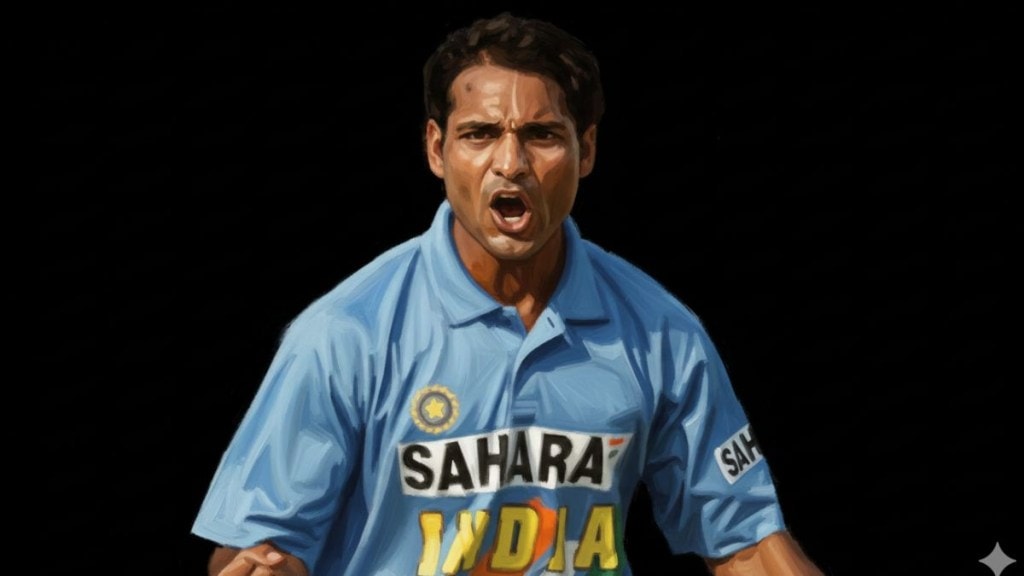
One month from now, when the T20 World Cup starts, millions will remember MS Dhoni with that shiny trophy in 2007. They will talk about Yuvraj’s six sixes. They will replay that final over like it’s a festival highlight.
But nobody talks about what happened to the man who actually bowled that over. Joginder Sharma didn’t fade away. He became a cop in Haryana. And that’s not even the most interesting part of his story.
Here’s the thing. We remember the ball that Misbah-ul-Haq scooped to Sreesanth. But we don’t remember that Joginder Sharma was never supposed to be there. He was a domestic workhorse. A Ranji Trophy grinder from Rohtak who had put in the hard yards when nobody was watching.
Ranji Trophy monster
Long before Johannesburg, Joginder was the kind of player who made selectors sit up and take notes in the most unglamorous way possible. He did it by destroying teams in the Ranji Trophy.
In 2004-05, playing for Haryana, he took 36 wickets at 15 runs each. Think about that. In first-class cricket, where batsmen grind you down, he was taking wickets for less than what you would pay for a cup of tea. And he scored 472 runs at 52 average.
This wasn’t a one-hit wonder. His first class bowling average (21) is better than many specialist bowlers and he took almost 300 wickets with that average.
Tournament before the over
This gets forgotten.
Everyone remembers the final. Nobody remembers that Joginder had already saved India twice in that World Cup.
Against South Africa in the Super 8s, India defended 153. That was the match where India’s bowling clicked. Joginder went for 24 runs in 4 overs. That’s six an over. India won by 37 runs. Without that spell, there’s no final.
Then came the semi-final against Australia. This was the big one. Australia needed 22 off the last over with Hussey and Lee at the crease. Dhoni gave the ball to Joginder. To the domestic bowler from Haryana.
He got Hussey caught at deep mid-wicket by Yuvraj. He clean-bowled Brett Lee. India won by 15 runs. The final over in Johannesburg? That wasn’t a fluke. That was Dhoni trusting a man who’d already done the job against the best team in the world.
Final over that changed everything
So we come to it. The final over. Thirteen runs needed. One wicket left. Misbah-ul-Haq on strike.
Dhoni had a choice. Harbhajan Singh was his main spinner. The experienced guy. The Test bowler. But Misbah was a good player of spin. And Joginder had bowled those death overs. Dhoni made the call that defines legacies.
First ball was a wide. Of course it was. You’re bowling to win a World Cup with 20 million people watching. Your hands are shaking. The wide made it 12 from 6.
Dhoni walked down. Put his hand on Joginder’s shoulder. Said something. Probably the same thing he’d said in the semi-final. “Tension nahin lena.”
Second ball was a dot. Good start. Then came the full toss. The one that Misbah hit for six. Over the bowler’s head. At that moment, every Indian watching thought, “We’ve lost this.”
But here’s what happened next. Joginder saw Misbah moving across his stumps. He knew the scoop was coming. So he slowed it down. Bowled it wider. Misbah went for the scoop again, but the ball wasn’t there. It looped. Sreesanth took the catch at short fine leg. India won the World Cup.
Crash that almost ended everything
After 2007, the world knew his name. IPL contracts followed. He played for Chennai Super Kings, won titles, did his role.
Then came the accident.
November 2011. Dwarka, Delhi. Joginder was driving when a BPO vehicle braked suddenly. The collision was brutal. Skull fracture. Brain clotting. ICU.
He calls it the “toughest phase.” Four months of bed rest. Nearly a year of rehab. The Haryana Cricket Association stood by him. Physio Amit Tyagi worked him back. But when you have a skull fracture, cricket seems far away.
He came back though. 2013-14 Ranji season. Five-wicket haul against Mumbai. Think about that courage. Most players retire after a finger injury. He came back from a broken head.
But cricket had moved on. The IPL had changed everything. Younger, faster bowlers were coming through. Joginder was 30. He’d already given the country its biggest over. Maybe that was enough.
The police badge
The Haryana government made him a DSP in 2007, right after the World Cup win. Sports quota. He joined the police while still playing. That was always the deal. Cricket was temporary. The service was permanent.
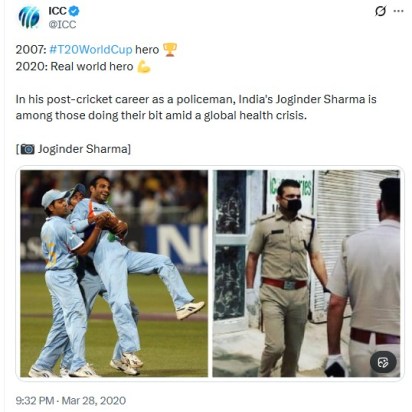
During COVID-19, he was posted in Hisar. Six in the morning to eight at night. Patrolling. Managing check-posts. Talking to villagers about masks. The ICC tweeted about him. “World Cup hero is now a real-life hero.”
Game never leaves you
He retired from cricket in 2023. But you don’t really retire. He’s playing Legends League. Gujarat Greats with Dhawan, Chris Gayle. Still bowling those death overs in exhibition games. Still has the action. The slower ball.
In March 2025, he cycled with 600 people in Delhi for Fit India. “Fit rahega tabhi to hit rahega India.” India will only be a hit if it stays fit. The message is clear. He’s still serving. Just different fields.
The real hero
So here we are. One month before another T20 World Cup. Everyone will talk about the new heroes. Who will bowl the big over? Who will take the pressure?
Joginder Sharma’s story is not just about one over. It’s about what came before and what came after. The domestic grind. The trust Dhoni placed in him. The skull fracture. The police badge.
We make heroes out of moments. But heroes are made from years. From showing up when nobody watches. From bowling in Ranji Trophy games in empty stadiums. From patrolling Hisar streets during a pandemic. From coming back when doctors say you shouldn’t.
When you watch the World Cup this year, you’ll see new stars. You’ll see brilliant catches, big sixes, tight overs. But remember that the biggest moment in India’s T20 history came from a man who was never the main guy.
Who bowled one over that gave us everything, then spent the next fifteen years giving back to his state in ways we don’t celebrate on TV.
That’s the thing about heroes. They keep serving long after the cameras stop rolling.