



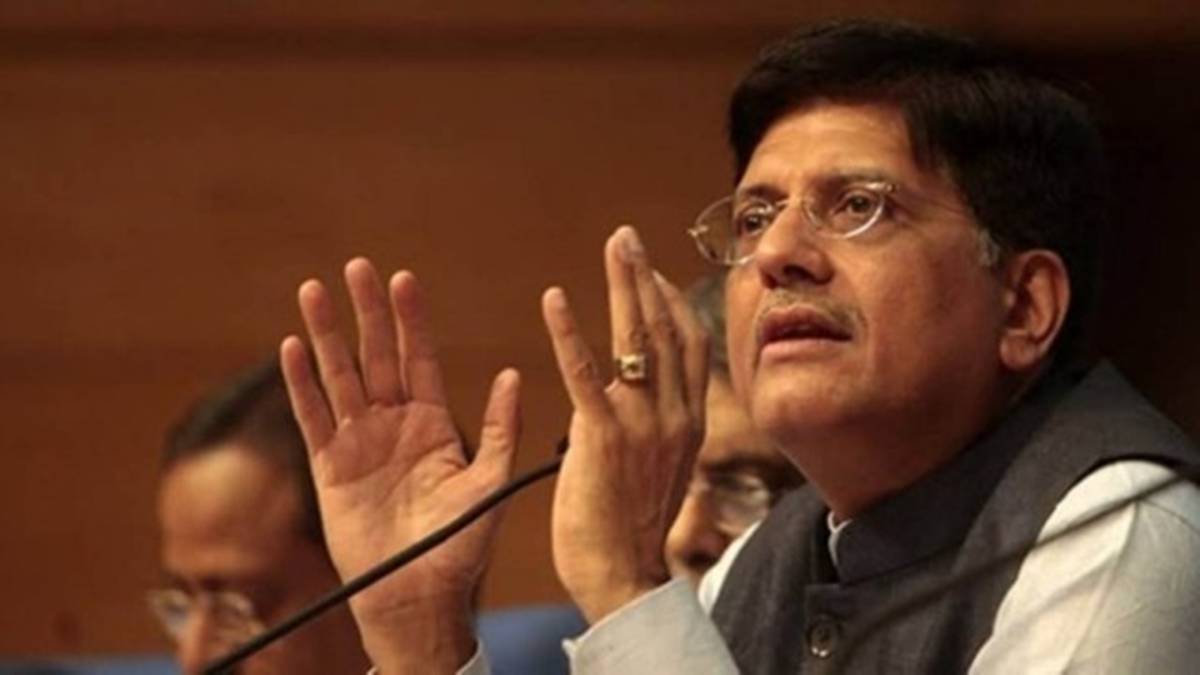
India has opted for a calibrated opening of its economy in its recent free trade agreements (FTAs) to ease the import of products it needs, Commerce and Industry Minister Piyush Goyal said Friday. The deal with the US will aid local manufacturing, he added.
“With the US we are hopeful to get more aeroplanes into the country which will be good for our mobility and will hopefully bring down airfares. It will also open up remote connectivity,” he said at an event organised by a new channel. “I can very easily see the aviation sector needing $ 100 billion of imports – Boeing planes, aircraft engines and spare parts.”
He said that in the next five years, the Indian steel industry is expected to double its capacity from 140 million tonnes to 300 million tonnes, which will double the need for coking coal imports for steel production. “We already import about $ 17 billion of coking coal. “We will need nothing less than $ 30 billion of such imports,” Goyal said.
India is currently importing coking coal from Australia, the US, and Russia. “With more sources there will be more competition, better pricing and quality,” he said.
In its trade deal with the US that brought down reciprocal tariffs to 18% from 50%, India has agreed to target imports of $ 500 billion from the US. To meet this target, India will buy energy products, aircraft and aircraft parts, precious metals, technology products, and coking coal.
On Wednesday US President Donald Trump, while calling the India-US trade deal historic, said that it would lead to an increase in exports of American coal which is the finest in the world.
Goyal also said that with the FTAs India is also addressing tariff disadvantages it faces on exports to the developed world. “We just concluded two very large FTAs – with the European Union and the US – which together will open up a market of $ 55-60 trillion,” he said.
In the EU many of India’s products were facing high Most Favoured Nation (MFN) tariffs as compared to its competitors like Vietnam and Bangladesh. Vietnam has an FTA with the EU while Bangladesh got concessions because of being a least developed country. India will be at par with both in important product categories after its FTA with the EU becomes operational. Even the reciprocal tariffs of 18% on India are the lowest when compared to the competition.
“In the textiles sector I can visualise doubling of exports and creation of 7-8 million additional jobs,” he said. Other areas of opportunities are leather and footwear, marine, handloom, sports goods, agri products, fruits, vegetables, basmati rice, spices, coffee, tea, honey among a large variety of goods.
“Today when we engage with the world we respect their sensitivities and they respect ours.”