



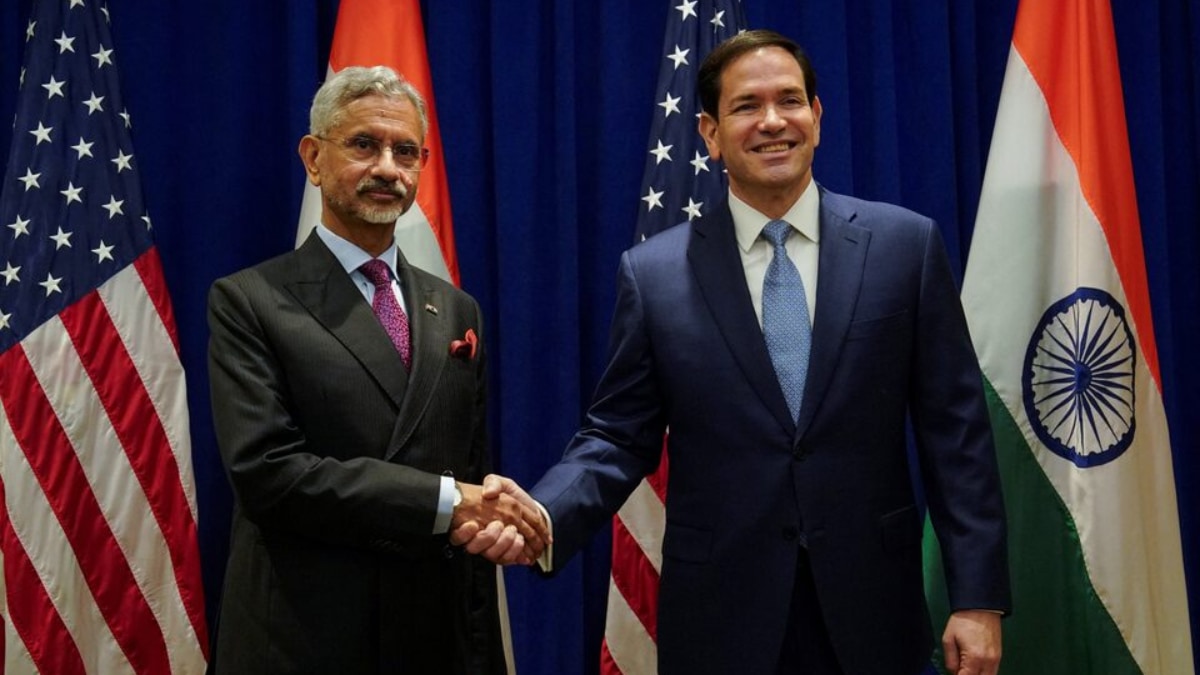
External Affairs Minister S Jaishnakar on Tuesday shared that he had a “good conversation” with US Secretary of State Marco Rubio. The two leaders had a telephonic conversation where they discussed bilateral trade, critical minerals, nuclear cooperation, defence and energy cooperation between the two countries.
Minutes after Jaishankar’s post, Gor said, “A quick update: @SecRubio Just concluded a positive call with @DrSJaishankar. They discussed next steps regarding our bilateral trade negotiations, critical minerals and a possible meeting next month.”
Both India and the United States want to more than double their two-way trade and take it past $500 billion by 2030. To reduce the trade imbalance, India has promised to import more energy and defence equipment from the US, reported Reuters. This comes even though trade negotiations held last year did not lead to any agreement.
What was discussed?
During the call, Rubio congratulated India on enacting the Sustainable Harnessing and Advancement of Nuclear Energy for Transforming India Bill. He said the US wants to use this step to deepen civil nuclear cooperation with India, create more opportunities for American companies, strengthen energy security, and secure supply chains for critical minerals.
The two leaders also discussed bilateral trade and agreed on the need to boost economic ties. They discussed regional issues as well and reiterated their support for a free and open Indo-Pacific.
Earlier in the week, US embassy official Gor said trade negotiators could begin discussions as soon as Tuesday and that India would be invited to join the US-led strategic initiative called Pax Silica.
The timing of the Rubio-Jaishankar call, which came a day after Gor’s remarks and covered similar issues, signalled an effort by both sides to move past months of tension and push bilateral ties forward.
It’s worth noting that this outreach came just days after US Commerce Secretary Howard Lutnick publicly accused India of slowing down progress on a trade deal.
US-India ties back in focus?
In his first statement after taking charge, Gor sent out a clear message. He spoke about his personal bond with India, his close access to President Donald Trump, and the importance of the Trump–Modi relationship. He also stressed the need for slow and steady steps to calm tensions and improve public perception on both sides.
This laid the groundwork for the latest phone call between Jaishankar and Rubio. The two have met and spoken several times in 2025, starting with their first interaction in January last year, on Rubio’s very first day in office.
Since then, they have stayed in touch through multiple meetings and calls, including discussions on the sidelines of the UN General Assembly and gatherings of G7 foreign ministers.
In September 2025, they held their first meeting after the Trump administration imposed 50 per cent tariffs on Indian goods and announced a $100,000 fee for H-1B visa applicants. Their talks covered key bilateral and global issues, showing that sensitive topics were openly discussed. Both sides agreed to keep engaging to move forward on priority areas.
The following month, in October, Jaishankar met Rubio during the ASEAN and East Asia leaders’ meetings in Kuala Lumpur. This came at a time when ties were strained due to the high tariffs, a 25 per cent penalty linked to India’s purchase of Russian oil, closer US ties with Pakistan, and Trump’s repeated claims of having brokered a ceasefire between India and Pakistan.
In November 2025, the two met again on the sidelines of the G7 foreign ministers’ meeting in Canada. Their discussions focused on trade and supply chains, along with the wars in Ukraine and the Middle East, and the situation in the Indo-Pacific.
The latest phone call makes it clear that both sides are now directly addressing the issues affecting the relationship, even as a trade deal remains unfinished.
A report by The Indian Express states that India has cut back on Russian oil imports since September 2025, a move seen as a signal to Washington to remove the 25 per cent penalty tariff. Citing sources, the report added that lifting this penalty could ease pressure on ties while negotiations continue to lower the remaining tariffs under a broader trade agreement.
There is also urgency because India is negotiating a separate trade deal with the European Union. Both sides are trying to finalise it before EU leaders visit India as chief guests for the Republic Day celebrations on January 26, followed by the India-EU summit the next day.