



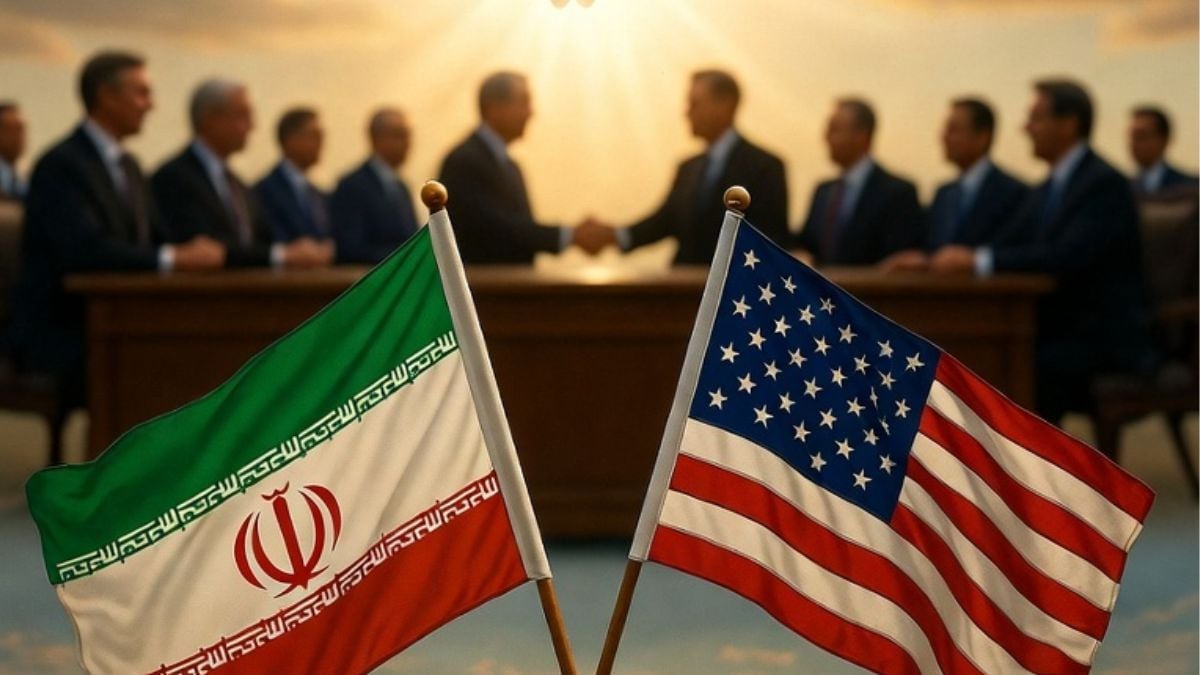
The collapse of the latest round of US-Iran talks in Islamabad is not surprising in itself. What is more concerning is how quickly failure risks becoming a pretext for renewed confrontation. After 21 hours of negotiations—the first high-level engagement between Washington and Tehran in over a decade—the talks ended without agreement, with both sides blaming the other for “unreasonable” demands.
Yet the core disagreements were neither new nor unexpected: Iran’s nuclear programme, sanctions relief, and control of the Strait of Hormuz have long defined the limits of compromise. If anything, the outcome merely confirmed what had long been evident. This was never going to be a quick diplomatic breakthrough anyway. Washington entered the talks seeking sweeping commitments on nuclear rollback and regional conduct. Tehran, for its part, made clear that its core sovereign red lines were not up for negotiation. The result was less a breakdown of diplomacy than a predictable clash of maximalist positions.
From Ceasefire to Blockade
What makes the moment dangerous is not the failure itself, but the fragility of what follows. The talks were never designed to resolve the conflict in a single sitting; their more immediate purpose was to prevent escalation. That objective is now at risk. Markets have already registered unease, with renewed concern over energy flows through Hormuz—a critical artery for global oil supply. The geopolitical consequences of disruption are immediate; the economic costs, potentially far-reaching.
This is precisely why the collapse must not be misread—or misused. Diplomatic failure does not legitimise military escalation. Yet history suggests that failed negotiations often harden positions rather than soften them, with each side interpreting the absence of agreement as evidence of the other’s bad faith. Early signals point in that direction. Washington has emphasised Iran’s unwillingness to curb its nuclear ambitions; Tehran has accused the US of imposing unrealistic conditions. More troublingly, US President Donald Trump has already hinted at veering towards coercive options, including discussion of a naval blockade of the Strait of Hormuz.
India Exposure
For India and the wider global economy, the stakes are immediate. Any renewed conflict in the Gulf would push up oil prices, disrupt shipping lanes, and deepen volatility across supply chains and financial markets. India, heavily dependent on imported energy, would be particularly exposed—not only through higher import costs but also through the secondary effects on inflation and growth. More fundamentally, both sides would do well to recognise that the alternative to imperfect diplomacy is not a better deal, but a worse outcome. Negotiations of this kind are inherently incremental, shaped by mistrust and constrained by domestic politics. Expecting a comprehensive settlement in a single round was unrealistic. Even participants on both sides acknowledged as much, describing the talks as substantive, if inconclusive. That distinction matters. It suggests that while agreement remains distant, engagement is still possible.
The immediate priority, therefore, is not to salvage a grand bargain but to preserve the conditions for continued dialogue. That means holding the ceasefire, maintaining communication channels, and avoiding steps that foreclose future negotiation. Mediators, particularly regional actors, will have an important role in sustaining this fragile process. The failure of the Islamabad talks is a setback, but it need not become a turning point. Whether it does will depend on what follows: restraint or retaliation, patience or provocation. In geopolitics, as in economics, escalation is easy. Reversing it is not.