



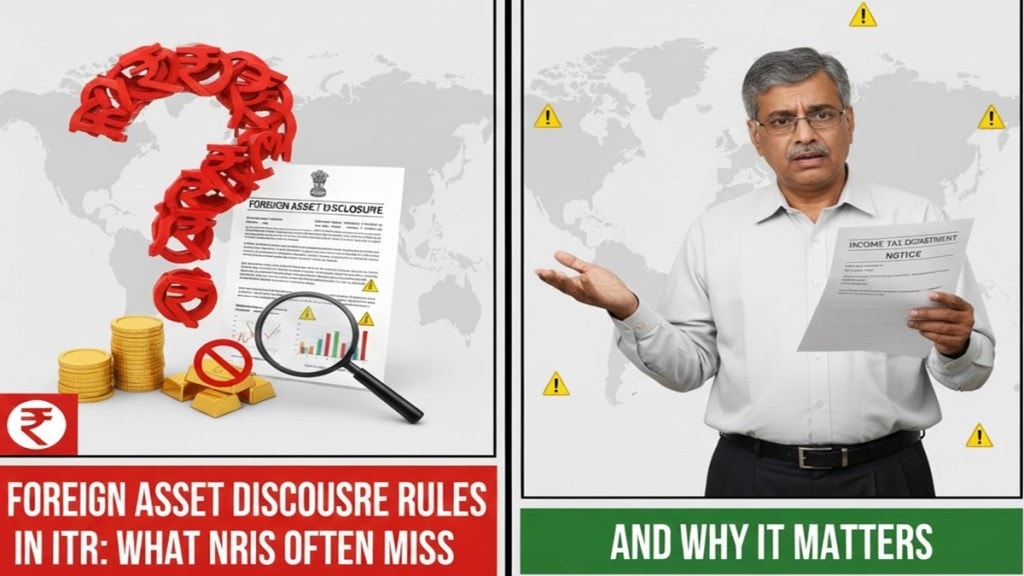
A recent post by an NRI on an online public forum might struck a chord with many NRIs who have moved in and out of India over the years and are unsure about their income tax disclosure obligations.
This particular user explained that he was an NRI for 10 years, then became a tax resident of India for four years — classified as ‘Resident but Not Ordinarily Resident (RNOR)’ for two years and ‘Resident and Ordinarily Resident (ROR)’ for the next two — and is now an NRI again. The problem? During the two ROR years, his chartered accountant never informed him that foreign assets needed to be disclosed in the income tax return (ITR).
Let’s first understand ROR and RNOR in simple terms since residential status is central to this issue. Here’s a quick explainer:
NRI (Non-Resident Indian): Lives abroad; taxed in India only on Indian income
RNOR (Resident but Not Ordinarily Resident): Recently returned to India; enjoys limited tax exposure on foreign income and assets
ROR (Resident and Ordinarily Resident): Fully taxable in India on global income and required to disclose global assets
Only RORs are required to disclose foreign assets in Schedule FA.
Now, after reading online discussions about a possible Rs 10 lakh penalty for non-disclosure of foreign assets, the user is confused and worried. He wants to know whether filing an updated return (ITR-U) to disclose foreign assets attracts penalties and whether others have faced such consequences.
To clear the confusion, we shared the matter with tax expert Dinkar Sharma, Company Secretary and Partner, Jotwani Associates, who explained the issue in detail.
Setting the tone, Sharma says the situation needs attention, not alarm.
“It is important to maintain a balanced perspective in this matter. While the situation does not constitute a crisis, it does warrant thorough attention and due diligence,” he explains.
In simple terms, this is not a rare or unusual problem. Many NRIs return to India for a few years, change residential status, and rely on professional advice — sometimes incomplete — while filing returns.
When is disclosure of foreign assets mandatory?
The key issue here is residential status. As Sharma clarifies: “The obligation to disclose foreign assets in Schedule FA arises only if an individual qualifies as a ‘Resident and Ordinarily Resident’ during the relevant assessment year.”
This means:
NRIs – No disclosure of foreign assets required
RNORs – No disclosure of foreign assets required
RORs – Disclosure of all foreign assets is mandatory
Importantly, disclosure is required even if those foreign assets did not earn any income, and even if no money was brought into India. So, during the two years when the taxpayer was classified as ROR, foreign assets should ideally have been reported in Schedule FA of the ITR.
What about the Rs 10 lakh penalty everyone talks about?
This is where online discussions often create fear. The much-cited Rs 10 lakh penalty comes from the Black Money (Undisclosed Foreign Income and Assets) law.
But Sharma makes an important clarification: “Such penalties are not imposed automatically. The primary objective of the Black Money Act is to address cases involving deliberate concealment or non-disclosure of foreign assets, particularly where tax evasion is evident.”
In other words, the law targets wilful hiding of assets, not genuine mistakes. Tax authorities do consider factors like bona fide errors, reliance on professional advice, no intention to conceal, and no undisclosed income involved.
These aspects matter greatly while deciding whether a penalty should be imposed.
Can filing an updated ITR (ITR-U) help?
Yes, and this is a crucial relief. The government now allows taxpayers to file an updated return (ITR-U) to correct omissions, including missed disclosures of foreign assets.
Sharma explains, “Voluntary disclosure, accompanied by the payment of any applicable taxes and absent any indication of willful concealment, is generally not met with penal consequences, although the final determination rests with the assessing officer.”
If the foreign assets did not generate undisclosed income and the omission was unintentional, filing an updated return with proper disclosure significantly reduces risk.
What should affected taxpayers do now?
The expert suggests a clear action plan:
List all foreign assets held during ROR years
Check whether any income was earned from them
Review old ITRs to see what was disclosed
File ITR-U if required, with a clear explanation
Document reliance on professional advice, if applicable
Transparency and proactive correction go a long way in such cases.
Summing up…
As Sharma concludes: “While immediate remedial action is warranted, there is no cause for undue anxiety.”
If you were an ROR and missed foreign asset disclosure, the safest path is to act now, disclose voluntarily, and correct the record. Panic helps no one — but timely action certainly does.