



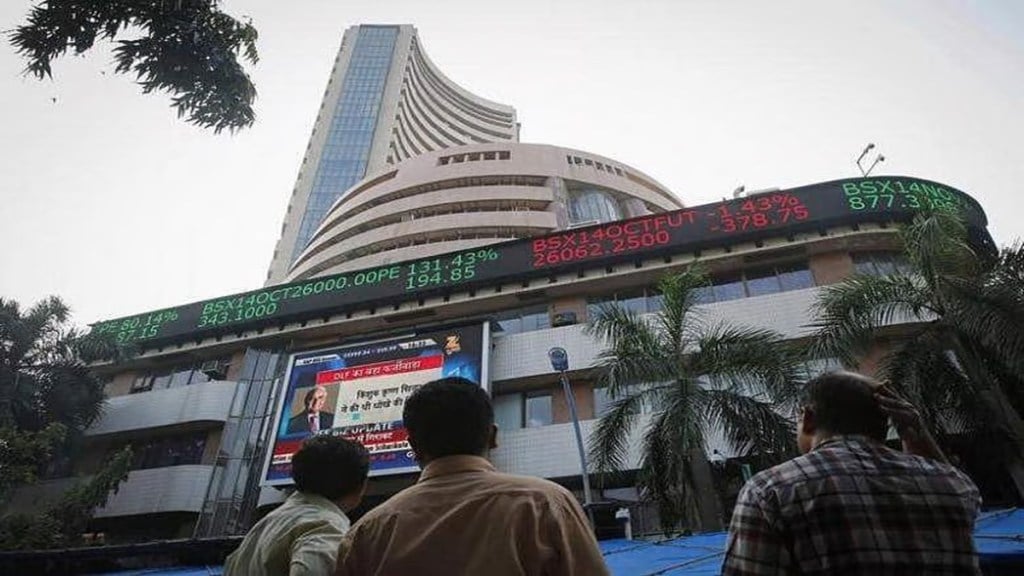
The market capitalisation of BSE’s 30-stock benchmark Sensex stands at Rs 169 lakh crore as it completes 40 years. At the end of 2005, the index market capitalisation was Rs 12 lakh crore, which rose to Rs 92 lakh crore as of 2020 end.
The Sensex was launched on January 1, 1986. The next day, it closed at 549.43 points, compared with 85,220.60 points on the last day of 2025. Hindustan Unilever, Larsen & Toubro, ITC, and Reliance Industries have been part of the index since its inception.
HDFC Bank has the highest weightage and contributes 15.2% to the index’s movement, followed by ICICI Bank’s 10.13%, and Reliance Industries’ 9.72%.
Four Decades of Compounding
A research paper by BSE Index Services showed that in the last 40 years, the Sensex Price Return Index gave positive returns in 75% of the years and negative returns in the remaining. The Total Return Index, including dividends and reinvestment of dividends, gave positive returns in 79% of the years. There was only one negative return year in the last 14 calendar years.
Historically, the paper highlighted that April and July consistently remained the best months in terms of positive returns. January and February were the negative-return months over the past 20 years. Under the same parameter, September has been the negative-return month over the past 10 years.
Meanwhile, Tuesday consistently was the top return day of the week across time periods, followed by Wednesday and Friday. Mondays were among the lowest-return days.
Sectoral Evolution
Sector wise, the weightage of financial services has gone up from 22.25% to 39.5% between 2005 and 2025 and that of the IT sector has decreased from 19.9% to 12.95%. Weightage of the consumer discretionary has increased from 4.93% to 12.95% while the commodities sector saw a fall from 8.97% to 2.98%.
The best day for the index was May 18, 2009, when it had risen 17%. The worst day was March 23, 2020, when it had slumped 13.15%. The paper shows that large movements in a single day were quite common in early decades and became fewer in recent years, except for the Covid period. “This shows that Indian markets have matured with improved liquidity and increasing participation compared to those of earlier years,” it said.