



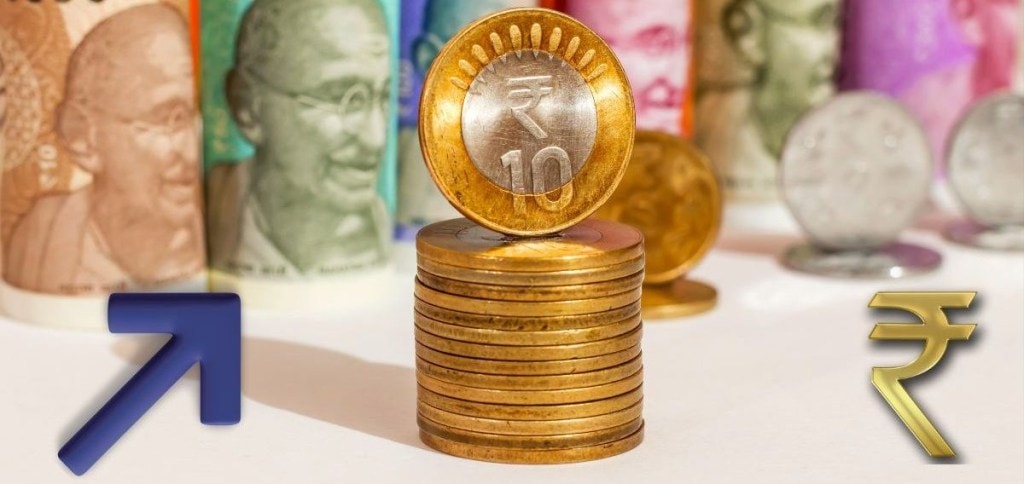
The Indian rupee today finally saw a pause in the free fall seen in past few sessions. The currency closed at 90.38 against the US Dollar, up 0.7% from its previous close of 91.02. This marked the best single-day rise posted by the Indian rupee since October 15.
The recovery is largely being attributed to heavy intervention by the Reserve Bank of India (RBI).
On Wednesday, the currency slipped past the psychologically important 91-level mark to hit an intraday low of 91.07. So far in FY26, the Indian rupee has declined by 6.5%, making it the worst-performing Asian currency of 2025.
Let us look at what drove today’s rebound:
Heavy intervention by RBI
The Indian rupee, which opened at 91.07, saw an intraday recovery as the central bank stepped in to avoid steeper losses. Traders reported that state-run banks sold dollars aggressively, which helped the local currency rebound. By the afternoon session, the rupee was trading at 90.32 against the dollar.
“The central bank’s swift action, similar to forceful interventions seen in recent months, was aimed at breaking the rupee’s one-way decline. The move followed heavy recent losses driven by portfolio outflows and persistent dollar demand that left the currency looking overstretched,” said Jigar Trivedi, Senior Research Analyst at Reliance Securities.
The heavy dollar selling signals “its (RBI’s) discomfort with rapid depreciation (of the rupee) beyond recent ranges,” Reuters quoted Abhishek Goenka, Chief Executive at FX advisory firm IFA Global, as saying.
Rupee’s recovery dependent on India-US trade deal
Analysts have cautioned that the rupee’s long-term recovery is still dependent on clarity over the India-US trade deal. Outflows from foreign investors are likely to continue in the Indian equity market until the final outcome of the trade deal is announced.
Currency experts have further added that the Indian rupee will continue to remain under pressure, as US tariffs continue to weigh on investment flows.
As per provisional data available on the NSE for December 16, foreign investors have sold equities worth Rs 12,281 crore, in contrast to domestic players, who have purchased equities worth Rs 10,708 crore.
India’s Trade Secretary Rajesh Agarwal on December 15 said that the government is “very close” to closing the initial framework deal with the US to lower reciprocal tariffs. The trade deal is expected to be finalised by March 2026.
“The rupee rebounded sharply from near 91.00 to around 90.35, likely aided by intervention, snapping a multi-day losing streak. However, the sustainability of this recovery remains uncertain as India–US trade deal clarity is still awaited and FII selling continues,” said Jateen Trivedi, VP – Research Analyst (Commodity and Currency), LKP Securities.
Outlook for the rupee
With improved trade numbers for November and today’s sharp rebound, analysts expect the Indian currency to likely settle around the 90-level mark by H1 FY26.
“Volatility is expected to persist, with the rupee likely to trade in the 89.80–90.80 range,” Trivedi added.
According to the Financial Express, Axis Bank said the base case is for “mild, not wild” depreciation of the rupee. “The sharply weaker REER (real effective exchange rate) and ongoing reforms to improve the ease of doing business are supportive of sentiment and could incentivise fresh inflows over time. The rupee is projected at 90 by June 2026 and 92 by June 2027, with the pace of depreciation dependent on the evolution of capital flows and global risk appetite.”