



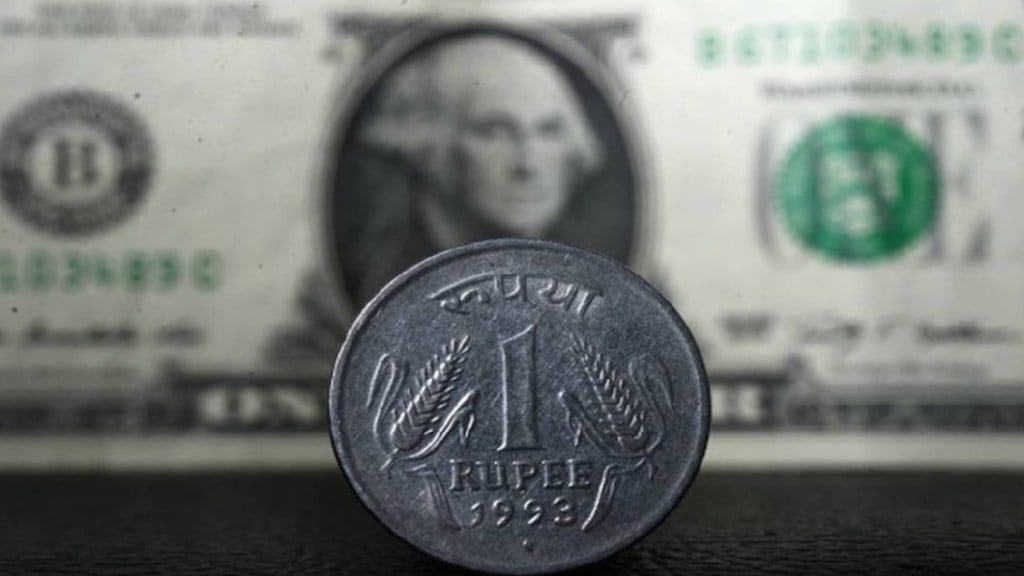
After a week of ups and down, the Indian rupee on Monday opened at 89.54 against the US dollar, down 0.3% from Friday’s close of 89.27. Last week, on December 16, 2025, the domestic currency breached the psychologically crucial 91 level and hit a historic low of 91.08 against the greenback.
Just three days after the breach, the rupee appreciated by nearly 2%, touching a high of 89.25 on December 19. Traders said the recovery was largely on back of by heavy intervention from the central bank, with state-run banks selling dollars aggressively on behalf of the Reserve Bank of India (RBI).
Weakening rupee not a threat: experts
Confederation of Indian Industry (CII) President Rajiv Memani, in a conversation with FE’s Manu Kaushik, said that a mild depreciation in the currency is not a cause for concern.
“As long as there is no major volatility, a little weakening of the rupee will not have a bad outcome for India,” Memani said.
He added that while currency depreciation raises the cost of imported goods, it also makes domestic alternatives more attractive. Memani noted that lower oil and gas prices would help offset the inflationary impact that might otherwise arise from a weaker rupee.
Meanwhile, Ram Singh, an external member of the RBI’s Monetary Policy Committee (MPC), said in the central bank’s minutes released on December 19 that, “With low global commodity and oil prices, the rupee’s depreciation should not translate into significant imported inflation.”
Gross FDI up, trade numbers improve
“While gross FDI has gone up significantly this year, there was some concern due to FII exits,” the CII President told FE.
He also highlighted improvements in trade numbers, noting that merchandise exports are growing at 2–3%, while services exports are expanding at a faster pace of 9–10%. He added that the current account deficit remains under control.
“The trade numbers for November show that merchandise exports are still growing at 2–3%, service exports are growing at 9–10%, and the current account deficit is well under control. So, on the rupee side, there’s no real need to worry,” he said.
Meanwhile, the RBI on December 19 said India’s foreign exchange reserves rose by $ 1.689 billion to $ 688.949 billion in the week ended December 12. In the previous reporting week, overall forex reserves had increased by $ 1.033 billion to $ 687.26 billion.
As per provisional data available on the NSE for December 19, foreign institutional investors (FIIs) were net purchasers of Indian equities worth Rs 26,896 crore, while domestic institutional investors sold equities worth Rs 24,508 crore.
Repo rate cut on the cards
Memani said a quarter-point rate cut by the RBI is widely anticipated at the February MPC meeting.
“Rates could come down by 0.25%, which would take the repo rate to 5% by the end of the financial year,” he said.
He emphasized that India’s relatively low inflation compared to its peers strengthens the case for a rate cut. Banks and analysts have also indicated a higher probability of easing, though much will depend on the finalisation of a trade deal with the US. Analysts added that the rupee’s weakness is likely to persist amid RBI’s market-based operations.
However, MPC member Ram Singh cautioned that a rate cut could put additional pressure on the currency.
“A rate cut can add to pressure on the INR. However, the depreciation is unlikely to lead to imported inflation due to low oil and commodity prices,” Singh said in the RBI’s monetary policy minutes released on December 19.
Analysts expect the rupee to trade in the 89–90 range in the near term.