



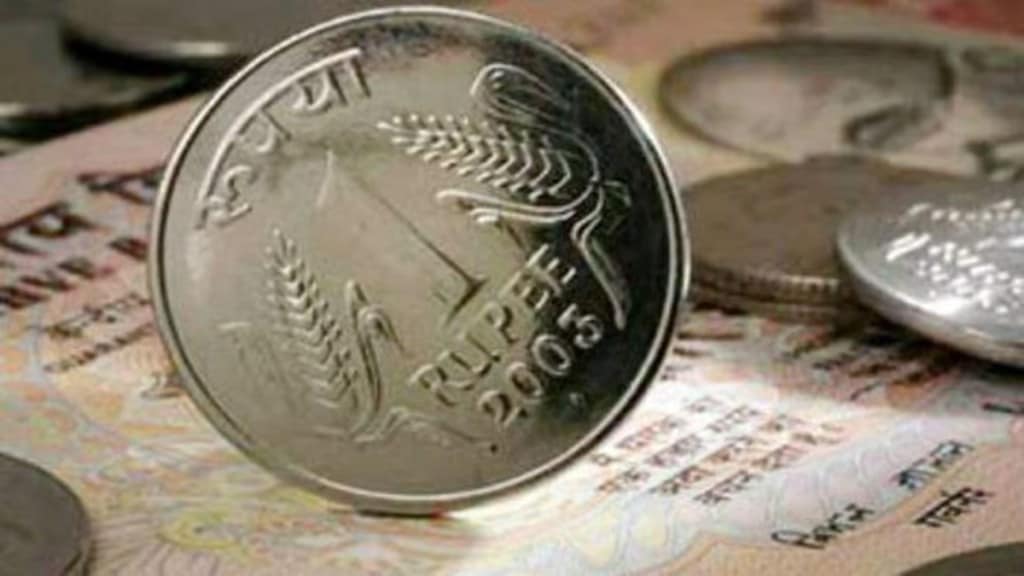
The Indian rupee has been hitting new historic lows almost every second day in the past two weeks. The domestic currency had a rather turbulent volatile session and closed near lifetime lows at 90.36 per dollar, down 0.4% from its yesterday’s close of 89.96. The currency has been one of the worst-performing Asian currencies, having fallen by over 5% against the dollar.
The currency started the day steady at 89.88, but in early trade it hit the 90.21 mark, and then by afternoon it further dipped to 90.46 against the US dollar, marking a historic low for the domestic currency.
While the markets had anticipated the domestic currency to see a slight recovery following the US Federal Reserve’s rate cut of 25 basis points, the currency fell as local corporates purchased dollars for completing their end-of-year international payments, alongside demand from foreign and local private lenders for merchandise-related transactions, Jigar Trivedi, Senior Research Analyst at Reliance Securities, cited as some of the reasons. Here is what drove the rupee down:
#1 India-US trade deal uncertainty
The uncertainty with regards to the progress of the India-US trade deal has been a key factor that’s weighing on investor sentiment. India’s Chief Economic Advisor (CEA), V. Anantha Nageswaran, in an interview with Bloomberg TV, said that a trade deal with the US could be finalised by March. This could have added downward pressure to the currency, as analysts have warned that if a trade deal with the US is not finalised, the Indian rupee could reach the 92-level mark against the US dollar.
India’s high trade deficit amid delays in the trade deal is putting pressure on the domestic currency. “A record October goods trade deficit and muted capital inflows — amid uncertainty around the India-US trade deal — point to a further deterioration in the net Balance of Payments position in Q4,” Reuters quoted analysts at Goldman Sachs as saying in a note.
#2 US Fed signals a pause in January
The quarter-point rate cut by the US Federal Reserve comes at a time when tariff tensions linger over India. While the rate cut would have been in favour of the economy, Fed Chair Jerome Powell added that following the December rate cut, the Fed projects only one rate cut for 2026 and one for 2027. This has boosted confidence in the markets, as smaller rate cuts signal dollar strength, which increases its demand.
The US Fed also said that it will start buying short-term government bonds, with initial buying of $40 billion commencing from Friday. The move is directed to help the central bank manage its interest rate target system. The central bank further added that the buying “will remain elevated for a few months” and would reduce from there on.
However, traders still eye deeper rate cuts by the central bank due to the weakening labour market condition in the US economy.
#3 Limited RBI intervention
As per a Reuters report, the Reserve Bank of India likely stepped in to help prevent sharp losses. However, they added that the intervention was mild and was intended to slow the rupee’s fall instead of targeting any specific level. “Reduced FX intervention by the RBI over the past 1–2 weeks has increased INR volatility,” Reuters quoted Goldman Sachs as saying in a note.
The focus will now be on RBI’s $5 billion dollar-rupee buy/sell swap, which is scheduled to be conducted next week. This measure will help inject liquidity into the local banking system.
#4 Outflow of foreign equities
The rupee weakened following persistent outflow of foreign equities, which has kept the domestic currency under pressure. As per a Reuters report, foreign investors have pulled out nearly $18 billion from domestic equities, making India one of the worst-hit markets in terms of portfolio outflow.
“With the Fed’s rate cut now digested and domestic cues limited, markets will take direction from global sentiment, currency trends, and institutional flows in the near term,” Vikram Kasat, Head Advisory, PL Capital, said.
#5 Mexico’s imposition of tariffs
On Wednesday, the Mexican Senate announced it would hit Asian countries with duties of up to 50% to help revive the country’s local industry. The imposition of these tariffs is expected to affect shipments worth $1 billion from major car exporters from India.