By Anuj Bhatia
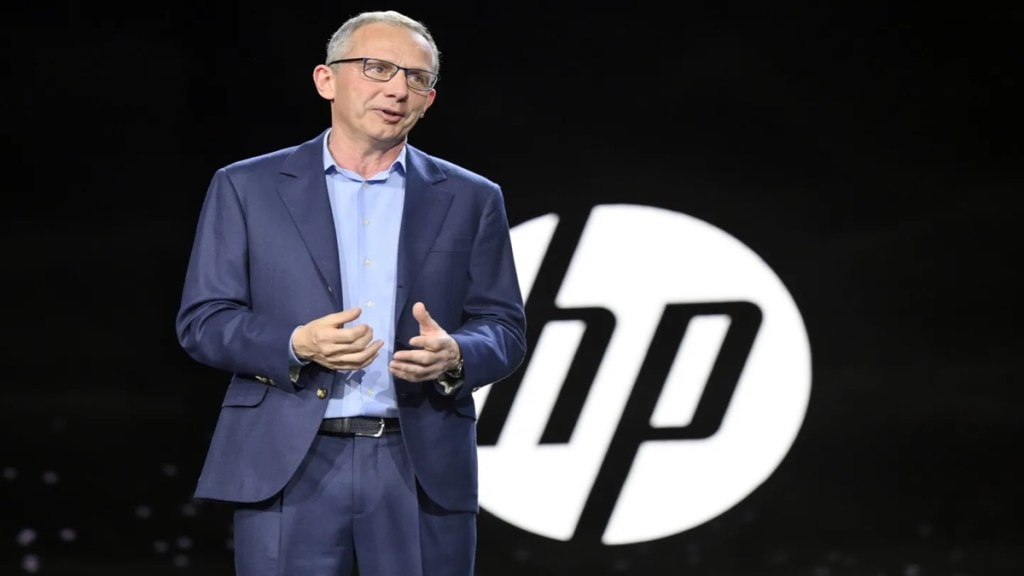
HP CEO Enrique Lores said the company is keenly looking at India to establish a broader presence. Towards this end, the organisation is adopting a two-pronged approach. For one, HP will focus on local manufacturing. Plus it will bring in top tech talent that significantly contributes to building software features which go into HP’s products.
“India is the second country in the world where we have the most employees, and a large number of them are engineers working specifically in software development, which we will integrate into the rest of our portfolio,” he informed.
According to Lores India is already an important market for selling PCs.
In fact HP is India’s top PC maker by market share, according to International Data Corporation (IDC).
“Across different categories, we have some of the highest market shares globally. Moreover, in India we conduct a lot of internal development and research…something that we use in our products sold worldwide,” Lores told indianexpress.com on the sidelines of the Amplify conference held in Nashville, Tennessee.
Similar to other tech majors, even HP is bullish on the opportunities that Asian market offers, in terms of an untapped consumer base as well as top talent.
Further, focusing on India enables the American computer maker to diversify its supply chain.
Late last year, HP placed an order to the local contract manufacturer Dixon Technologies, to make laptops and desktops under the government’s performance-linked ‘Make in India’ scheme. Manufacturing in India helps HP to offer its products at lower price points, in turn enhancing its competitiveness.
“In India regulations require products to be built locally. We adopted these regulations a few months ago, and the month of April will mark the first month in India in which the new factory begins producing notebooks,” he added.
HP, like other tech majors, is sharpening its focus in India so that it does not have to rely on China. Recent geo-political tensions such as Washington’s growing rift with Beijing have forced many consumer companies, especially those that use China as a manufacturing location, to reduce their overdependence on Chinese production facilities. Additionally, companies like HP and others are vulnerable to President Donald Trump’s tariffs on Chinese-made goods.
Further, unlike smartphones, PCs still have a lower penetration in India. This allows companies like HP, among others, to further explore this market and sell new-age personal computers with built-in artificial intelligence features. Now more and more PC companies are looking to sell commercial AI PCs to large corporations and SMBs, where the adoption rate of AI features is pretty high.
“In other countries we are working with local authorities to develop models that leverage the local culture. This is something we are not doing in India yet. For instance, we are doing that in Spain, where we are collaborating with local universities and the government to develop a Spanish-specific Large Language Model (LLM) that integrates all aspects of Spanish culture. We are also working on the same front in Saudi Arabia, developing a similar model in Arabic. We believe this will have a lot of potential in countries like India as well,” he said when asked about how HP is looking to deploy AI models developed locally into its products.
(The writer is in Nashville, Tennessee attending the Amplify conference at the invitation of HP)