



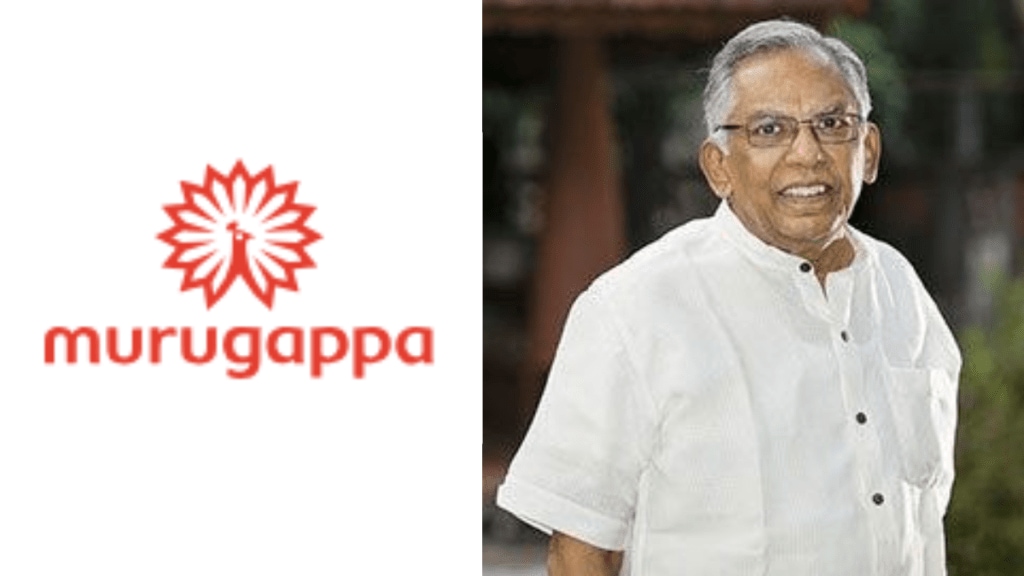
In the spring of 2001, when India’s business families were still built on the inheritance of authority as much as the inheritance of wealth, MV Subbiah walked into a boardroom in Chennai and did something few patriarchs of his era imagined, let alone attempted. At the height of his influence, and with no crisis forcing his hand, he stepped down.
He was 62, chairman of the century-old Murugappa Group and the architect of one of the more remarkable corporate turnarounds in Indian industry. But he had come to believe that running a conglomerate by custom and lineage, the way his own family had for generations, was no longer tenable in an economy that was beginning to open, globalise and compete. And so he ceded the top job to an outsider from Infosys, signalling that the future of the group would rest not with bloodlines but with structure.
It was an uncharacteristically public moment for a man who had made a career of working quietly, methodically, and almost always ahead of his time.
The heir who chose to train, not inherit
Born in 1939 in Pallathur, Tamil Nadu, into the storied Nattukottai Chettiar community, Subbiah belonged to a family that had traded across Asia for generations. Yet he resisted the scripted pathway of slipping directly into leadership.
Instead, he travelled to the United Kingdom, studying engineering at the University of Birmingham for two years before earning a diploma in industrial administration at Aston University. He later added Harvard Business School to his résumé, a rarity among Indian business scions of the 1960s.
In 2011, Birmingham University conferred on him an honorary doctorate, acknowledging not his lineage but his intellect.
His entry into the Murugappa Group began not at the top but in the operational trenches of Tube Investments & Materials. By the late 1970s, he was managing director, a disciplined executive known for process thinking rather than the flamboyance associated with Indian industrial families of the time.
The EID Parry turnaround that made his name
In 1984, the Murugappa Group took over EID Parry. Then, it was handed over to Subbiah. Founded more than 200 years ago and once synonymous with India’s organised sugar industry, the company had been drained by inefficiency and drift.
Subbiah approached it less like a scion reclaiming a legacy than like a consultant performing a full-body scan. He hired professional managers, restructured bloated divisions, cut redundancies and introduced systems of accountability that were rare in family-controlled firms at the time. He invested in Parryware, a bathroom-fittings division that he believed could be modernised and branded, pulling it away from the loose network of traders that dominated sales.
By the end of the decade, EID Parry had regained both profitability and stature. The turnaround became a kind of management parable, recounted in classrooms and, later, in articles describing how Indian firms matured through the 1980s.
Reforming a conglomerate
In 1996, Subbiah became chairman of the Murugappa Group. Unlike many family leaders before him, he believed longevity in the top job was unhealthy for institutions. His mandate: prepare the group for a century defined by globalisation, competition and transparency.
His answer was governance reform.
During this period, he created the Murugappa Corporate Board, a centralised body that included external directors and clearly defined powers, a first for a major Indian business family. It institutionalised rules that earlier existed only in informal consensus.
Then came the shock.
In April 2001, at the height of his authority, Subbiah stepped down and appointed an outsider — Infosys co-founder N.S. Raghavan as non-executive chairman.
A statesman for India Inc.’s workforce
On January 19, 2004, he retired from all statutory boards: EID Parry, Coromandel Fertilisers, Parry Agro, Parrys Confectionery and the Murugappa Corporate Board. However, retirement from formal corporate roles did not end his influence.
Between 2008 and 2013, Subbiah chaired the National Skill Development Corporation, the government-backed effort to train millions of young Indians entering the labour force each year. His advocacy there echoed his corporate philosophy: create standards, build systems, measure results.
He continued as trustee of the A.M.M. Foundation, the family’s philanthropic arm, focusing on education and healthcare.
He pushed for accreditation regimes, technology-enabled training and industry-led curriculum design ideas that were far from mainstream at the time but now sit at the centre of India’s skill-development strategy.
In 2012, the government awarded him the Padma Bhushan, one of India’s highest civilian honours. Characteristically, he described it not as a personal achievement but as recognition for “teamwork.”
In later years, Subbiah turned increasingly reflective, offering a critique that was unusual for a business leader of his generation. India, he argued, had borrowed Western management frameworks almost wholesale, forgetting the commercial traditions that had once made the pre-colonial economy a global force.
The remedy, he suggested, was not nostalgia but a deeper understanding of indigenous business ethics — and a belief that modern Indian capitalism could draw upon its own intellectual heritage as confidently as it adopted global practices.
A legacy beyond wealth: The Murugappa way
The Murugappa Group that Subbiah left behind looks almost nothing like the one he inherited. By 2024, the group’s net worth had expanded to Rs 85,000 crore
The fourth generation, including business leaders like Vellayan Subbiah, now builds on that architecture. Their success, often cited in global entrepreneurship forums, is inseparable from the institutional groundwork he laid.
Today, as Indian conglomerates confront succession battles, governance scrutiny and global competition, many of the principles Subbiah championed, outside directors, separation of ownership and management, structured succession, and professional meritocracy, have become mainstream.