



Market expansion: FnP, known earlier as Ferns N Petals, has refreshed its logo, tweaked its brand name, strengthened its senior leadership team, launched its first television commercial, raised funding, and introduced a new vertical targeting young mothers — all in less than a year. The goal: become a one-stop destination for gifting, a growing Rs 2.5-trillion industry. The company hopes to reach its revenue target of Rs 1,000 crore in FY25, from Rs 650 crore revenue in FY22.
From flowers to cakes to chocolates to grooming hampers, the company, which was launched in 1994 as a single offline retail store for flowers, has expanded its bouquet of offerings and footprint to cover over 80% of Indian pin codes. The brand now has close to 400 shops across 150 cities along with over 500 third-party tie-ups, besides a strong international footprint. It receives 10,000 orders a day on an average from within India and generates 75% of its business online; the rest is offline.
The journey thus far hasn’t been a cakewalk for FnP, which addresses a market that is largely unorganised. “People once thought of flowers as a product that would ‘waste’ away in two days. Over the past 28 years, we worked to change this mindset and have successfully associated flowers with emotions. Back then, there was just one ‘Diwali’ for us — Valentine’s Day. We have pumped a lot of money since then to create many such days,” says Anil Sharma, COO, retail & franchise, FnP.
The company was one of the early adopters of e-commerce in 2004, which helped it to scale up quickly between 2008 and 2014. Over the years, it managed to build a large distribution network with the help of its franchise partners, allowing the company to deliver products to multiple locations in two hours. It takes an individual between Rs 13 lakh and Rs 15 lakh to set up a franchise for FnP, which includes fees, training and equipment, and some initial stock.
With the help of this network, the company in 2017 forayed into another perishable product — cakes — and now sends out close to 5,000 orders a day. FnP Cakes currently has over 160 stores and hopes to become the largest in the category in three years.
The first step towards putting together this bouquet of offerings has been to create a strong sourcing and delivery network. “For fresh flowers, we are focused on creating an ecosystem where the partners will have direct access to farms. We are rethinking our strategy of engaging in contract farming. For cakes, we are associating with established vendors to source key raw materials such as premixes and fresh dairy products. We are setting up a contract manufacturing unit to support the existing franchise network,” says Pawan Gadia, global CEO and director, FnP.
Strong backend
Such ambitious plans come with their own set of challenges. According to COO Sharma, the company saw consistent growth of 30%-32%, for over a decade. However, the rate slowed down in the aftermath of the pandemic. Growth this year is projected to be about 20%-22%. Rising raw material cost has also cut into margins.
Moreover, many new brands are exploring the gifting segment with gusto. Players such as IGP, Interflora, and Floweraura have a strong presence online. Archies, another legacy brand, is banking on its online presence to bolster its strong vendor network. Says Varun Moolchandani, executive director of Archies, “We’ve built a strong business over these years. Our vendor relations go back about 44 years, and there hasn’t been a single occasion when they’ve failed us in terms of quality and timelines. “
Experts say FnP has done a good job of establishing itself as a brand to reckon with. “FnP is a brand name that has become a category of its own for flower delivery on special occasions,” says Samit Sinha, founder and managing partner, Alchemist Brand Consulting. “It has an opportunity to expand the portfolio. This will help differentiate it from competitors, and target a more mature and affluent segment of consumers.”
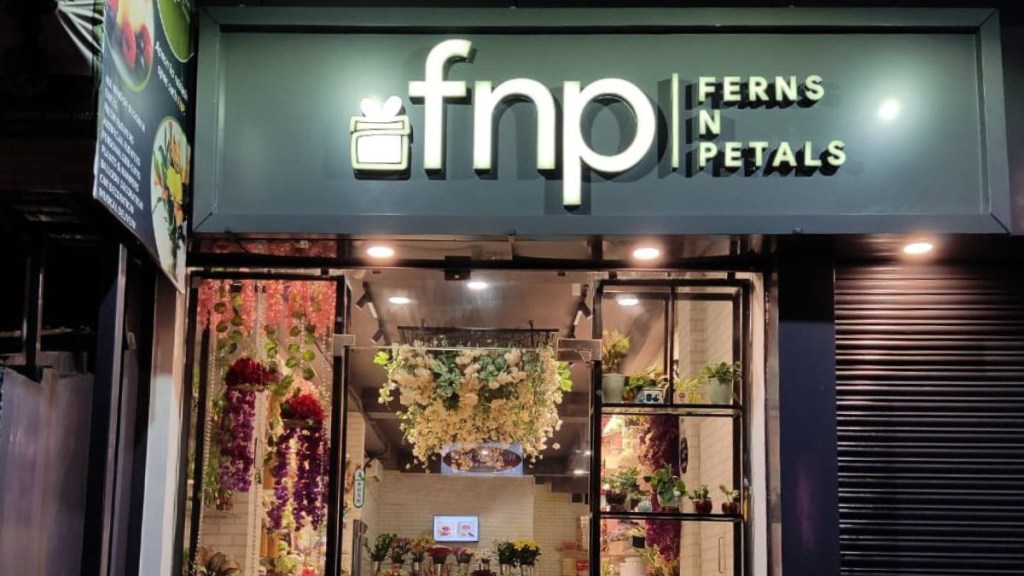
For now, the firm is working at rolling out its redesigned outlets and devise new ways to engage consumers. “We are increasing our focus on Gen Z and millennial consumers. We have created a new prototype for our store with interiors that would offer an international look and feel,” says Sharma. The company is also expanding its presence in tier-II and III towns.