



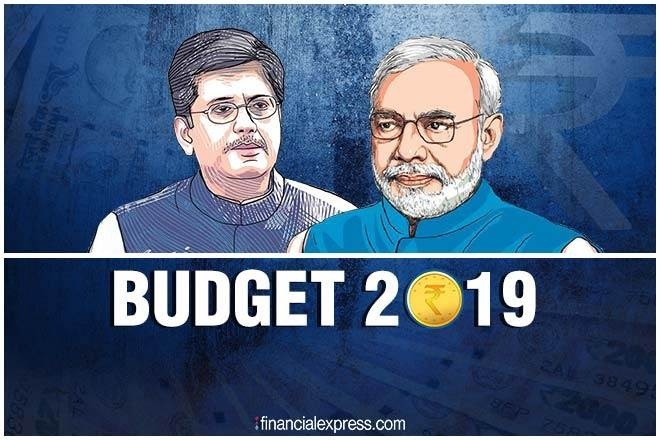
Budget 2019 Expert Opinion on Budget Expectations: With just a day left for the Modi government’s pre-election budget, speculations are going around whether the Finance Minister would issue a full-fledged budget making some big-ticket announcements or simply follow the protocol of issuing interim budget. The budget scheduled to be presented on February 1, is being keenly awaited as it is expected that the government will put favourable measures in plate of the masses.
During its tenure, the Modi government had witnessed evolving economy and resultant tax issues, therefore, it made continuous efforts to benefit different section of the society from corporates to individuals over the four years of its governance. Given the high expectations and limited fiscal space, meeting the plethora of expectations would be a really daunting task for the government. However, there remained certain issues that India Inc wishes the government would address in its interim budget.
Also read: Kerala budget 2019: From tourism to Sabarimala; key allocations in first budget post flood
Easing off corporate tax liability
While presenting its first budget 2015-16, the Modi government proposed to reduce the corporate tax rate from 30% to 25% gradually over its tenure. Currently, the Indian companies are bearing heavy tax burden, which includes corporate tax, dividend distribution tax and various cesses. Further, applicability of reduced rate of taxation necessitates adherence to the condition of not availing tax incentives/ exemptions. Its zero hour that government should maintain its long standing commitment of reducing the corporate tax burden and relieve corporate tax payers by un-conditional applicability of 25% corporate tax rate.
Rationalisation of Minimum Alternate Tax (MAT) provisions
Reduction in the corporate rate of taxation would not alone provide the desired relief to the corporate tax payers. Corporate tax rate and MAT goes hand in hand owing to the comparison between the two while discharging the income-tax liability by the companies. It is expected that the government should bring effective reduction in rate of taxation under MAT alongside the reduction in the corporate tax rate, otherwise, benefit of reduced corporate tax rate would stand wasted in certain cases.
Clarification of absolute removal of cascading effect of Dividend Distribution Tax (DDT)
It is expected that the Budget 2019 would provide a uniform and simplified taxation regime, providing for DDT credit irrespective of the stipulations that the recipient company should hold 51% or more of the share capital of the company declaring, distributing or paying the dividend.
Curb the angel tax
The provisions of section 56(2)(viib) in the Act were issued to curb the practise of tax avoidance and discourage trade of black money through the issuance of share capital by the closely held companies. The said provisions became a hurdle for the government in accomplishing their objective of promoting start-ups. The said provisions brought within its purview the funds raised by start-ups from the investors. Despite numerous steps taken by the government to address the challenges of start-ups, one or the other obstacle emerged hampering the growth of start-ups. A large percentage of the start-ups in India expect the government to abolish angel tax and provide much-needed relaxation to the start-ups.
Tax the foreign player in digitalised economy
The world is witnessing unfolding digital economy leading to diversified business practises and business models. In addition to the steps being taken world-wide to address the tax challenges and concerns arising from the digitalised economy, the Indian government introduced the concept of significant economic presence (SEP) to tax the profits generated by the digital business models.
SEP was introduced to give acceptance to the phenomenon of virtual presence in its domestic tax law which traditionally formed its basis of taxation on physical presence. However, such provisions are futile as the user and revenue thresholds which are necessary to make the SEP provisions effective are still awaited. Thus, the Indian corporates are expecting governments to spell out the threshold to give effect to such provisions. Further, SEP provisions involves subjectivity and certain terms requires clarity. Thus, elucidation is required on the terms ie ‘systematic and continuous’ included in the definition of SEP to remove any scope of litigation and doubtful interpretation. This will ensure a level playing field for foreign players and the domestic companies providing digital services.
Budget 2018 widened the definition of business connection by including the activities of person playing principal role in conclusion of the contracts. The term ‘principal role’ is subjective in nature and poses the risk of litigation. The government is expected to provide definite meaning to the term.
(Disclaimer: This article has been authored by Rakesh Nangia, Managing Partner, Nangia Advisors LLP. Views expressed in the article are author’s own)