



Budget 2018: The Union Budget 2018 clearly recognises the strain on the economy, particularly in the farm and informal sectors, in terms of job creation. The two big policy steps—demonetisation (DeMo) and the goods and services tax (GST)—have certainly affected cash-based micro, small and medium enterprises (MSME), and also agricultural credit and trade markets. In fact, the Economic Survey 2017-18 acknowledges that DeMo reduced demand and production till middle 2017, especially for the cash-based informal sector, affecting the MSME sector.
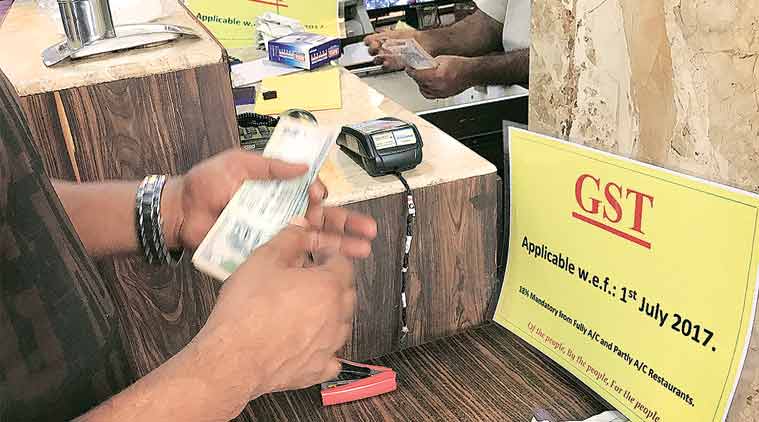
When remonetisation significantly improved the cash-to-GDP ratio by mid-2017, GST was rolled out on July 1, 2017, affecting the supply chains of small traders and also MSMEs supplying intermediates to larger firms due to compliance cost and paper work. Budget 2018 has certainly delivered when it comes to giving a boost to MSMEs and agriculture. The proposal to increase agricultural credit by 10% to Rs 11 lakh crore and a host of other policies, along with allocation for rural economy, would revive demand and create opportunities for the MSME sector, crucial for jobs and growth. MSMEs are labour-intensive and the need of the hour is to create an enabling environment for them to invest and grow, creating jobs, pushing demand and growth.
Know how Arun Jaitley’s Budget 2018 will impact your tax liability with this Income Tax Calculator
In this context, the Union Budget hits the target by providing ample budgetary allocations and appropriate policies. The first big step for MSMEs is cutting corporate tax rate to 25% of companies with annual turnover up to Rs 250 crore from Rs 50 crore, which would leave more investable resources with 99% of 7 lakh firms filing their tax returns. This would enable them to not only reinvest and expand, but also help them spend more on research and development, which is crucial for their competitiveness.
WATCH | Five key takeaways for Indian stock markets
It is a well-known fact that the Indian MSME sector is suffering from the dearth of easy finance and proper credit instruments. Banks mostly offer credit against a collateral, and MSMEs, particularly micro and small exporters, are not in a position to do so, depriving them of access to the formal credit market. Further, limited access to export credit and export insurance for MSMEs is also another constraint. Therefore, making a provision of Rs 3 trillion for the MUDRA scheme for 2018-19, and making an additional Rs 3,794 crore for MSMEs for credit, capital support, interest subsidy and promotion of innovations are much desired steps. The MUDRA scheme was founded with the motto of “funding the unfunded” by extending financial support, including refinancing, to the micro segment of the economy.
READ | Union Budget 2018: Cut in corporate tax to boost MSMEs growth, say top company officials
There are already reports that the scheme has created 5.5 crore direct and indirect jobs in the last two years. As the Economic Survey brings out that almost 83% of the total loans of Rs 26,041 billion by banks till November 2017 were appropriated by large firms, leaving only a small proportion of 17% to large number of SMEs. Therefore, big allocation in Budget 2018 for the MUDRA bank and for additional credit facility for MSMEs compliment earlier programmes such as the Prime Minister Employment Generation Programme for unemployed youth and micro enterprises in the non-farm sectors; and the Credit Guarantee Scheme for Micro and Small Enterprises and extending credit limit to Rs 200 lakh per borrowing unit.
WATCH | 5 Must-Know Budget-Related Terms
Similarly, allocation of Rs 2,164 crore for the remission of state levies (ROSL) for exporters schemes, compared to Rs 1,855 crore last year, would help SMEs involved in exports. However, the government can think of allowing MUDRA to relax on eligibility criteria and extending subsidy beyond government schemes. It is also better to have fixed interest rate on the MUDRA loan, which currently fluctuates between 1% to 7%, according to the risk and customer profiles. Textile is a large and labour-intensive industry, predominantly dominated by small firms, and a comprehensive package with allocation of Rs 7,148 crore, compared to Rs 6,000 crore last year, augurs well for MSMEs in textile sector. The package would complement the Amended Technology Upgradation Fund Scheme, introduced in 2016, to provide capital subsidy for machinery at 15% for garmenting and technical textiles segments with a cap of Td 30 crore and at 10% for weaving, processing, jute, silk and handloom segments with a cap of Rs 20 crore.
READ | Budget 2018: Import duty hikes, focus on MSMEs, farm push to spur domestic auto industry growth
The big budgetary support positively affects textile units and helps them gain back the momentum needed to create more jobs and value addition. The NDA government has taken a few major steps in the last few years to help MSMEs. In October 2017, the ministry of micro, small & medium enterprises set up an online portal aimed at monitoring cases of delayed payments to SMEs and enforcing provisions under the MSMED Act, 2006—MSME Samadhaan, an initiative for an online census of MSMEs so that discretionally MSME policies could be better targeted. The government also has given greater protection to the lending of NBFCs to SMEs and giving 50% fee reduction to SMEs for innovation and protection of their innovation.
WATCH | Budget 2018: 10 New Facts On The Indian Economy
The need of the hour is job creation and Budget 2018 has rightly focused on employment generation by giving priority to labour-intensive employment-generating sectors, including textiles, leather and MSMEs. In fact, MSMEs contribute around one-third of total value added and exports, but their performance has been affected by rupee appreciation, teething problems in GST and DeMo. All the above mentioned measures in this year’s Budget will also help exports of MSMEs, particularly after the government announced incentives worth Rs 8,450 crore in December 2017, to boost exports of goods and services, mainly from labour-intensive MSMEs. Some special labour-intensive sector-specific packages like Rs 10,000 crore for fisheries and Rs 1,290 crore for the bamboo sector will help MSMEs in these sectors.
READ | Budget 2018: Rural sector including agriculture and MSME are key facets of budget, says Hasmukh Adhia
However, one-stroke allocations and policy initiatives in Budgets will not be enough. MSMEs need support and hand-holding constantly, as there are many challenges for them, such as access to finance, low scale, huge competition from large firms, low research and development, market access, lack of appropriate technologies, retaining skilled manpower, etc. MSMEs constitute the backbone of the economy and sustained focus and support to the sector will go a long way towards job creation and add to India’s growth trajectory.
Pravakar Sahoo, Professor, Institute of Economic Growth, Delhi