



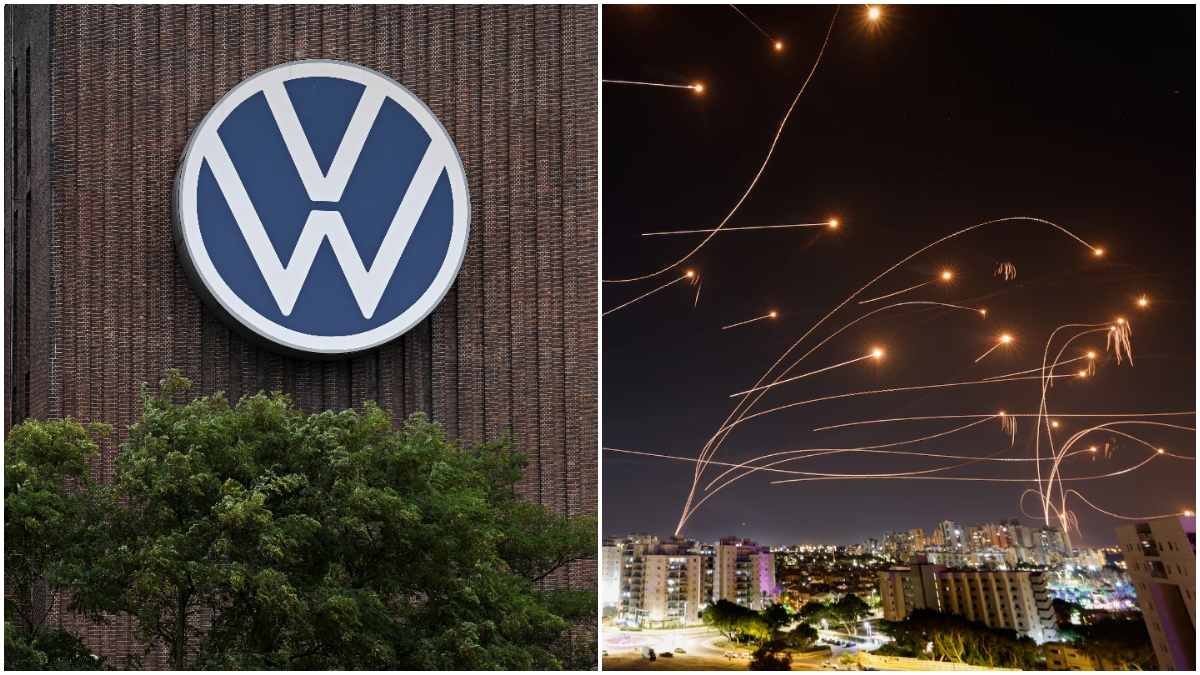
Volkswagen is in discussions with Israel’s Rafael Advanced Defence Systems about a possible deal to change how its Osnabrueck plant is used, according to a report by the Financial Times citing sources familiar with the matter.
The idea being explored is to shift the factory from making cars to producing parts for missile defence systems, including components linked to Israel’s Iron Dome. However, Volkswagen said it is only looking at different options for the site and clarified that it is not planning to manufacture weapons, even though talks with outside partners are ongoing.
The Osnabrueck plant, which employs about 2,300 people, is set for changes after production of the T-Roc Cabriolet ends in 2027. Volkswagen has been considering selling the facility or repurposing it as part of a broader restructuring plan.
Earlier talks with defence company Rheinmetall over a possible sale fell through last year. Still, CEO Oliver Blume recently said the company continues to speak with defence firms as it looks for a future plan for the plant.
VW to pivot from cars to defence?
According to FT, carmakers in Germany have been hit by falling profits, rising competition from Chinese companies, and a slow shift to electric vehicles.
The plan focuses on Volkswagen’s Osnabrueck factory in Lower Saxony, which has been at risk of shutting down. Both companies are looking at ways to protect all 2,300 jobs at the site and possibly even expand the workforce.
People involved in the discussions say the goal is not just to save jobs but to create growth, though workers would have to decide individually if they are willing to move into defence-related production. The German government is said to be backing the proposal, as per the report.
What the factory could produce
Under the proposal, the Osnabrueck plant would manufacture parts for the Iron Dome air defence system. This includes heavy trucks used to carry missiles, launchers, and power generators. The factory would not produce the missiles themselves.
Setting up this new line of production is expected to require only limited investment. Sources say the transition from car manufacturing to defence components would be relatively straightforward, using existing facilities and expertise.
If the plan moves forward, production could begin within 12 to 18 months. However, this depends on workers agreeing to shift to defence manufacturing.
Rafael is also planning to build a separate facility in Germany specifically for producing missiles, since that work requires specialised infrastructure.
Why Germany?
Rafael is looking to sell the Iron Dome system to several European countries, including Germany, as governments increase defence spending following Russia’s invasion of Ukraine, the report suggests. It further states that Germany has already started strengthening its air defence systems and recently received the first of three Arrow 3 systems from Israel Aerospace Industries.
Sources told FT that Germany was chosen as a base for European production partly because of its strong support for Israel. There has also been encouragement from German officials to make better use of spare capacity in the country’s struggling industrial sector.
Germany is planning to spend over €500 billion on defence by the end of the decade, with air defence systems being a key priority.
Volkswagen’s Restructuring Plans
Volkswagen has been searching for a long-term plan for the Osnabrueck plant as part of a wider cost-cutting strategy agreed in 2024. Vehicle production at the site is expected to stop next year.
As part of its restructuring, around 35,000 employees across Volkswagen plants are expected to leave the company by 2030, though all exits are planned to be voluntary, the FT report said.