



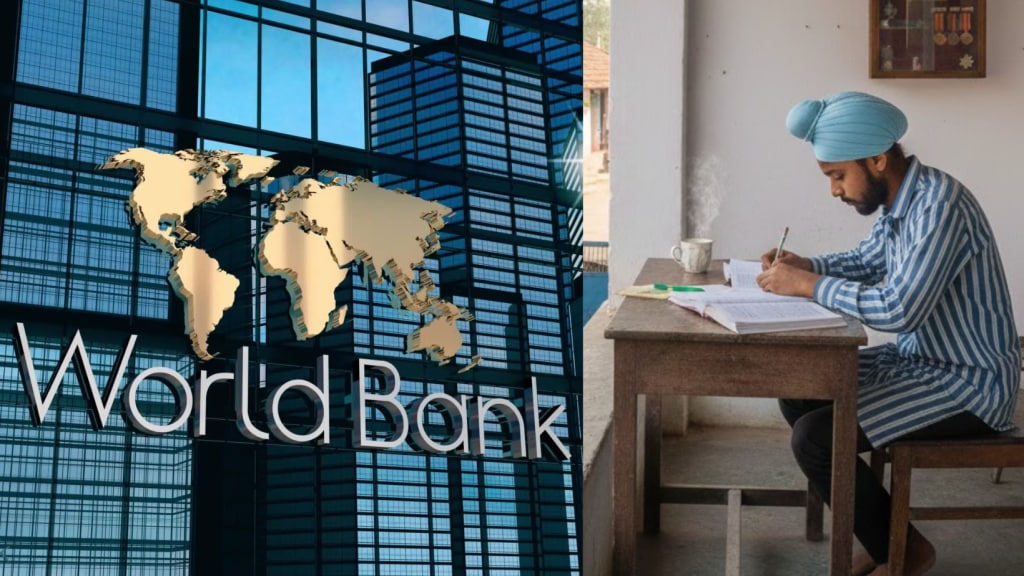
When Ajay Banga was born in Khadki, a small town in Maharashtra, few could have imagined that one day he would lead one of the world’s most powerful financial institutions. Today, Ajay Banga is the President of the World Bank Group shaping policies that affect billions of people and the global economy itself.
Banga was born on November 10, 1959, into a Sikh family. His father served as an officer in the Indian Army, which meant the family moved frequently across the country. This life gave Banga early exposure to discipline, adaptability, and different cultures.
Academically bright, he won several awards and scholarships. Regardless of growing up in an army household, he chose a different path.
Years later, thinking on that decision, Banga once explained that times had changed. Careers like management and global business were opening up in ways his father’s generation never saw. “I had more choices than my dad,” he said in an interview with Rediff adding that each generation should have better opportunities than the last.
From Delhi classrooms to corporate corridors
Banga studied economics at St. Stephen’s College in Delhi, graduating with honours in 1981. He then went on to complete his management education at the Indian Institute of Management, Ahmedabad.
His career began as an intern at Nestlé India. Over 13 years, he worked his way through sales, marketing, and general management roles, helping build brands and launch products across the country. This early experience grounded him in the basics of business understanding consumers, markets, and execution on the ground.
How did he leap into global finance?
After a brief stint at PepsiCo, where he headed marketing for its snacks division in India, Banga joined Citigroup in 1996. This move would take him beyond India and into global finance.
Over the next decade, he rose steadily within Citi’s consumer banking business. In 2008, he became CEO of Citigroup Asia Pacific, overseeing operations across multiple countries during a time of financial uncertainty. His ability to manage complexity and scale soon caught global attention.
Transforming Mastercard
In 2010, Ajay Banga became the CEO of Mastercard. What followed was a defining chapter of his career. Under his leadership, Mastercard moved beyond being just a payments company. It embraced technology, data analytics, and fintech partnerships, also making financial inclusion a core mission.
Millions of people without access to formal banking were brought into the digital economy. Banga often stressed that access to financial tools was not just about money, but about dignity and opportunity. After more than a decade at the helm, he left Mastercard having transformed both its culture and its global role.
From boardrooms to global development
Before taking charge at the World Bank, Banga served as Vice Chairman at private equity firm General Atlantic and chaired the International Chamber of Commerce. He also held advisory and board roles across global institutions, from cybersecurity to healthcare and climate-focused investment platforms.
In February 2023, former US President Joe Biden nominated him as President of the World Bank. He was confirmed in May and began his five-year term in June 2023, succeeding David Malpass. Banga became the first person of South Asian origin to lead the World Bank.
A new vision for an old institution
When Banga took over, he made his goal clear, to make the 80-year-old institution faster, simpler, and more impactful. Under his leadership, the World Bank adopted a new mission, to create a world free of poverty on a livable planet. He pushed reforms to increase lending capacity, unlock private capital, and respond faster to global crises. One of his core beliefs is that jobs are the strongest driver of development.
This thinking has shaped initiatives to expand electricity access in Africa, strengthen healthcare systems, modernise agriculture, and build digital infrastructure in developing nations. He has also brought the private sector closer to development work, arguing that governments alone cannot solve global challenges at scale. Banga’s work has earned him global recognition, including India’s Padma Shri award in 2016, the Ellis Island Medal of Honor, and Singapore’s Public Service Star.