



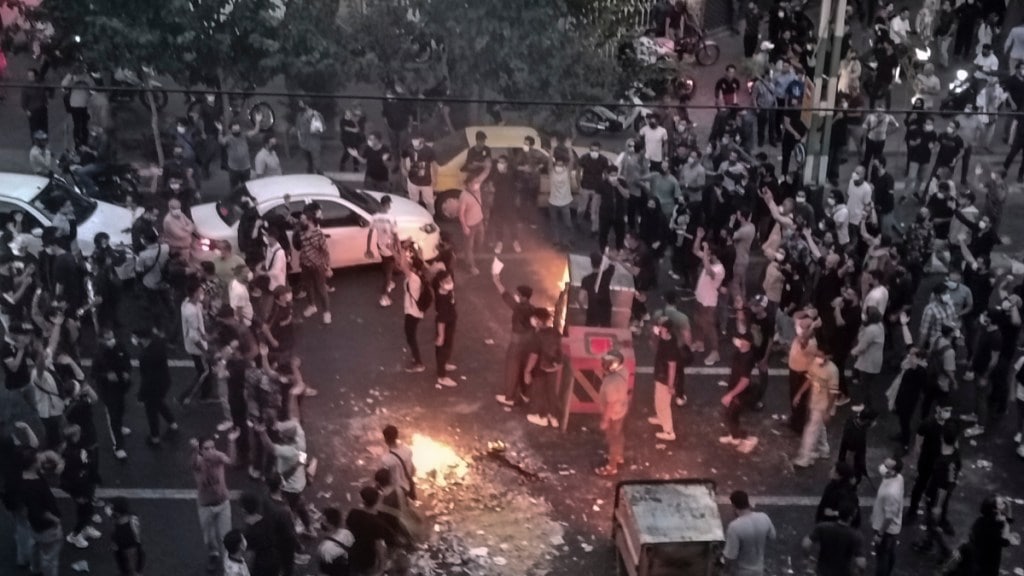
At least 35 people have been killed as protests in Iran continue to cause unrest across the country. The numbers were shared by the US-based Human Rights Activists News Agency. The group said that more than 1200 people have been detained during the protests, which have continued for over a week now. It also reported that 29 protesters, four children and two members of the security forces have died.
Protests spread across 27 of Iran’s 31 provinces
According to the Agency, protests have spread to more than 250 places across 27 of Iran’s 31 provinces. The group gathers information through activists inside Iran and has been considered reliable during past periods of unrest, a report by Associated Press said. Meanwhile, the semi-official Fars news agency, which is seen as close to Iran’s Revolutionary Guard, said late on Monday that around 250 police officers and 45 members of the Basij volunteer force were injured during the protests.
Will Trump step in?
With the number of deaths rising, the risk of US involvement has also grown. US President Donald Trump warned Iran on Friday that Washington could step in if peaceful protesters were killed by force. He did not explain what form that action might take, but his remarks quickly drew a sharp reaction from Tehran. Iranian officials responded with threats, saying American troops stationed in the Middle East could be targeted.
Trump’s warning gained added weight a day later, after the US military detained Venezuelan President Nicolás Maduro, a close ally of Iran.
What’s fueling the protests?
The protests first broke out over rising prices and the sharp drop in Iran’s currency. Since then, they have turned into something far bigger. Many people on the streets are now openly criticising the government and the political system, chanting slogans against Supreme Leader Ayatollah Ali Khamenei and calling for major change.
The situation worsened after tougher sanctions and Iran’s struggles following a 12-day war with Israel. In December, the rial crashed to around 1.4 million to the dollar, and protests soon followed. Foreign media says that it has been hard to judge how widespread the unrest really is as the state-run media has shared very little information.
Videos surfacing online show only short, unclear scenes of crowds or the sound of gunshots. Journalists inside Iran also face strict limits, including the need for travel permission and the risk of harassment or arrest.
Even so, the protests appear to be continuing. This is despite Supreme Leader Ayatollah Ali Khamenei saying on Saturday that “rioters must be put in their place.”