



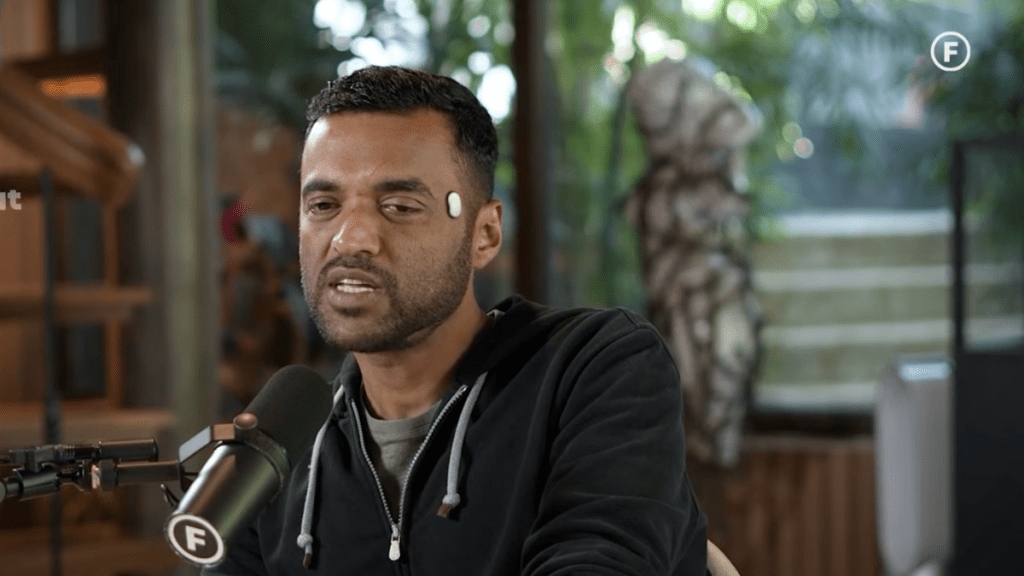
A startup founder, Akshat Shrivastava, shared his views on LinkedIn on why Zomato founder Deepinder Goyal may be looking beyond food delivery as his core focus. Shrivastava argued that with Zomato posting operating margins of just about 3 per cent and little visible improvement, Goyal is working on building new ventures to ensure long-term sustainability.
‘Temple is Zomato’s next big venture’
“Deepinder Goyal wears Temple: a brain monitoring, blood flow measuring device,” Shrivastava wrote on LinkedIn. He was referring to Goyal’s appearance on Raj Shamani’s podcast, where the Zomato founder was seen wearing a small silver device near his temple. The accessory later drew attention online and was revealed to be Temple, Goyal’s entry into the health-tech space.
The device, which measures cerebral blood flow – a key biomarker associated with neurological wellbeing, cognition, ageing, and longevity, was founded in August of 2024 – months before it went viral.
Back to Shrivastava’s post. He described Temple as Zomato’s next big venture. “What is he doing? Generating a visual proof before launching it as a full-blown product.”
Shrivastava also explained why, in his view, Goyal cannot rely solely on Zomato’s core business. “Because it is a cost-competitive, low-margin product. Zomato did 12,000Cr in sales with 351Cr profits in 2024. That’s 3% operating profit margins. There is no visible sign of improvement here.”
He further noted that with rival Swiggy continuing to raise capital, the sector remains locked in a cash-burning battle. “This is essentially a race to the bottom,” Shrivastava said.
It is to be noted that Goyal has shown interest in the aviation sector and founded LAT Aerospace in January this year. According to the company’s LinkedIn page, it will offer a “network of high-frequency, low-cost, 8-seater, STOL (short take-off and landing), medium-haul aircraft that make every city, every town, and every community accessible”.
The company claims its aircraft will operate from compact “air stops” no larger than a parking lot.
Shrivastava said that Goyal is following in the footsteps of Amazon. “For a firm to eventually sustain, you need a high-paying ecosystem. Amazon did this with AWS. And, Deepinder Goyal is quietly building towards that.”
From an investor’s perspective, Shrivastava said returns may materialise only after this transition is complete, adding that it could take time.
What social media users have to say
“This reads less like a side quest and more like a margin escape hatch. When the core business is structurally thin, optionality has to come from building a higher-leverage ecosystem, not squeezing operations harder. The interesting part isn’t the device, it’s the willingness to prototype the next profit engine in public,” said one LinkedIn user.
Another added, “Adding to this, what strengthens the thesis is that this isn’t an isolated bet. Deepinder Goyal has been deploying personal capital across future-facing, high-margin domains well beyond food delivery. From Temple (health, longevity, brain monitoring) to LAT Aerospace (regional aviation) and early bets in health, logistics, and deep-tech, the pattern is clear, building optionality outside a structurally low-margin core. The device may look experimental today, but the capital allocation mindset is long-term. This feels less like a distraction and more like a deliberate attempt to create a high-value ecosystem that can eventually subsidise the delivery business, exactly the kind of transition public markets reward, albeit with patience.”
“Akshat Shrivastava, Amazon is an excellent example of compounding through reinvention. The real lesson isn’t ‘pivot fast’. It’s built optionality while the core business throws off cash,” commented a third.
A fourth pointed out, “Akshat, the intent might make sense, but what about the sequencing? You don’t fix a 3% margin business by launching something completely orthogonal. AWS came after Amazon dominated retail logistics first.”