



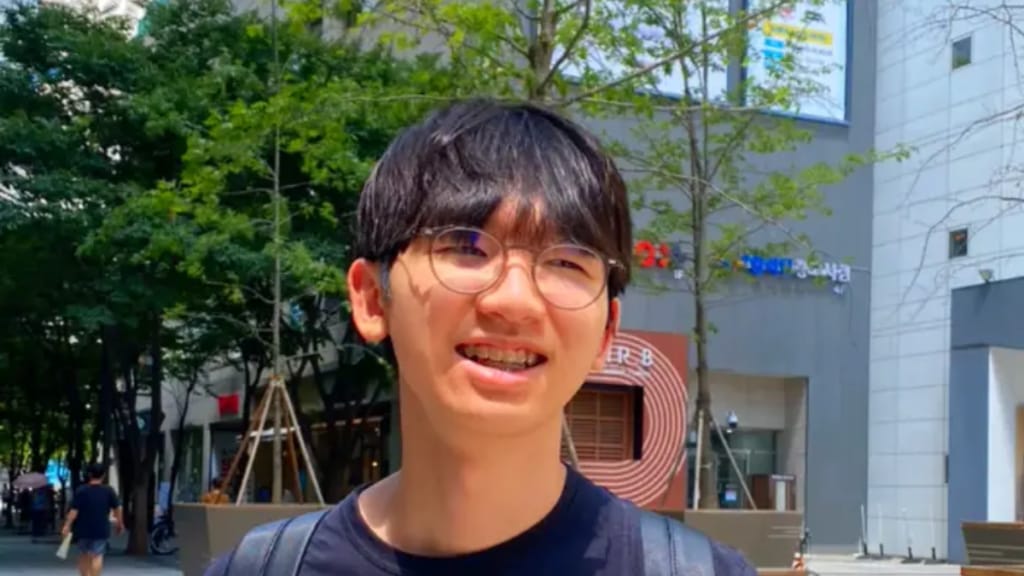
Alex Yang, an 18-year-old high school senior in Seoul has built a global AI research startup aimed at improving Alzheimer’s diagnostics, managing a team spread across multiple countries while continuing his regular school life, according to Business Insider.
The student, who begins his day as early as 3 am to coordinate with collaborators in the United States, founded the startup with one goal in mind: making early Alzheimer’s detection more accessible and affordable. Despite having no professional network at the time, he turned to online platforms to build one from scratch, the Business Insider report added.
His motivation stemmed from growing up around stories of family members affected by Alzheimer’s. The disease left a lasting impression, shaping his determination to work on solutions while still in school. What began as a personal fear soon became a research-driven mission.
Finding collaborators online and launching Reteena
With no academic backing or industry connections, the student began posting detailed research proposals on Discord servers and sharing early code on GitHub. After weeks of rejections, responses slowly began arriving from students based in California, Florida, and Michigan, the report further added.
Eventually, six high school students from different parts of the world came together to form a team. They named their startup Reteena, a wordplay inspired by the retina, symbolising their aim to bring clearer insight into Alzheimer’s diagnostics.
The team focused on enhancing low-field MRI scans using machine learning and deep learning techniques. Low-field MRI machines are more portable and affordable than conventional systems, and improving their image quality could help bring diagnostics to underserved regions, according to the report.
Managing a team across time zones proved demanding. The founder said the responsibility weighed heavily, knowing that delays or mistakes could waste months of collective effort. Over time, he introduced structured workflows, detailed documentation, and asynchronous coordination to keep research moving continuously across regions.
Research publication, product launch and current status
The team’s efforts received early validation when their first research paper was accepted at the IEEE BigData 2024 Conference, a major international forum for artificial intelligence research. Following this, the group expanded to 12 members and conducted further studies on speech pattern changes and genetic indicators linked to early Alzheimer’s detection.
Documenting their journey on LinkedIn helped the startup gain visibility among researchers, startup founders, and investors, including mentors associated with Y Combinator and Pear VC. The exposure also led to messages from students across countries seeking advice on building health technology projects.
Most recently, the team launched its first consumer-facing product, Remembrance, an AI-based therapeutic service designed to help Alzheimer’s patients reconnect with past memories. The service uses reminiscence therapy by prompting patients with gentle questions, then organises recalled memories into structured databases that can be revisited over time.
However, attempts to test the product in clinical settings have faced regulatory barriers. Approaches to hospitals were halted due to compliance requirements and institutional review board processes, highlighting the challenges of entering the healthcare sector.
While the startup’s long-term future remains open, the founder believes the experience itself has been the real achievement. Learning to build, research, and navigate failure at a young age has shaped both the team and the mission.
For now, Reteena continues to refine its research and product, with the team focused on completing further studies and exploring pathways for real-world deployment, even as its founder balances startup leadership with finishing high school.
He said, “That’s the real experiment. And it’s worth every sleepless night.”