



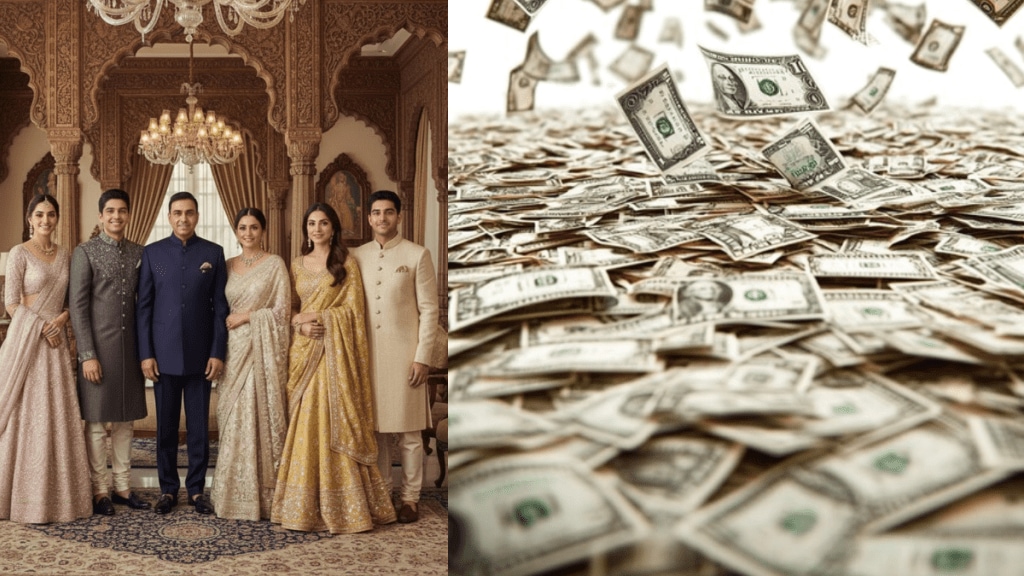
Bloomberg’s latest ranking of the world’s richest families reveals a fascinating mix of old money, new money, and global empires spanning industries from tech and oil to fashion and finance.
But when it comes to India, only one name made the list, the Ambani family and it is no surprise, the scale of their wealth and influence continues to increase especially in the context of the booming global economy.
Here is a closer look at the families topping the 2025 Bloomberg World’s top 15 Richest Families list:
The Waltons — $513.4 Billion
Topping the list once again are the Waltons, who hold a majority stake in Walmart, the world’s largest retailer. Walmart’s success story is legendary, starting from a small five-and-dime store in Bentonville, Arkansas, in 1950, to now serving 270 million customers each week across the globe.
The Walton family’s influence continues to grow, and this year their combined fortune exceeds half a trillion dollars for the first time. Walmart’s total revenue for the most recent fiscal year reached $681 billion, its massive footprint with over 10,750 stores worldwide is the core reason.
Al Nahyan Family — $335.9 Billion
The ruling family of Abu Dhabi, which holds most of the United Arab Emirates’ oil reserves, sees their wealth continue to soar. Under the leadership of Sheikh Mohamed bin Zayed Al Nahyan, who is also the country’s president, the family’s assets are vast, with investments in AI, crypto, and more.
The Al Nahyans have shaped the UAE’s modern economy, and their global influence keeps expanding. Sheikh Tahnoon, a key family member, oversees assets worth $1.5 trillion and has been a major investor in the crypto space.
Al Saud — $213.6 Billion
The Saudi royal family’s massive wealth is anchored in the country’s vast oil reserves, primarily controlled by Saudi Aramco. The family’s wealth surged this year, with estimates now factoring in revised past inflows. Though the family is estimated to have around 15,000 extended members, much of the wealth is concentrated in key royals, including Crown Prince Mohammed bin Salman. In 2017, Crown Prince Mohammed bin Salman initiated a high-profile crackdown on corruption, detaining royals and businessmen in a luxury hotel.
Al Thani — $199.5 Billion
Qatar’s ruling family, the Al Thanis, have seen their fortunes skyrocket since oil was discovered in the region in the 1940s. The family has since diversified, holding stakes in luxury goods, private banking, and prized foreign real estate. Qatar has become a global player, and so have its royal family members, who occupy influential political and business roles. The Qatari royal family once offered the Trump administration a luxury Boeing 747 to use as a temporary Air Force One.
Hermès Family — $184.5 Billion
The Hermès family has maintained their wealth for over six generations, thanks to their iconic luxury brand. Famous for their high-end handbags, including the legendary Birkin bag, the family’s fortune is built on exclusivity, craftsmanship, and innovation. Despite being one of the largest luxury houses in the world, the family still retains control of the company. A fifth-generation heir lost six million Hermès shares, a casualty of mishandling by a late wealth manager, leaving the family to recover and continue their rise.
Koch Family — $150.5 Billion
The Koch brothers inherited their father’s oil business and turned it into a massive industrial conglomerate. Today, Koch Industries spans industries from chemicals and oil refining to ranching and paper. The family has a long history of political engagement and philanthropy, particularly around libertarian causes. The Koch brothers were well-known for their fierce rivalry with their siblings, which ultimately split the family business into different divisions.
Mars Family — $143.4 Billion
The Mars family, famous for M&M’s, Snickers, and a wide range of pet-care products, continues to enjoy significant wealth. The family’s company, Mars, Inc., has grown through strategic acquisitions, including its purchase of snack-food maker Kellanova in 2025. Mars, Inc. distributed $1.5 billion to family shareholders last year, showing the strength of its diverse portfolio.
Ambani Family — $105.6 Billion
The Ambani family, India’s wealthiest, continues to dominate the global business stage. Mukesh Ambani, at the helm of Reliance Industries, controls the world’s largest oil refining complex and is a key player in telecommunications, retail, and energy. The family’s wealth is built on the shoulders of Dhirubhai Ambani, who started the company in the 1950s with little more than determination and vision. Mukesh Ambani’s 27-story mansion, Antilia, is often regarded as the most expensive private residence in the world.
Wertheimer Family — $85.6 Billion
The Wertheimers, who own the legendary fashion house Chanel, have seen their fortune rise as luxury goods continue to boom. Chanel, known for its timeless designs like the “little black dress,” remains one of the world’s most iconic brands. The Wertheimers also have diverse investments, including in racehorses and vineyards. The Wertheimer family has actively resisted takeover attempts over the years, keeping Chanel firmly under family control.
Thomson Family — $82.1 Billion
The Thomson family, based in Canada, controls one of the world’s largest financial data and media companies, Thomson Reuters. Their fortune began in the 1930s with Roy Thomson’s purchase of a radio station, which led to the creation of a media empire. In 2002, Ken Thomson donated his 2,000-piece art collection to the Art Gallery of Ontario, which was worth an estimated $192 million.
Johnson Family — $76.4 Billion
The Johnson family controls the financial services giant Fidelity, which has become a leader in wealth management and retirement planning. Under the leadership of Abigail Johnson, the family’s firm has expanded into digital assets and low-cost index funds. One in five adults in the U.S. are Fidelity customers, a testament to the company’s vast influence in the financial world.
Cargill-MacMillan Family — $73.9 Billion
The Cargill-MacMillan family’s wealth is rooted in agriculture, particularly the Cargill company’s global dominance in food and commodities. Despite a few family feuds, Cargill remains one of the largest privately-held companies in the world. In 2025, Cargill distributed a record $1.46 billion in dividends to its family shareholders, underlining the massive scale of its operations.
Hoffmann-Oeri Family — $69.4 Billion
The Hoffmann-Oeri family controls Roche, one of the world’s leading pharmaceutical companies. With a focus on oncology, Roche generates tens of billions of dollars in revenue annually. Family members also support environmental and conservation causes. Roche co-founder Lukas Hoffmann helped found the World Wildlife Fund, one of the most recognised environmental organisations globally.
Pritzker Family — $65.6 Billion
The Pritzker family, known for their control of the Hyatt hotel chain, has diversified into many sectors, including real estate and private equity. Prominent members include Penny Pritzker, former U.S. Secretary of Commerce, and J.B. Pritzker, the current governor of Illinois. The Pritzker family donated $5 million to the University of Chicago Booth School of Business to establish a Family Office Initiative.
Quandt Family — $61.3 Billion
The Quandt family’s wealth is tied to BMW, one of the world’s leading luxury car manufacturers. The family has maintained its control over the company, with members holding substantial stakes in the company despite shifts in leadership. The Quandt family’s involvement in BMW goes back to the 1960s, when Herbert Quandt saved the company from bankruptcy.