



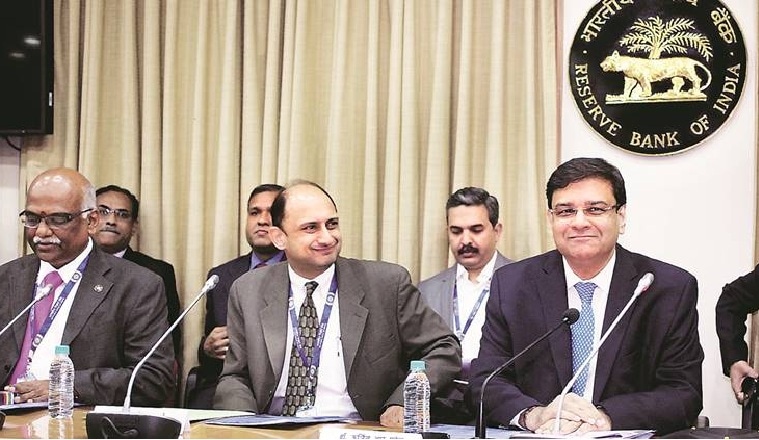
The Reserve Bank of India on Wednesday on concerns of higher inflation, firm crude oil prices, house rent allowance impact and fiscal slippage kept the repo rate unchanged with a neutral stance for the third time in its sixth bi-monthly monetary policy meet. Besides, it flagged concerns over small and medium enterprises facing trouble since the implementation of the Goods and Services Tax and gave them 180 days of time to repay their loans under some circumstances.
“The central bank’s stance was largely along expected lines, reflected in a relatively muted response in the bond and equity markets. There is only a slight shift towards a cautious bias, with headline inflation seen above target in FY19 – at above 5% in 1H FY19 and 4.5-4.6% in 2H,” Singapore-based DBS group said.
Here are the highlights from RBI’s sixth monetary policy meet:
1. The MPC kept the policy repo rate on hold and continued with the neutral stance. The MPC reiterated its commitment to keep headline inflation close to 4% on a durable basis.
2. Non-oil industrial raw material prices, crude oil price and monsoon to decide inflation outlook. The RBI MPC forecast inflation to be at 5.1% in the last quarter of the current fiscal year and between 5.1% and 5.6% in the first half of the fiscal year 2018-19.
3. The GVA growth for 2017-18 is projected at 6.6%, lower from the previous prediction of 6.7%.
4. The RBI flagged concerns over the fiscal slippage announced by Arun Jaitley in the Budget 2018. RBI said that apart from the direct impact on inflation, fiscal slippage has broader macro-financial implications, which will have economy-wide costs of borrowing which have already started to rise, leading to higher inflation.
5. The RBI said that the impact of HRA increases by various state governments may push up the headline inflation further over the baseline in the next fiscal, and potentially induce second-round effects, while expressing hope that the crude oil price may soften in future from present levels.
6. On MSMEs, the RBI said that the formalisation of business through registration under GST had adversely impacted the cash flows of the smaller entities during the transition phase with consequent difficulties in meeting their repayment obligations to banks and NBFCs.
7. While RBI remained optimistic on India’s growth, it said that even as export growth is expected to improve further on account of improving global demand, elevated commodity prices, especially of oil, may act as a drag on aggregate demand.