



By Harsh V Pant & Aditya G Sivamurthy
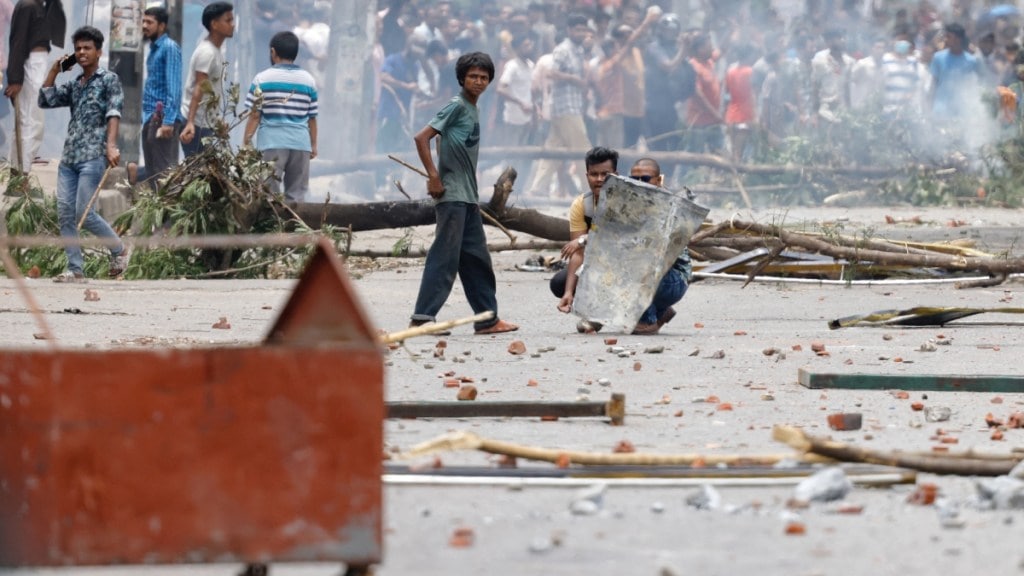
The death of student activist Sharif Osman Hadi has once again plunged Bangladesh into chaos. Violent mobs rallied on the streets, threatening the safety of Indian missions and officials, and accusing Delhi of being complicit in the assassination. The latest development demonstrates a growing concern in India’s neighbourhood, but it also overshadows India’s fair share of success and limitations throughout the year. In 2025, India walked the talk on its “Neighbourhood First” policy, particularly through its pragmatic engagement, connectivity initiatives, and development assistance. However, it has had mixed success in leveraging its influence. This year, Delhi’s policy of isolating Pakistan also witnessed a setback.
Pragmatism largely defined India’s outreach in the neighbourhood. Of Prime Minister Narendra Modi’s nearly 20 international visits, three were in the region (Bhutan, Maldives, and Sri Lanka). PM Modi visited Bhutan, despite the terror attacks in Delhi a day before his visit. India also continued engaging with the government of the day, even when certain leaders or parties had been critical of India or detrimental to India’s interests. With the Maldives, the focus was on implementing the economic and maritime security partnership vision launched in October 2024. In Sri Lanka, despite the ruling party’s anti-Indian past, India sustained its momentum and connectivity initiatives.
Telephone conversation with his Afghan counterpart
In May, Union External Affairs Minister S Jaishankar held a telephone conversation with his Afghan counterpart, making it the first ministerial-level interaction since the regime change in 2021. Since October 2025, three cabinet ministers from the Taliban visited India, and Delhi upgraded its technical mission in Kabul to an embassy. India was also quick to engage with the interim government in Nepal. With Bangladesh, despite growing irritants, India invited the interim government’s National Security Advisor (NSA) to participate in the Colombo Security Conclave’s NSA-level meet.
This outreach was also coupled with connectivity initiatives, except for Bangladesh, where Indian projects have been stalled. Flagship projects like the Greater Male Connectivity Project (in the Maldives), hydropower cooperation (in Nepal and Bhutan), commitment to revive Trincomalee as an energy hub (in Sri Lanka), and railway links (with Bhutan), have continued to make progress. India has pledged its assistance to the GMC Project and even declared the two railway links with Bhutan as Special Railway Projects. In Sri Lanka, Adani’s West Container Terminal of the Colombo Port became operational in 2025.
India continued with development cooperation, tailoring certain initiatives to meet the needs of its neighbours. To assist the Maldives with its debt burden and depleting USD reserves, India offered an INR-denominated credit line worth $565 million and restructured its debt, reducing annual debt obligations by 40%. With Sri Lanka, following the devastation caused by Cyclone Ditwah, India launched Operation Sagar Bandhu to help with humanitarian assistance and disaster relief efforts and rebuild infrastructure. During his recent visit, Jaishankar pledged assistance of $450 million. In Bhutan, India offered its first-ever line of credit worth `4,000 crore. To Afghanistan, India committed to humanitarian aid and development cooperation, especially in health, public infrastructure, and capacity building. Both sides also discussed commencing an air corridor to enhance economic engagements.
With this cooperation and push for connectivity, India improved bilateral ties, amplified its presence in the region, and competed with China. But it was unable to mitigate the neighbours’ urge to diversify. India was also reticent in leveraging its assistance, fearing that conditionalities might hinder its goodwill and deter neighbours from seeking further cooperation. While China remained an active player in the region, other countries have increased their presence as well. Bangladesh has intensified its outreach with Pakistan, and the Maldives has done the same with Türkiye. Bhutan, despite its dependence on India, has continued to increase its interactions with Southeast Asia.
The year also challenged India’s policy of regionally and internationally isolating Pakistan. India’s airstrikes, suspension of the Indus Water Treaty, and “new normal” on terrorism during Operation Sindoor have delivered a strong message to Pakistan but have also given much-needed power and legitimacy to the military establishment. There is also a new vigour in Pakistan’s diplomatic outreach. Military and security agencies have doubled down on their interactions with Bangladesh, and Nepal and the Maldives hosted high-level military delegations. Pakistan also sent humanitarian assistance to Sri Lanka during Cyclone Ditwah, followed by a ministerial visit.
Pakistan and China also held trilaterals with Bangladesh and Afghanistan respectively. China continued to support Pakistan—diplomatically and militarily—and Türkiye, Azerbaijan, and Malaysia toed Pakistan’s line during Operation Sindoor. Internationally, many countries exercised neutrality during Operation Sindoor, rather than condemn Pakistan. In the aftermath of Operation Sindoor, Pakistan and Saudi Arabia also signed a mutual defence pact. Most importantly, Pakistan is also beginning to find some relevance in the Trump administration’s foreign policy. Its potential role in the Gaza Peace Plan is expected to further its ties with the US and with the Arab world.
2025 had its ups and downs for India in the region
India continued with its pragmatic outreach, development partnerships, and connectivity projects, generating goodwill and enhancing bilateral ties. While these efforts helped the country compete against China, they were unable to counter neighbours’ bid to diversify. This year appears to be more challenging. Bangladesh has continued to descend into chaos and is witnessing a surge in anti-India sentiment, posing new challenges to India. Nepal too will hold elections in March. While the neighbourhood has always been a challenge for India, today, more than ever, New Delhi cannot be seen as complacent.
The author is Vice-President and Associate Fellow, Neighbourhood Studies, ORF
Disclaimer: The views expressed are the author’s own and do not reflect the official policy or position of Financial Express.”