



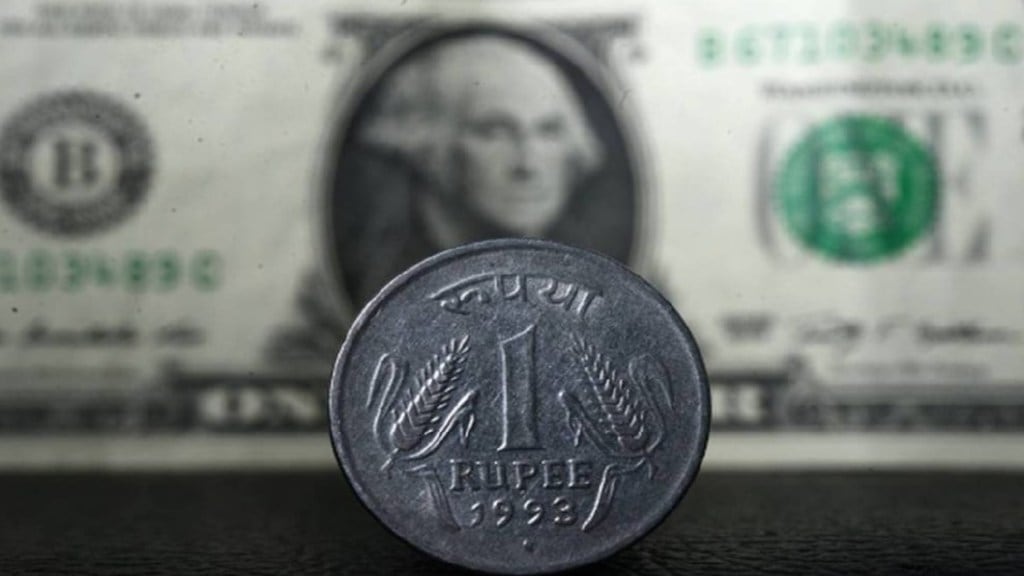
After nearly a week of record lows, it looks like the Indian rupee has finally started holding some ground. On Thursday it closed at 90.24 per dollar, up 0.1% from its previous close of 90.38 against the US dollar. The currency, during intraday trade, strengthened to the 90.13 level against the greenback, raising hopes in the market that the Indian rupee may avoid breaching the 91-mark for at least the remaining part of the year.
What helped the recovery?
Traders have said that the Indian currency posted a recovery following the RBI’s intervention on Wednesday, which led to aggressive selling of dollars by banks. Following the central bank’s intervention, trader interest in taking speculative positions on rupee shorts diminished, and importers and exporters were inching more towards locking in hedges, Reuters said in its report.
“We think the INR’s nominal and real effective exchange rates have depreciated sufficiently to mitigate punitive US tariffs, and the INR can therefore recover if some tariffs are rolled back,” Reuters quoted analysts at HSBC as saying, recommending a sell USD/INR trade.
The local currency on Tuesday, December 16, had breached the 91-level mark, falling to an intraday low of 91.08. Traders have said the RBI would not have been comfortable with the rupee sliding from the 89 to 91 level mark; hence, it stepped in to curb speculative positions.
Anil Kumar Bhansali, head of treasury, Finrex Treasury Advisors LLP, told Financial Express that the RBI would not have been comfortable with the sharp one-sided depreciation from 89 to 91 levels. “Moreover, many speculative positions were being created. Therefore, the RBI wanted to curb those speculative positions and bring them down.”
The 91-level breach
Currency experts have said that the 91-level breach was mainly caused by uncertainty surrounding the US–India trade deal, which led to an outflow of foreign equities from the domestic markets. So far, $1.5 billion worth of foreign equities have been pulled out of the Indian equity market.
India’s Trade Secretary Rajesh Agarwal, on December 15, said that the government is “very close” to closing the initial framework deal with the US to lower reciprocal tariffs. The trade deal is expected to be finalised by March 2026.
Analysts have further added that with RBI intervention, coupled with improved trade numbers for November, the rupee is likely to settle near the 89–90 mark by H1 FY26.
The focus now lies on the much-anticipated rate hikes by the Bank of Japan, which may lead to an unwinding of the yen trade and could put the Indian currency under pressure.