



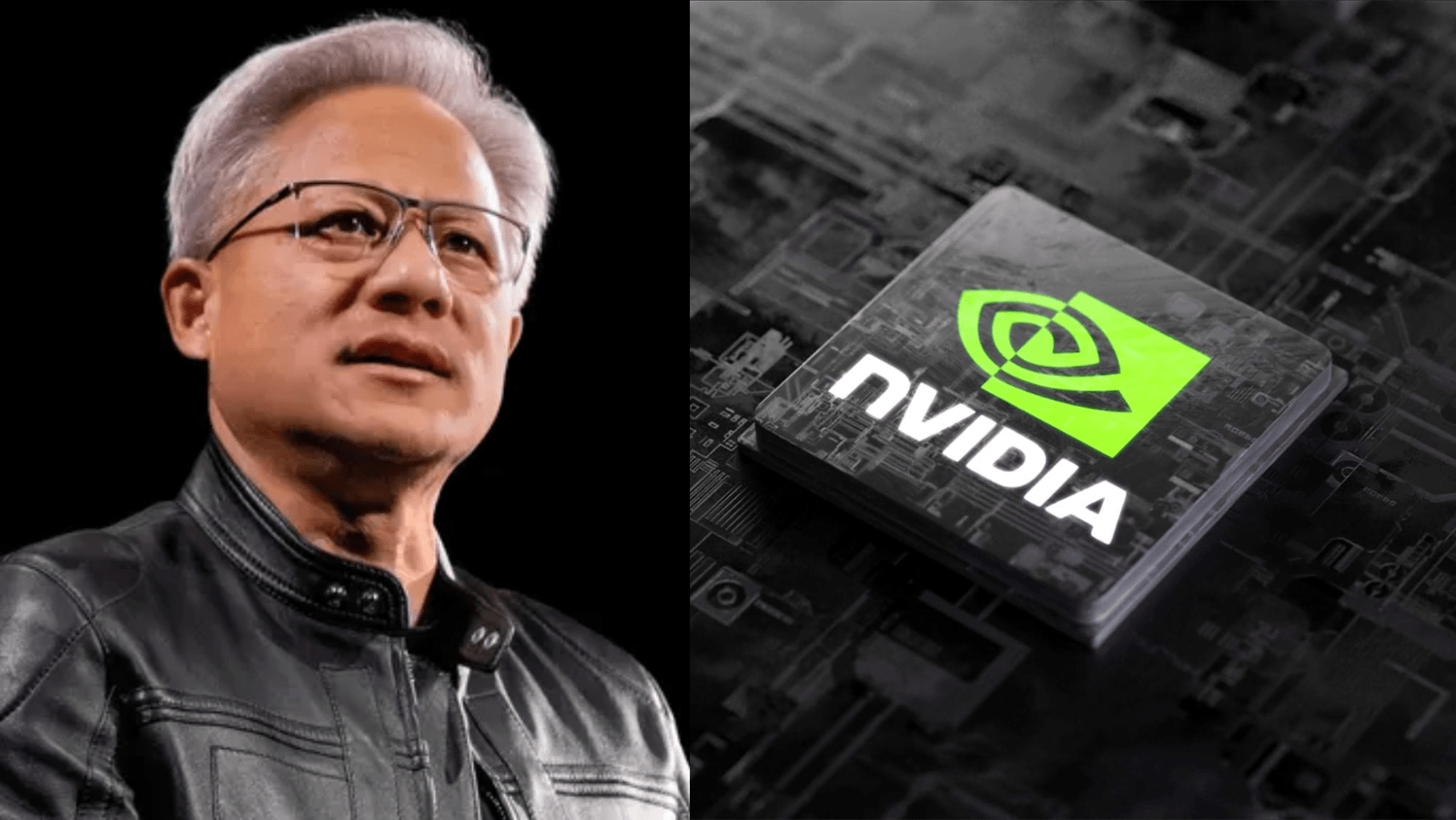
Nvidia has announced its latest forecast for sales, and investors were not fully impressed. The company expects its first-quarter revenue to be around $78 billion. While this is higher than the average Wall Street estimate of $72.8 billion, according to Bloomberg, some analysts had hoped for numbers closer to $80 billion.
After years of rapid growth, Nvidia is finding it harder to meet the very high expectations of investors. Shares fell about 1% after the news. And one of the major reasons could be the growing competition from rivals like Google, who are focused on their in-house chips.
In the fiscal fourth quarter ending Jan. 25, revenue jumped 73% to $68.1 billion, with profits of $1.62 per share, above analyst predictions. The company’s adjusted gross margin, 75.2%, also exceeded expectations.
China remains a big question
Nvidia is facing uncertainty in China, its largest potential market. A political standoff between Beijing and Washington has limited its ability to sell top products there. For now, Nvidia’s forecast does not include any revenue from Chinese data centers. The company did note, however, that it received a US license to ship small amounts of its H200 chips to China. These shipments must be inspected in the US first and are subject to a 25% tariff. “To date, we have not generated any revenue under the H200 licensing program, and do not yet know whether any imports will be allowed into China,” Nvidia said in a statement to Bloomberg.
Memory shortages pose challenges
Like the bigger electronics industry, Nvidia faces a shortage of memory chips, which are important for products from smartphones to supercomputers. Supply issues have driven up prices and slowed shipments. Nvidia says it has secured enough inventory to meet demand for the next several quarters.
Nvidia’s CEO says ‘market got it wrong’
Speaking to CNBC, right after the results, Nvidia’s CEO, Jensen Huang, said that the market has underestimated the power of artificial intelligence. Huang said that AI is not a threat but a tool that will improve productivity for software companies like ServiceNow. “I think the markets got it wrong,” he said. He added, “Nobody is going to service better than ServiceNow, and they’re going to come up with agents that are really fine-tuned and optimised for the work that uses the tools that they have.” Huang explained that AI tools help finish work and organize information in ways humans can understand.
Despite concerns, Huang believes the fears about AI spending being unsustainable are wrong. “Our customers are racing to invest in AI compute, the factories powering the AI industrial revolution and their future growth,” he said speaking to Bloomberg. Huang argued it will take years to replace older computers with machines that improve productivity.
Huang also mentioned the success of AI tools like Claude from Anthropic and Codex from OpenAI. He said they prove that AI is delivering real benefits to both cloud companies and everyday users.
Earlier this month, Nvidia announced that Meta Platforms Inc. will use millions of its processors over the coming years, strengthening their AI partnership. Rival Advanced Micro Devices Inc. also signed a large long-term deal with Meta, reportedly worth tens of billions. While these deals show confidence in the AI market, some critics worry that the close financial ties between suppliers and customers could artificially inflate demand.