



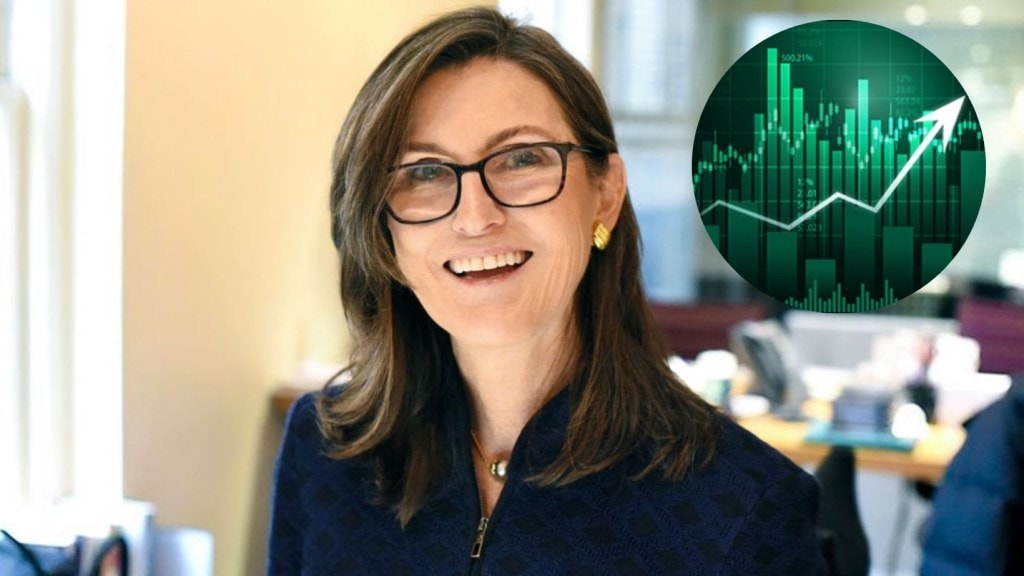
Cathie Wood is at it again. The woman who made a fortune (and lost one) betting on Tesla is now going all-in on something that sounds like science fiction: gene editing.
And we’re not talking about small bets here. ARK Invest just dropped $5.4 billion on a single company called Beam Therapeutics. That’s more than the GDP of some small countries. All while quietly dumping her darlings like Roku and Shopify.
So what’s going on?
The shift
Here’s the thing about Cathie Wood, she doesn’t do anything halfway. When she believes in a theme, she goes nuclear.
And right now, that theme is genomics.
Over the past few weeks, ARK has been buying gene-editing companies like there’s no tomorrow. Beam Therapeutics. Intellia Therapeutics. CRISPR Therapeutics. Pacific Biosciences. Companies you’ve probably never heard of unless you’re a biotech nerd.
To fund these purchases, she’s been selling the old guard. Tesla? Sold 633,000 shares. Rocket Lab? Trimmed. Roku? Out. Shopify? Reduced.
The message is clear: Consumer tech is yesterday’s story. Gene editing is tomorrow’s goldmine.
But why gene editing?
Let’s break this down simply.
You know how software engineers fix bugs in code? Gene editing does the same thing—but with your DNA. Got a genetic mutation causing disease? These companies can theoretically go in and fix it. Permanently.
We’re talking about curing diseases that were previously incurable. Sickle cell anemia. Some cancers. Genetic disorders that have plagued families for generations.
The technology isn’t entirely new. CRISPR has been around for a while. But here’s what’s changed: It’s getting precise. It’s getting safe. And most importantly, it’s getting close to commercialization.
Beam Therapeutics, for instance, uses something called “base editing.” Think of it as using a pencil eraser instead of scissors. More precise, fewer mistakes.
The AI connection
But there’s another layer to Wood’s thesis, and this is where it gets interesting.
She believes AI will supercharge the entire genomics revolution. Here’s how:
AI makes gene sequencing faster and cheaper. Cheaper sequencing generates more data. More data makes AI smarter. Smarter AI leads to better gene editing. Better editing creates successful therapies. Successful therapies attract more investment.
It’s a flywheel. And Wood thinks we’re at the point where the wheel starts spinning faster and faster.
She’s even said that AI’s application to healthcare is “the most profound application of artificial intelligence”, bigger than self-driving cars, bigger than chatbots, bigger than everything else AI is doing.
The portfolio numbers
By late December, CRISPR Therapeutics made up over 5% of ARK’s flagship fund. Beam Therapeutics hit 3.41%. These aren’t small side bets, these are core positions.
ARK also has an entire fund (ARKG) dedicated to genomics. If you believe in the theme, you can literally buy the whole basket.
The risks
Now, before you rush to copy Cathie Wood’s homework, let’s talk reality.
These companies are mostly pre-revenue or barely profitable. They’re burning cash. Their success depends on clinical trials that could fail. Regulatory approvals that could take years. And reimbursement from insurance companies that might not cooperate.
Remember, this is the same Cathie Wood who bet big on Zoom at $500 (it’s now around $75) and predicted Tesla would hit $3,000 per share (it hasn’t).
She’s right sometimes. She’s spectacularly wrong other times.
The bottom line
Cathie Wood is making an audacious bet: 2026 will be the year gene editing goes mainstream.
Maybe she’s early. Maybe she’s late. Maybe she’s spot on.
But one thing’s certain, when gene editing does take off, whether it’s this year or five years from now, she’ll be positioned to capture it.
The question is: Are you willing to wait that long?
Because in the world of disruptive technology, the winners make fortunes. But the journey there? That’s where most investors lose their patience, and their money.
Sonia Boolchandani is a seasoned financial writer She has written for prominent firms like Vested Finance, and Finology, where she has crafted content that simplifies complex financial concepts for diverse audiences.
Disclosure: The writer and her his dependents do not hold the stocks discussed in this article.
The website managers, its employee(s), and contributors/writers/authors of articles have or may have an outstanding buy or sell position or holding in the securities, options on securities or other related investments of issuers and/or companies discussed therein. The content of the articles and the interpretation of data are solely the personal views of the contributors/ writers/authors. Investors must make their own investment decisions based on their specific objectives, resources and only after consulting such independent advisors as may be necessary.