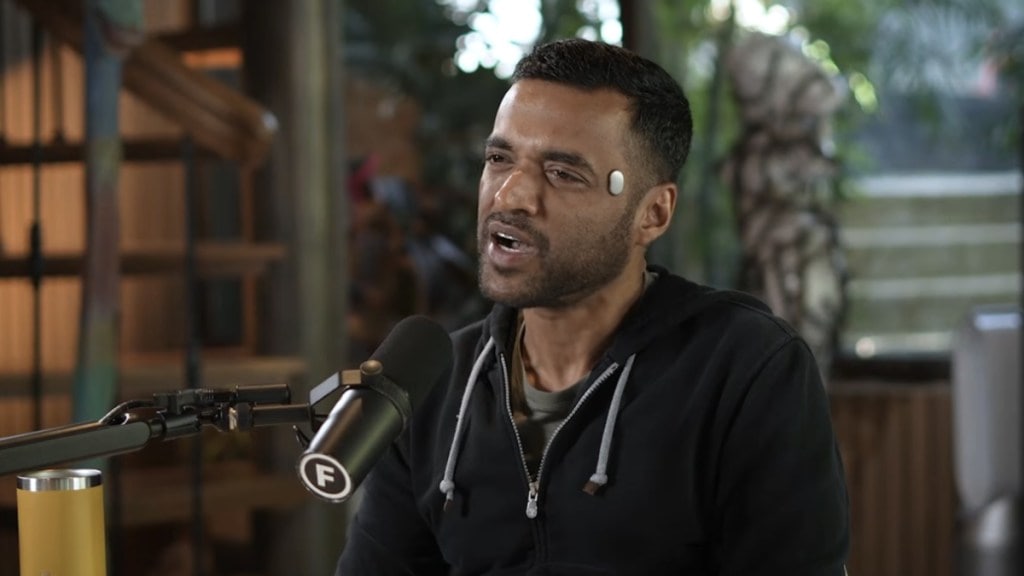
Zomato founder and CEO Deepinder Goyal recently led to widespread curiosity after appearing on the Raj Shamani Podcast wearing an unusual device near his temple. Viewers quickly noticed a small metallic clip, gold or silver in colour, attached to the side of his head. Social media users began asking questions about the gadget and what it was meant to do.
The device is called “Temple”, an experimental wearable sensor that Goyal says is designed to track blood flow to the brain in real time. Unlike smartwatches or fitness bands, this gadget is worn close to the temple region, where it aims to monitor cerebral blood circulation more directly.
How Does the Temple Device Work?
The Temple wearable uses advanced sensors that may include AI-based analysis to study patterns of blood flow in the brain. Some people believe that brain circulation plays a key role in neurological health and the ageing process. By tracking changes in blood flow continuously, the device is supposed to provide insights into how the brain functions over time.
However, it is important to note that Temple is not a commercial or medical product. Deepinder Goyal has clarified that he has been personally testing the device for over a year as part of his own health-related research. It is still in an experimental stage and not available to the public.
“Gravity Ageing Hypothesis”
Deepinder Goyal links the Temple device to his personal theory known as the “Gravity Ageing Hypothesis.” According to this idea, humans spend most of their lives standing or sitting upright, with the brain positioned above the heart. Over decades, gravity may slightly reduce blood flow to the brain, which could contribute to ageing and neurological decline.
He supports this theory by pointing to animals like bats, which often live upside down, and yoga practices that involve head-below-heart postures. Deepinder Goyal has reportedly invested around $25 million (approximately Rs.225 crore) of his own money into exploring this hypothesis.
Why Medical Experts Are Warning People?
Despite the attention, many medical experts are unconvinced. A former AIIMS Delhi doctor has strongly criticised the device, saying it has “zero scientific standing” as a medical tool. Another physician-scientist, Dr Suvrankar Datta, described it as an unproven experiment rather than a validated health solution.
Doctors caution that devices claiming medical benefits must be backed by rigorous scientific studies. Until proper evidence is published, experts advise people not to assume the Temple device has real health effects or proven benefits.