



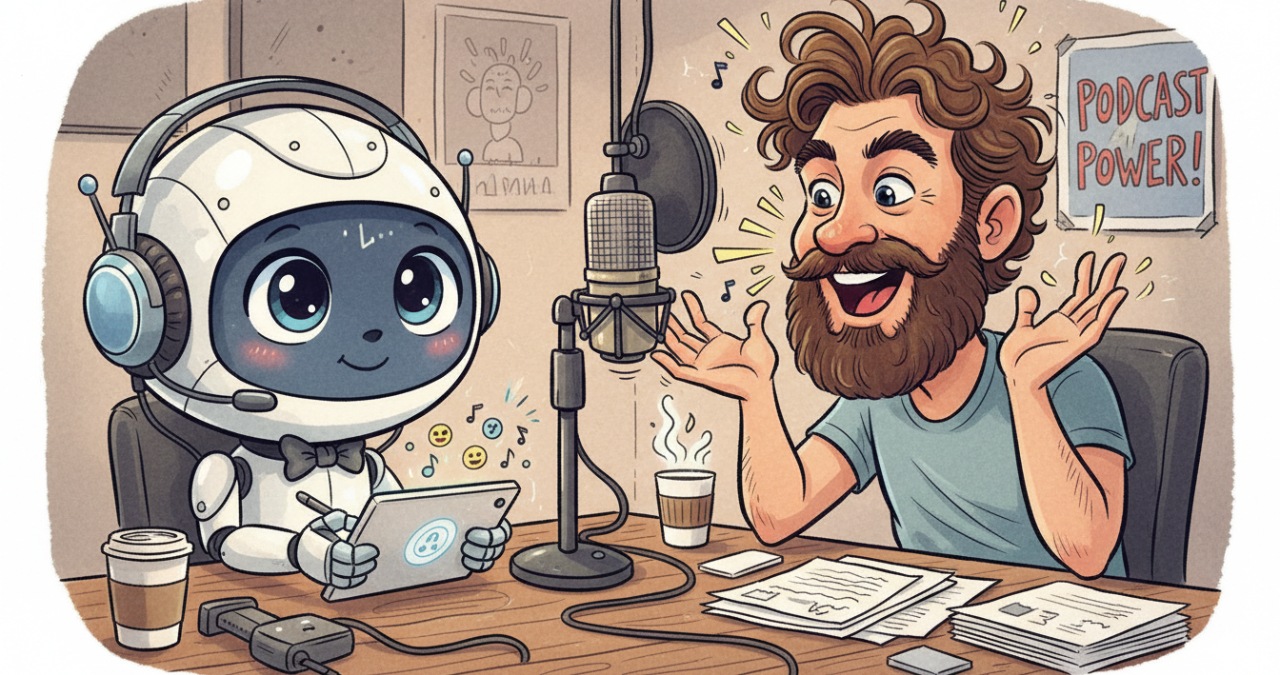
Journalist David Greene, a longtime public radio host known for his work on NPR’s Morning Edition and the political podcast Left, Right & Center, has filed a lawsuit against Google, claiming the company illegally replicated his distinctive voice for its AI-powered NotebookLM tool without consent or compensation.
The lawsuit, filed in Santa Clara County Superior Court in California, accuses Google of training its NotebookLM Audio Overviews feature on Greene’s voice and broadcasting style – including his rhythm, intonation, cadence, filler words like “uh,” and other verbal tics – to generate lifelike synthetic podcast hosts. Greene discovered the resemblance in fall 2024 when friends, family, colleagues, and listeners began contacting him, mistaking the AI voice for his own.
American journalist sues Google for illegally copying his voice
One former co-worker emailed in fall 2024, “So… I’m probably the 148th person to ask this, but did you license your voice to Google? It sounds very much like you!” Greene described hearing the voice as an “eerie moment where you feel like you’re listening to yourself,” adding that he was “completely freaked out.” He put emphasis on the personal stakes, stating, “My voice is, like, the most important part of who I am,” calling it his most valuable career asset.
NotebookLM is Google’s experimental AI research and note-taking tool, allowing users to upload documents and generate on-demand “Audio Overviews” — podcast-style discussions with two AI hosts (one male, one female) that summarise content in conversational form. Greene’s complaint argues the male host’s voice mimics him so closely that it deceived others, supported by forensic audio analysis showing 53-60% confidence of a match (with scores above 50% considered relatively high). An unnamed forensic firm reportedly concluded it was their “confident opinion” that the model was trained on Greene’s voice.
Greene’s lawyer, Joshua Michelangelo Stein of Boies Schiller Flexner, stated, “We have faith in the court and encourage people to listen to the example audio themselves.”
Google responds to the allegations
Google has rejected the allegations, with spokesperson José Castañeda telling The Washington Post, “These allegations are baseless. The sound of the male voice in NotebookLM’s Audio Overviews is based on a paid professional actor Google hired.” The company maintains that NotebookLM’s voices are synthetic creations derived from licensed professional talent, not unauthorised cloning of public figures or broadcasters.
The lawsuit highlights growing tensions between individual creators’ rights and the AI industry’s use of vast datasets — including publicly available audio from podcasts, radio archives, and online sources — to train generative models. The complaint seeks damages and an injunction to stop further use of the allegedly infringing voice.
This isn’t the first instance where an AI voice has been accused of taking inspiration from celebrities. In May 2024, OpenAI unveiled an updated version of ChatGPT (powered by GPT-4o) with new voice mode features, including a female AI voice option called “Sky”. The voice was quickly compared by users, media, and listeners to Johansson’s performance as the seductive, human-like AI assistant “Samantha” in the 2013 film Her (directed by Spike Jonze).