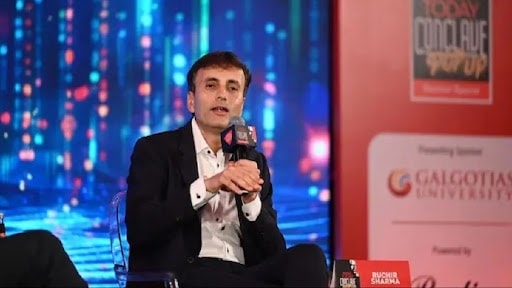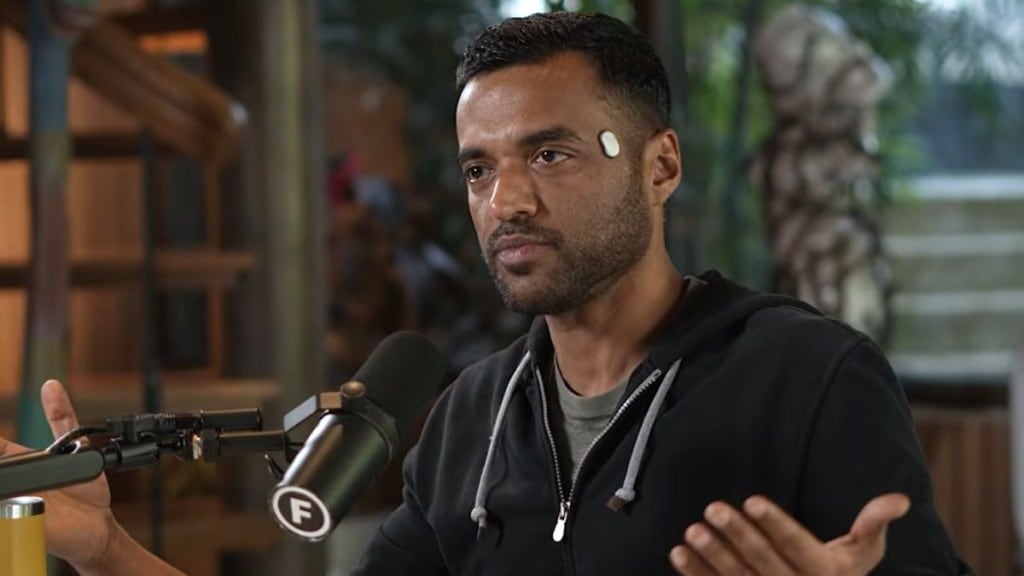
Zomato founder and CEO Deepinder Goyal grabbed attention by not just appearing on the Raj Shamani Podcast. But for an unusual device worn near his temple. Viewers noticed a small gold or silver clip-like gadget attached near his temple and started wondering what it was.
The device is called “Temple” an experimental sensor that Goyal says is designed to measure blood flow to the brain in real time. According to reports, it uses advanced sensors (potentially with AI integration) to track patterns of cerebral circulation, a key factor linked to neurological health and ageing.
Deepinder Goyal has been testing this device for over a year and says it’s part of his personal work on a health hypothesis. It’s not a commercial product available in the market yet.
Former AIIMS doctor Suvrankar Datta questioned its scientific credibility
The “Temple” device has sparked strong criticism from medical experts, especially a former doctor from AIIMS Delhi. The doctor publicly dismissed the wearable, saying it currently has “zero scientific standing” as a useful medical device. In simple words, he warned people not to assume it has proven health benefits or spend money on it.
As a physician-scientist and one of the earliest researchers in India in Arterial Stiffness and Pulse Wave Velocity (2017) which predicts cardiovascular mortality, I can assure you that this device currently has 0 scientific standing as a useful device and do not waste your hard… https://t.co/pm0pxGRycd
— Dr. Datta M.D. (AIIMS Delhi) (@DrDatta_AIIMS) January 4, 2026
Dr Suvrankar Datta, a former AIIMS doctor and physician-scientist, calling it a fancy toy for rich people something that billionaires might use for self-experimentation, but not something validated by rigorous science. He stressed that biology has been studied extensively, and speculative ideas must be backed by strong research before being promoted publicly.
“As a physician-scientist and one of the earliest researchers in India in arterial stiffness and pulse wave velocity (2017), which predicts cardiovascular mortality, I can assure you that this device currently has zero scientific standing as a useful device,” Dr Datta wrote.
“Do not waste your hard-earned money on buying fancy toys that billionaires can afford to waste money on. If you are one, then go ahead.”
This reaction shows that wearables claiming medical value without solid proof can be misleading or risky especially if users misunderstand what they actually do. Health experts are urging caution.
All About Temple: What Does It Do?
According to Deepinder Goyal, the “Temple” wearable works by continuously measuring brain blood flow, which he believes is connected to overall ageing and neurological functioning. This idea is part of his “Gravity Ageing Hypothesis.”
Deepinder Goyal’s theory suggests that because humans spend most of their lives upright with the brain above the heart gravity may reduce blood flow to the brain over decades, potentially speeding up ageing. He points to animals like bats (which live inverted sometimes) and yoga practices with head-below-heart postures as supporting examples.
He has reportedly invested $25 million (about Rs.225 crore) of his own money into research on this idea. But despite the media attention and personal funding, many doctors remain skeptical until more scientific evidence is available.